Your shopping cart is empty!

Disrupted sleep after nighttime alarms: how to restore the regime and not make the next night worse
Published: 11/11/2026
Times Read: 26
Comments : 0
Nighttime air raid alerts, moving to a shelter, generator noise, or sudden power outages can not only shorten sleep but also split it into several segments. Even if a person spends seven or eight hours in bed overall, frequent awakenings may leave them feeling exhausted. This is known as sleep fragmentation: the continuity of nighttime rest is disrupted, and attention and resilience to everyday demands may decline the following day.
After such a night, it may not be possible to return to an ideal schedule immediately. However, a sequence of realistic steps can help preserve the cues of the daily rhythm and avoid making the problem worse the following evening. We will also explain why melatonin, magnesium, glycine, and L-theanine cannot replace safe sleeping conditions and adequate rest.
Why interrupted sleep is exhausting even without losing many hours
Falling asleep, alternating sleep stages, and waking up are not the only characteristics of rest. Its continuity matters too. When an external signal wakes someone several times, the normal progression of sleep cycles is disrupted. After every awakening, it takes time to fall asleep again, and total duration does not always accurately reflect fatigue.
In a laboratory experiment, Bonnet and colleagues (1996) fragmented sleep using auditory signals without substantially changing total sleep duration. The next day, participants were sleepier, and some measures of attention and mood deteriorated. An experiment by Grant and colleagues (2024) also showed increased sleepiness and poorer performance on certain attention tests after a series of fragmented nights. However, these were controlled studies, not direct investigations of sleep during air raid alerts: their exact effect sizes cannot be applied to all real-life circumstances.
Two distinct problems may follow a forced awakening. The first is insufficient duration, when there simply was not enough time to sleep. The second is disrupted structure, when a person sleeps in several periods separated by long intervals of wakefulness. The two can occur together. This is why saying “but I slept for eight hours” does not necessarily contradict pronounced daytime fatigue.
What to do in the morning after a night of repeated awakenings
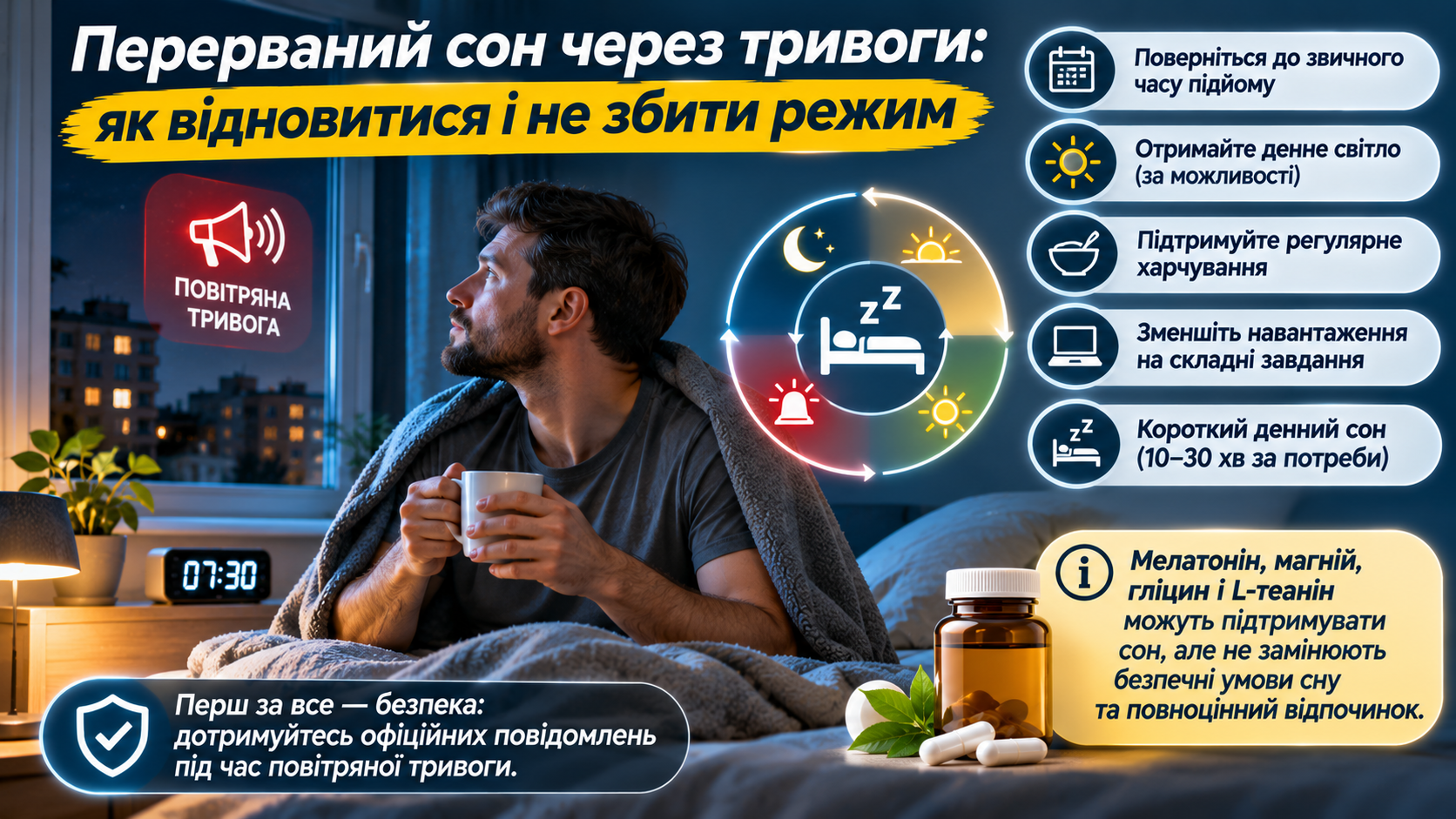
Safety comes first. If there was an air raid alert overnight, follow official notifications and shelter rules; sleep-schedule advice must not take precedence over safety. Once the threat has passed and the day has begun, a few simple reference points can help.
- Return to approximately your usual wake-up time. Shifting your wake-up time by many hours may make it harder to fall asleep the next night. However, if sleep was critically short, safety and recovery matter more than rigid adherence to a schedule.
- Get some daylight. Go outside when it is safe or spend some time near a window. Natural daylight helps the body distinguish active hours from rest periods.
- Have breakfast or eat at your usual time. Regular meals do not make up for lost sleep, but they help maintain the normal structure of the day.
- Reduce the demands of complex tasks. If your attention is noticeably impaired, postpone hazardous work, work at heights, and driving. Caffeine does not automatically make a sleepy person fit to perform these activities.
- Do not try to “defeat” sleepiness with energy drinks. Temporary alertness is not the same as restored cognitive function and may make it harder to fall asleep the next night.
A consensus statement on sleep regularity (2023) supports relatively consistent bedtimes and wake times as important elements of a healthy routine. However, its authors do not suggest ignoring the need to recover from unavoidable sleep loss: extra sleep can sometimes be appropriate.
Daytime naps: when a short rest may help
After nighttime awakenings, it may sometimes be possible to sleep briefly during the day. This is not a full replacement for nighttime sleep, but for some people a short daytime nap improves alertness and well-being. In a systematic review and meta-analysis of 11 studies (2021), napping was associated with better cognitive performance after waking, particularly vigilance; most studies were conducted in laboratory settings.
A practical guideline is a short nap, often around 10–30 minutes, in the morning or early afternoon if possible. This is not a universal rule: individual needs and work schedules differ. A long nap may sometimes cause sleep inertia, a temporary period of grogginess immediately after waking. Napping late in the day may also reduce sleepiness in the evening.
If circumstances make napping impossible, a quiet break without screens or unnecessary stimulation may be more realistic than trying to force an hour of “catch-up” sleep. However, when sleepiness is severe, a simple break does not make driving or hazardous work safe.
Light, screens, and air raid alerts: how to avoid shifting your daily rhythm
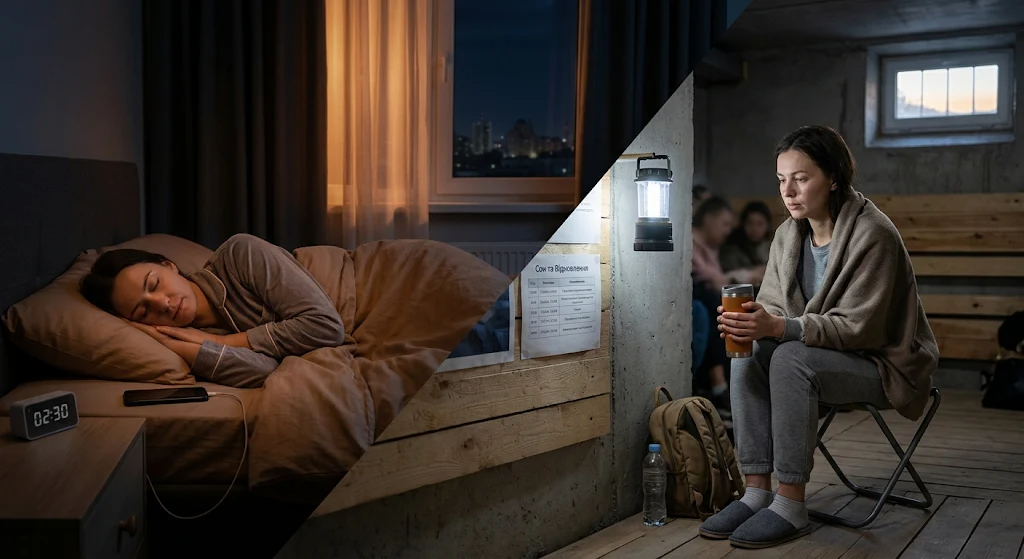
The body uses light as one of its main time cues. Brighter light in the morning and daytime helps align the biological clock, while excessive evening light can delay the feeling of sleepiness. In Ukraine, however, an essential qualification applies: during an air raid alert, lighting and devices are used primarily for safe movement and communication. Preserving “sleep hygiene” at the expense of safety makes no sense.
After an alert ends, you can return to dim lighting, minimize aimless news scrolling, check essential messages, and try going back to bed. If lighting is needed in a shelter, choose adequate, safe illumination rather than darkness at any cost.
Do not expect one “perfect” night to instantly restore your rhythm after several difficult days. Repeating achievable actions works better: morning daylight, a calmer evening, manageable daytime movement, and a return to your usual sleep window.
Coffee after a poor night's sleep: how not to make the next night worse
Caffeine blocks some signals of sleepiness and can temporarily increase alertness. However, it remains in the body longer than the subjective feeling of being energized. In a randomized study by Drake and colleagues (2013), 400 mg of caffeine taken even six hours before habitual bedtime worsened certain objective measures of nighttime rest. This was a research dose, not advice to consume that amount.
After a fragmented night, it makes sense to have coffee earlier in the day and avoid large servings close to evening. There is no single caffeine “cutoff time” for everyone: sensitivity, metabolic rate, health, and planned bedtime vary. If you need to go to bed earlier than usual, your last coffee should also be earlier.
Particular caution with caffeine is warranted if you experience palpitations, increased anxiety, or take medication. Continually increasing coffee consumption after each difficult night can create a vicious cycle: daytime sleepiness, a late stimulant, difficulty falling asleep, and even greater fatigue the next day.
What is known about melatonin, glycine, magnesium, and L-theanine
Studies of these substances involve different populations, doses, sleep outcomes, and observation conditions. None has convincing evidence that it can compensate for repeated nighttime awakenings caused by external danger. It is important to distinguish findings on sleep onset or subjective sleep quality from actual recovery after a fragmented night.
| Substance | What has been studied | What has not been proven |
|---|---|---|
| Melatonin | Time-of-day signaling, circadian rhythm disorders, and certain measures of falling asleep. | That it replaces sleep or reliably prevents awakenings caused by sirens. |
| Glycine | Small studies of subjective sleep quality and daytime fatigue. | A consistent effect in large samples or effectiveness specifically after nighttime air raid alerts. |
| Magnesium | Different forms and measures of sleep quality in small randomized studies. | That the supplement is a universal solution for disrupted sleep. |
| L-theanine | Subjective sleep onset, sleep quality, and well-being in several clinical studies. | That it eliminates the cause of awakenings or replaces rest. |
Melatonin. This is a hormonal signal of the dark part of the day, not a universal sleeping pill. A clinical guideline from the American Academy of Sleep Medicine (Sateia and colleagues, 2017) does not recommend it as a standard treatment for chronic difficulties falling or staying asleep in adults because of low-quality evidence for that indication. The possible use of melatonin for a circadian rhythm disorder is a different clinical situation that must be assessed separately.
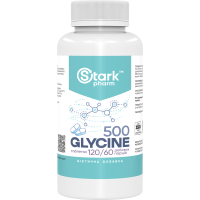
Glycine. In a study by Yamadera and colleagues (2007) involving just 11 volunteers, researchers tested 3 g of glycine before bedtime and observed improvements in certain measures of well-being and sleep onset. Bannai and colleagues (2012) also used 3 g during partial sleep restriction. These figures describe research protocols only; they are not recommended servings. Samples this small do not justify treating the findings as a general rule.
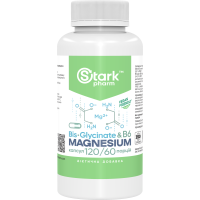
Magnesium. A systematic review by Lopresti and colleagues (2026) analyzed 12 randomized studies related to sleep and found heterogeneous results with low or very low certainty of evidence. The review does not support routine magnesium use as a means of treating insomnia. Magnesium performs important functions in the body, but this does not establish the effectiveness of supplements for awakenings caused by external events.
L-theanine. A 2025 meta-analysis included 19 publications involving 897 participants and reported improvements in some subjective sleep outcomes. Differences across studies, small samples, and limited objective outcomes do not justify expecting identical results for everyone. These data do not directly address nighttime air raid alerts.
If additional use of any substance is being considered, follow the instructions for the specific product and medical advice. It is especially important not to combine several potentially sedating products at random, use them before driving, or take them when a rapid response may be necessary. Melatonin and other ingredients carry specific precautions concerning age, pregnancy, breastfeeding, chronic conditions, and drug interactions.
How to prepare for an evening when sleep may be interrupted again
Silence and uninterrupted electricity cannot be guaranteed, but it is possible to reduce additional disturbances. The following is not a “perfect sleep ritual,” but a practical minimum that does not interfere with safety requirements.
- Prepare the items needed to reach a shelter safely and a reliable way to receive official alerts.
- Choose a calmer activity before bed when possible, and limit unnecessary scrolling through news feeds.
- Do not try to compensate for fatigue with alcohol: it can disrupt sleep structure and worsen how you feel the next day.
- Where possible, maintain a comfortable temperature, quiet conditions, and ventilation while preserving the necessary level of safety.
- If you wake up and cannot fall asleep again for a long time after the all-clear, do not force yourself to lie there feeling tense; you can briefly switch to a calming activity in dim light.
- If alerts keep recurring, do not judge your progress by a single night: achievable consistency is more helpful than rigid rules that create additional stress.
Some of these behavioral principles are consistent with sleep hygiene recommendations. However, general advice alone may not be sufficient for long-term problems. For chronic sleep disturbances, clinical guidelines identify cognitive behavioral therapy for insomnia (CBT-I) as a first-line approach, selected with a professional rather than replaced by arbitrary combinations of supplements.
When to seek professional help
If nighttime awakenings and daytime exhaustion recur for weeks and substantially interfere with work, studying, or daily life, consider consulting a family doctor or sleep specialist. This is particularly appropriate if you experience pronounced daytime sleepiness, fall asleep in dangerous situations, snore loudly with pauses in breathing, or constantly need stimulants just to get through the day.
After dangerous events, nighttime tension, fear of another alert, or intrusive thoughts may persist. If these do not subside and affect daily life, a psychologist or mental health professional can help identify appropriate support. One difficult night is not a basis for diagnosing yourself with a psychiatric condition.
The central point is simple: interrupted sleep is not just “too few hours” but also disrupted continuity of rest. Consistent actions during the day and evening help maintain a rhythm, but they do not remove the need for sleep or eliminate external causes of awakening.
Frequently asked questions
Why do I still feel sleepy after eight hours in bed?
Time spent in bed is not the same as uninterrupted sleep. Frequent awakenings can reduce sleep quality and daytime alertness even without a major reduction in total hours.
Should I sleep longer in the morning after an air raid alert?
If the night was critically short, additional rest may be needed. However, waking very late may delay sleep onset the next night, so prioritize safety and your actual need for recovery.
How long can I nap during the day after a bad night?
People often use a short nap of around 10–30 minutes earlier in the day. This is a guideline, not a universal rule; long or late naps may make it harder to fall asleep in the evening.
Can coffee fully restore my attention?
Caffeine can temporarily reduce sleepiness, but it does not replace sleep. When fatigue is pronounced, it is better to postpone hazardous work and driving.
Should I turn off every screen immediately after an alert?
First, obtain essential information and make sure you are safe. After the all-clear, you can dim the lights and limit unnecessary news browsing.
Is melatonin a sleeping pill for frequent nighttime awakenings?
Melatonin is primarily associated with daily rhythms. There is no convincing evidence that it restores sleep disrupted by external alerts.
Have magnesium or glycine been proven helpful after a sleepless night?
There are small studies of glycine and heterogeneous studies of magnesium, but they do not establish a reliable effect specifically after forced nighttime awakenings.
When should I see a doctor about sleep problems?
When the problem lasts for weeks, noticeably affects daytime functioning, or involves dangerous sleepiness, breathing pauses, or severe emotional exhaustion.
Sources
- Martin SE et al. (1996). The effect of sleep fragmentation on daytime function. American Journal of Respiratory and Critical Care Medicine. PubMed.
- Grant LK et al. (2024). The effect of experimentally induced sleep fragmentation and estradiol suppression on neurobehavioral performance and subjective sleepiness in premenopausal women. Sleep. PubMed.
- Sletten TL et al. (2023). The importance of sleep regularity: a consensus statement of the National Sleep Foundation sleep timing and variability panel. Sleep Health. DOI.
- Souabni M et al. (2021). Effects of a Short Daytime Nap on the Cognitive Performance: A Systematic Review and Meta-Analysis. International Journal of Environmental Research and Public Health. PubMed.
- Drake C et al. (2013). Caffeine Effects on Sleep Taken 0, 3, or 6 Hours before Going to Bed. Journal of Clinical Sleep Medicine. PubMed.
- Sateia MJ et al. (2017). Clinical Practice Guideline for the Pharmacologic Treatment of Chronic Insomnia in Adults: An American Academy of Sleep Medicine Clinical Practice Guideline. Journal of Clinical Sleep Medicine. PubMed.
- Yamadera W et al. (2007). Glycine ingestion improves subjective sleep quality in human volunteers, correlating with polysomnographic changes. Sleep and Biological Rhythms. DOI.
- Bannai M et al. (2012). The effects of glycine on subjective daytime performance in partially sleep-restricted healthy volunteers. Frontiers in Neurology. PubMed.
- Lopresti AL et al. (2026). Magnesium Supplementation for Sleep in Adults: A Systematic Review of Randomized Controlled Trials. Journal of Dietary Supplements. PubMed.
- The effects of L-theanine consumption on sleep outcomes: A systematic review and meta-analysis (2025). PubMed.
- Qaseem A et al. (2016). Management of Chronic Insomnia Disorder in Adults: A Clinical Practice Guideline From the American College of Physicians. Annals of Internal Medicine. PubMed.
Dietary supplement. Not a medicinal product. Consult your doctor before use.
Products related to this post


Related Posts
Comments
Information
Customer Service
Extras
My Account


Sports nutrition manufacturer in Ukraine StarkPharm © 2026


