Your shopping cart is empty!

Coffee after a sleepless night: how to maintain focus and subsequent sleep
Published: 11/11/2026
Times Read: 16
Comments : 0
Coffee after a sleepless night can make a person feel more alert for a short time, but it does not restore the brain’s full rest. After an air raid alert, a night shift or an unexpected awakening, it is tempting to regain focus quickly: work, travel, studying and everyday responsibilities do not disappear. Caffeine does affect sleepiness and reaction speed, but the amount consumed is not the only factor. Timing, the length of the preceding sleep and the time of the next bedtime also matter.
The main practical question is how to avoid turning one bad night into two. Research helps distinguish a temporary increase in alertness from genuine recovery of performance and from caffeine’s effects on subsequent sleep.
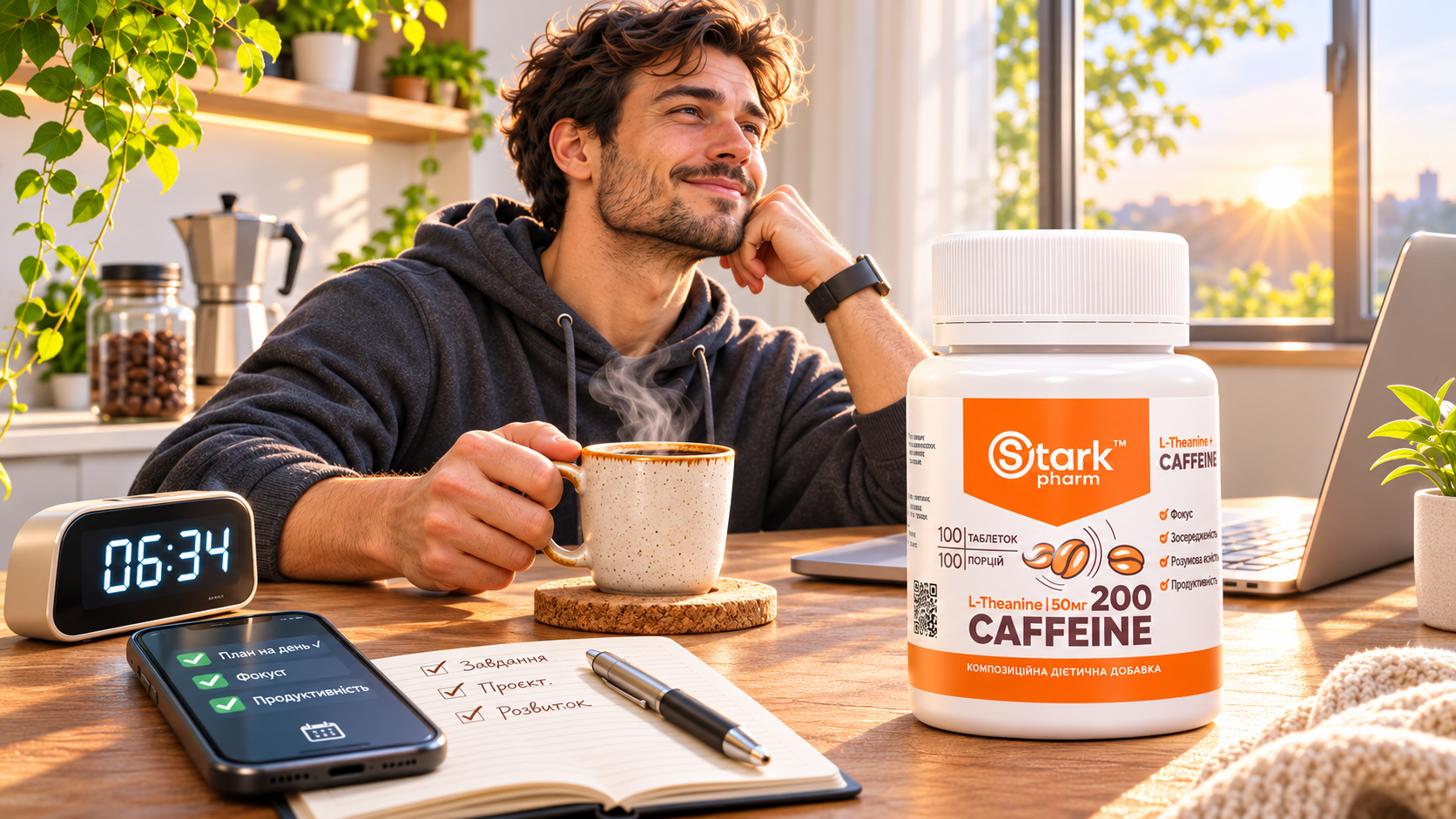
What caffeine can and cannot do after sleep deprivation
During prolonged wakefulness, the body’s need for sleep increases. The adenosine system is one of the signals involved in that need. Caffeine blocks adenosine receptors, reducing the sensation of sleepiness. This does not mean the accumulated need for sleep disappears: what primarily changes is how the brain responds to its signals (a 2022 review of adenosine, caffeine and sleep regulation).
In a systematic review, Irwin and colleagues (2020) examined 45 publications on caffeine after restricted or lost sleep. On average, several measures of attention, reaction time and task performance improved. However, the effect depended on the specific function, experimental conditions and dose: a result on a vigilance test is not equivalent to being able to make complex decisions without error throughout the day.
In Lieberman’s review (2016), caffeine’s effects on vigilance and simple reactions were more consistent than its effects on memory, judgment and other complex executive functions. Thus, feeling “fully awake” is not a reliable indication that driving or operating dangerous equipment is safe after substantial sleep loss.
| After caffeine | What may happen | What should not be assumed |
|---|---|---|
| Sleepiness | May temporarily decrease | The need for sleep has been eliminated |
| Simple reaction time | May sometimes become faster | All complex decisions will be error-free |
| Concentration | May improve on certain tests | The effect is the same for everyone and lasts until evening |
| The following night | Is not improved by caffeine itself | Evening coffee will not affect falling asleep |
What experiments in people with restricted sleep have shown
A study involving 36 healthy men compared conditions following eight versus five hours in bed; participants received 75 or 150 mg of caffeine twice daily. Caffeine improved measures of alertness, but the results do not establish that this regimen is suitable for everyday use or reverses the consequences of chronic sleep restriction.
In a 2018 study on using coffee after poor sleep, 69 participants received coffee containing approximately 100 mg of caffeine or water. Performance on vigilance tests generally improved, but certain types of errors remained a problem among participants with poor sleep quality. In other words, feeling alert and performing tasks accurately do not always coincide.
In another laboratory study from 2018, 12 healthy adults underwent sessions of 48 hours of total sleep deprivation. Researchers compared repeated doses of 200 and 300 mg of caffeinated chewing gum with placebo. Both regimens reduced the decline in vigilance, particularly at night, while the difference between doses was small. This describes an experimental protocol under controlled conditions, not a dosing regimen for everyday life.
Taken together, these studies explain why caffeine can sometimes have a noticeable short-term effect after insufficient sleep, yet cannot replace restorative sleep or make many hours of wakefulness safe.
When to drink coffee without disrupting the next night
Caffeine does not have a universal “expiry time” at a particular hour. In adults, its half-life is often around 4–6 hours, but varies considerably with individual characteristics, medications, smoking, pregnancy and other factors (the International Society of Sports Nutrition position stand, 2021). “Half has been eliminated” does not mean “the effect is gone”: a substantial amount may remain in the bloodstream hours later.
In a controlled experiment, Drake and colleagues (2013) found that 400 mg of caffeine taken even six hours before planned bedtime could substantially reduce sleep duration. A more recent randomized crossover study involving 23 men compared single doses of 100 and 400 mg taken 12, 8 and 4 hours before bedtime. The 400 mg dose disrupted sleep measures even at 12 hours, whereas no statistically significant effect of 100 mg was detected under those conditions. This does not prove that 100 mg in the evening is entirely safe for everyone.
It is therefore more practical to count backward from the planned bedtime, rather than from the end of the working day. After a fragmented night, the need for recovery is especially high, and late caffeine may delay sleep precisely when it is most needed.
How much caffeine drinks contain and why all sources count
The caffeine content of a cup is not fixed: it depends on the amount of coffee, the bean variety, the brewing method and serving size. Caffeine also comes from tea, energy drinks, certain foods and dietary supplements. Counting cups alone is therefore insufficient.
EFSA’s opinion on caffeine safety states that, for most healthy adults, single amounts of up to 200 mg and total intake of up to 400 mg per day do not raise general safety concerns. These are risk-assessment benchmarks, not a recommendation to consume these amounts after sleep loss. Even a single 100 mg dose can affect sleep in some individuals, particularly close to bedtime. The conclusions differ for pregnant women and other sensitive groups.
If someone has already consumed coffee, tea or an energy drink, caffeine from any other supplement adds to their total intake. Not feeling enough of an effect does not mean that the previous dose has already been eliminated.

A practical day plan after a night of insufficient sleep
The following steps are not a caffeine dosing schedule, but a way to prioritize when the night was short or repeatedly interrupted.
- After waking. If possible, spend some time in daylight and return to your usual morning rhythm. If the night was spent in a shelter or without electricity, safety and basic rest come first, rather than immediately trying to “switch on productivity.”
- Early in the day. Breakfast, water and manageable movement help maintain a familiar routine but do not replace lost sleep. If you choose to consume caffeine, take into account drinks already consumed, individual tolerance and the timing of your next sleep.
- If very sleepy. A short daytime rest when conditions are safe is more helpful than endlessly adding stimulants. In a small experiment, Hayashi and colleagues (2003) found that a 20-minute nap combined with caffeine produced better short-term results than some separate conditions; this does not mean caffeine is needed before every nap.
- Later in the day. Do not attempt to recreate the morning boost by drinking coffee after coffee. The closer consumption is to bedtime and the larger the amount, the greater the risk of disrupting the following night.
- In the evening. Reduce bright lighting, noise and additional stimulation as much as circumstances allow. After nighttime air raid alerts, it is important to remain able to respond safely to new warnings rather than isolate yourself from them entirely.
If sleepiness is pronounced, it is safer to postpone driving, working at heights or operating dangerous machinery. Coffee does not guarantee adequate reactions in a critical situation.
A short nap, daylight and caffeine: what matters most
A short nap may provide temporary relief, but its effects depend on time of day, duration and the extent of preceding sleep loss. In a small experiment, Hayashi and colleagues (2003) compared a 20-minute nap, a nap combined with caffeine, bright light after a nap and other conditions; short-term benefits differed across tests.
It is important not to mistake the laboratory scenario of “coffee plus a nap” for advice to take large caffeine doses: research protocols cannot automatically be applied to people with high blood pressure, palpitations, anxiety, caffeine sensitivity or sleep problems. If the goal is to sleep well the next night, a late nap and late coffee may work against it.
Caffeine and L-theanine: should a different effect be expected?
Caffeine and L-theanine are frequently studied together because of their potential effects on attention. A 2025 systematic review and meta-analysis of randomized studies of tea, L-theanine and its combination with caffeine found some small benefits of the combination on attention tests. Nevertheless, confidence intervals for some results indicated uncertainty, and short laboratory tests do not establish that the mixture restores the brain after a sleepless night.
This topic is discussed in more detail in a separate article on theanine and caffeine. In the context of sleep loss, it is important to remember that theanine does not cancel caffeine’s effects on adenosine receptors or guarantee that subsequent sleep will remain undisturbed.
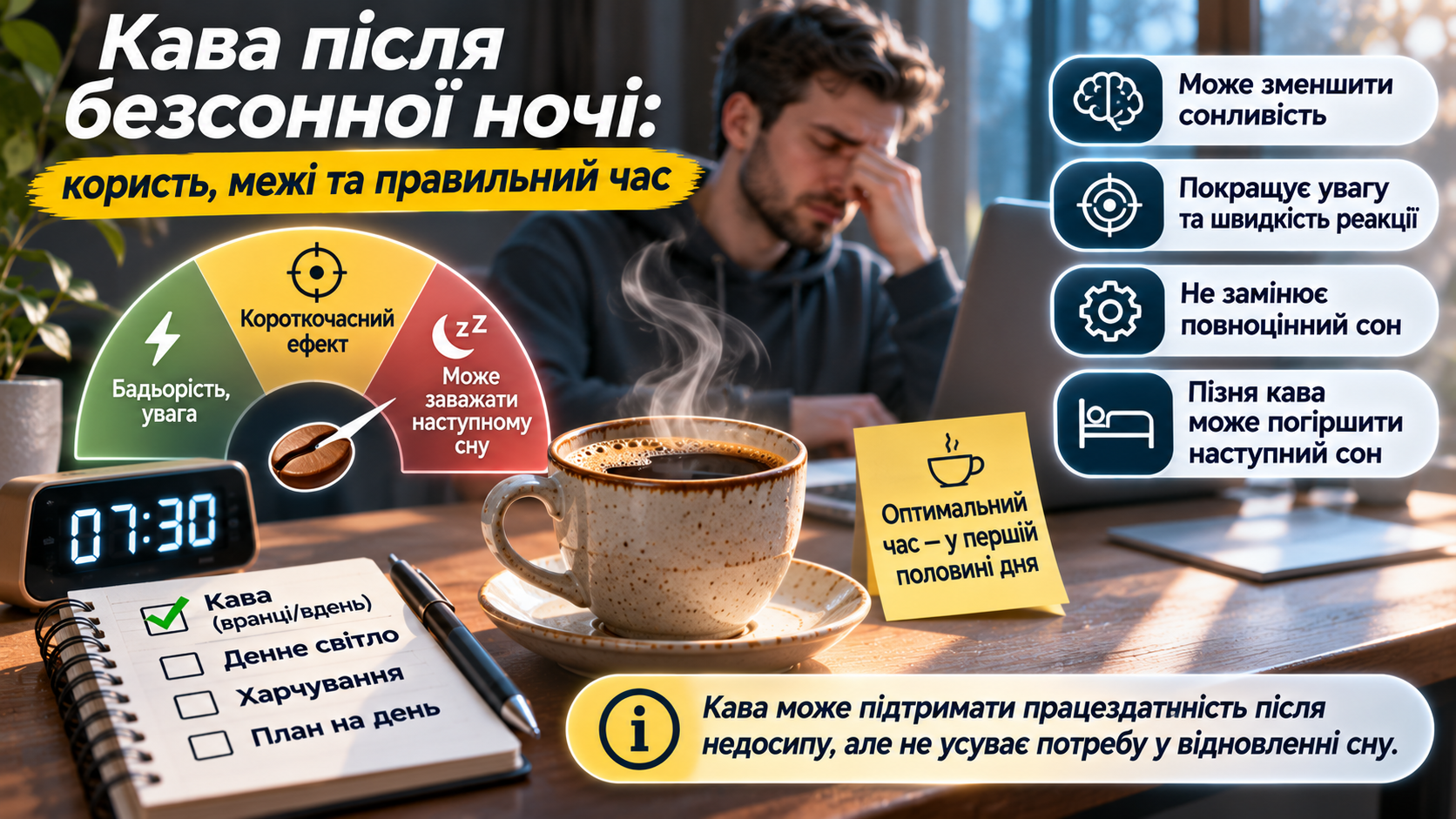
When caffeine may be a poor choice
Particular caution with caffeine is appropriate for people experiencing palpitations, trembling, marked anxiety, heightened sensitivity to stimulants or sleep problems. Other health conditions, medications, pregnancy and individual tolerance also matter. Avoid combining several caffeine-containing supplements and drinks without considering the total caffeine intake.
Caffeine-containing dietary supplements are not intended for children, and caffeine consumption during pregnancy requires specific limits and professional advice. Persistent sleep disturbances, a sudden deterioration in well-being or repeated episodes of overwhelming daytime sleepiness warrant discussion with a doctor. After a fragmented night, the priority is safe activity and an opportunity for restorative sleep, not the maximum number of stimulants.
Frequently asked questions
Does coffee help after a sleepless night?
Caffeine can temporarily improve alertness and reaction speed. It does not remove the underlying need for sleep or guarantee recovery of all cognitive functions.
When is it best to drink coffee after poor sleep?
Consider your planned next bedtime and your own sensitivity first. Late caffeine, especially in large amounts, can interfere with falling asleep.
Why do I feel sleepy a few hours after coffee?
Caffeine only temporarily reduces the sensation of sleepiness. As its effect wears off, the accumulated need for sleep may become noticeable again.
Is 400 mg of caffeine safe after sleep deprivation?
400 mg per day is a general safety-assessment benchmark for healthy adults, not a target intake. A large single dose can affect sleep even long before evening.
Can coffee replace a daytime nap?
No. Caffeine temporarily changes alertness, whereas sleep provides recovery that a stimulant cannot reproduce.
Can I have an energy drink instead of coffee?
The total amount of caffeine from all sources is crucial. A particular drink may also contain other ingredients that need to be considered.
Does L-theanine neutralize caffeine’s effect on sleep?
There is no evidence that L-theanine completely eliminates caffeine’s effects on sleep. Studies of the combination have mainly measured short-term attention outcomes.
Can I drive after coffee if I have barely slept?
Caffeine cannot guarantee freedom from errors or microsleeps. Driving should be postponed when sleepiness is pronounced.
Sources
- Irwin C et al. (2020). Effects of acute caffeine consumption following sleep loss on cognitive, physical, occupational and driving performance: A systematic review and meta-analysis. Neuroscience & Biobehavioral Reviews. PubMed.
- Lieberman HR (2016). A review of caffeine's effects on cognitive, physical and occupational performance. Neuroscience & Biobehavioral Reviews. PubMed.
- Drake C et al. (2013). Caffeine effects on sleep taken 0, 3, or 6 hours before going to bed. Journal of Clinical Sleep Medicine. PubMed.
- Dose and timing effects of caffeine on subsequent sleep: a randomized clinical crossover trial (2025). Sleep. PubMed.
- Adenosine, caffeine, and sleep-wake regulation: state of the science and perspectives (2022). PubMed.
- Using coffee to compensate for poor sleep: Impact on vigilance and implications for workplace performance (2018). Applied Ergonomics. PubMed.
- Randomized, double-blind, placebo-controlled, crossover study of the effects of repeated-dose caffeine on neurobehavioral performance during 48 h of total sleep deprivation (2018). PubMed.
- Alerting effects of caffeine after normal and restricted sleep (1991). PubMed.
- Hayashi M et al. (2003). The alerting effects of caffeine, bright light and face washing after a short daytime nap. Clinical Neurophysiology. PubMed.
- Effects of Tea (Camellia sinensis) or its Bioactive Compounds L-Theanine or L-Theanine plus Caffeine on Cognition, Sleep, and Mood in Healthy Participants: A Systematic Review and Meta-Analysis of Randomized Controlled Trials (2025). Nutrition Reviews. PubMed.
- Guest NS et al. (2021). International society of sports nutrition position stand: caffeine and exercise performance. Journal of the International Society of Sports Nutrition. PMC.
- European Food Safety Authority. Scientific Opinion on the safety of caffeine (2015). EFSA Journal. EFSA.
Dietary supplement. Not a medicinal product. Consult your doctor before use.
Products related to this post
Related Posts
Comments
Information
Customer Service
Extras
My Account


Sports nutrition manufacturer in Ukraine StarkPharm © 2026


