Your shopping cart is empty!

Lactose-free milk or lactase: which is more convenient and in what cases?
Published: 21/11/2026
Times Read: 52
Comments : 0
Lactose-free milk and the enzyme lactase help organize the diet in different ways when regular milk causes digestive discomfort due to lactose. In the first case, the milk sugar is broken down during the production of the product. In the second, the enzyme is used together with food containing lactose. The difference is primarily in the method of use, and not in the fact that one option is suitable for absolutely everyone.
The choice depends on where a person eats, what foods they eat, how sensitive they are to the amount of lactose, and how predictable the food composition is. Lactose-free milk is convenient as an everyday product at home, and the enzyme can be a practical option in situations where it is impossible to change the composition of the dish in advance. At the same time, both approaches have their limits: they relate to milk sugar, not milk protein allergies.

Lactose-free milk or lactase: the main differences
| Criterion | Lactose-free milk | Lactase enzyme with food |
|---|---|---|
| Principle | The lactose has already been broken down or its amount has been reduced during production. | An enzyme is added that must come into contact with lactose during food consumption. |
| For which situations | Homemade drinks, cereals, coffee, recipes with milk. | Dishes with lactose in a cafe, at a party, or on a trip, if this is provided for in the instructions. |
| What to check | Labeling on the packaging, ingredients, nutritional value. | Enzymatic activity, amount per serving, and rules of use. |
| Advantage | The composition of a particular drink is known in advance. | There is no need to completely replace all dishes with special analogues. |
| Limitation | Does not change the lactose content in other dishes. | The result depends on the amount of lactose, the form of the enzyme, and individual characteristics. |
| Milk protein allergy | Regular lactose-free cow's milk is not suitable. | The enzyme does not break down milk proteins as allergens. |
The comparison does not imply that the two options are interchangeable under all circumstances. If the cause of the discomfort is unknown, dietary experimentation alone is not sufficient to establish it. A scientific review by Shaukat et al. (2010) emphasizes that lactose tolerance varies between individuals, and the results of trials of different methods of restriction cannot be mechanically extrapolated to every consumer.
How lactose-free milk is made
In regular cow's milk, lactose is a disaccharide, a molecule made up of two simple sugars, glucose and galactose. To break it down, the enzyme β-galactosidase, known in the food industry as lactase, is required. In industrial production, the enzyme is added to the milk at a controlled processing stage; sometimes membrane separation methods are also used. According to the 2019 review Lactose-Free Dairy Products: Market Developments, Production, Nutrition and Health Benefits , various enzymatic cleavage schemes are used in practice, including pre- or post-heating.
After the action of the enzyme, lactose ceases to be the same molecule: glucose and galactose are formed. Therefore, lactose-free milk is sometimes perceived as sweeter than regular milk, although the manufacturer may not have added table sugar. This is due to the taste properties of the monosaccharides formed. To compare sweetness, you need to look at the composition of a particular product, and not draw a conclusion based on the word "lactose-free".
Lactose-free cow's milk usually remains a dairy product with proteins, fats and minerals, but the quantitative values depend on the fat content, heat treatment, enrichment and manufacturer. The fact that lactose is broken down does not mean that the drink becomes carbohydrate-free or low-calorie. It is worth looking at the label separately for carbohydrates, sugars, protein and calcium.
The 2019 and 2023 technology reviews also note that manufacturers may use a combination of enzymatic processing and filtration. This is why it is not appropriate to attribute the same residual lactose content to all dairy products, even if they are on the shelf with the same label.
How does lactase used with food work?
Lactase in the form of a food enzyme performs a similar chemical job: it breaks the bond in the lactose molecule. The difference lies in the time and place of contact. While during milk production the enzyme works before the drink is purchased, when used with food the enzyme contacts lactose already within the meal.
The effect depends on how much lactose the food contains, how the enzyme product is made, under what conditions it is active, and how sensitive a person is to digestive symptoms. Therefore, it is not enough to see a large number on the package and assume that it will be enough for any dairy dessert. Enzyme activity is expressed in special units; they cannot simply be replaced by the mass of the powder in milligrams.
It is advisable to follow the instructions for a specific enzyme product. There is no common scheme that is exactly suitable for all forms and any meal. There is also no reason to believe that a single use of lactase will permanently change the actual production of the enzyme in the intestine: its action is primarily associated with a specific portion of lactose-containing food.
What is known from direct research and why one cannot name a single winner
Studies of enzyme-treated milk and the addition of lactase to milk have been conducted for decades, but they have used different lactose concentrations, enzymes, time schedules, and assessment methods. For example, the 1984 study Enzyme replacement therapy for primary adult lactase deficiency compared regular milk, pre-hydrolyzed milk, and milk to which the enzyme was added before consumption. This is a useful example of a direct comparison of lactose processing methods, but its conditions cannot be considered universal for all modern products.
Shaukat et al. (2010) reviewed 36 randomized trials of different strategies in people with lactose intolerance. The authors noted the heterogeneity of the methods and the lack of data to clearly state the superiority of a particular strategy in all people. For our practical comparison, this means a simple thing: the choice is better made according to the dietary scenario and tolerability of specific products, rather than the promise of absolute effectiveness of one format.
| Data type | What it really shows | What it doesn't prove |
|---|---|---|
| Technological analysis of lactose-free milk | How the amount of lactose is reduced during production. | That a particular drink is suitable for every person with digestive discomfort. |
| Enzyme testing with food | Changes in hydrogen test and symptoms under certain doses and conditions. | That any capsule works equally well with all products. |
| Systematic reviews | The overall picture of the evidence and its heterogeneity. | The advantage of one approach for every household scenario. |
Sometimes studies report a reduction in certain symptoms, but this may not be the case in another group or after a different product. Bloating and abdominal pain can also occur for reasons unrelated to lactose, so comparing methods for reducing it does not replace assessing the causes of prolonged discomfort.
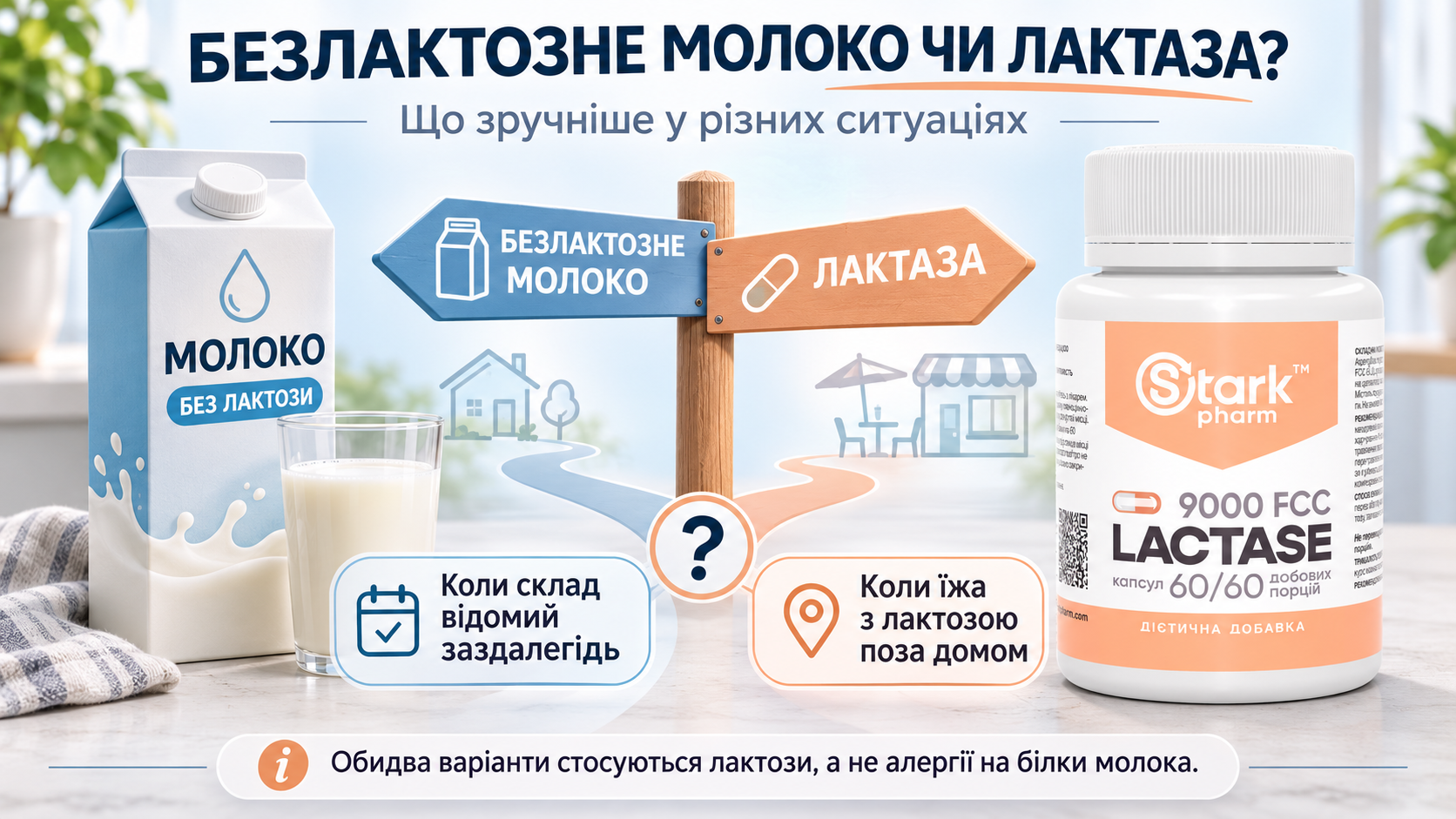
What is more convenient at home, in a cafe and while traveling
At home. If a person uses milk every day for porridge, coffee or baking, a package of lactose-free milk provides a clear and repeatable choice. There is no need to determine the enzyme activity each time before a specific cup of drink. But when another dish contains cream, ice cream or milk sauce, replacing only the milk in the refrigerator does not change its composition.
In a cafe. An establishment may offer lactose-free cow's milk for coffee, but this does not mean that the dessert, syrup, cream or ready-made cream is also lactose-free. Asking the staff about the ingredients helps to assess the composition. Enzyme in a convenient form can be an alternative only when its use is appropriate and in accordance with the instructions.
When visiting. A person does not always know the recipe for a pie, sauce, or homemade dessert. In this case, it is important not to rely only on the name of the dish. For example, vegetable soup may contain cream, and ready-made pastries may contain powdered milk. With significant lactose sensitivity, it is more reliable to specify the composition and portion size.
On the go. Lactose-free products aren't always available in stores or cafes; a take-home enzyme is potentially more flexible. However, it doesn't automatically make an unfamiliar dish suitable, especially when you don't know what other ingredients are causing the discomfort.
| Scenario | Which is often more convenient | What to check |
|---|---|---|
| Coffee with milk every day at home | Lactose-free milk | Composition and nutritional value of the drink. |
| Meals with various dairy ingredients outside the home | An enzyme may be handy | Instructions, dish composition and individual reaction. |
| Unfamiliar dessert | First, clarify the composition | Milk, cream, milk powder and other ingredients. |
| A famous milk drink labeled lactose-free | Ready-made lactose-free product | Are there any other reasons for discomfort? |
Is the nutritional value of lactose-free milk different from regular milk?
A review of A New Food Composition Database of Lactose-Free Products Commercialized in Spain shows that there are differences in nutritional composition and frequency of fortification among lactose-free products on the market. Therefore, it is wrong to compare “lactose-free” and “regular” simply as two identical formulas. For a fair comparison, take specific products of the same fat content and look at their labels.
For example, if a customer is choosing milk for a protein shake, the amount of protein per 100 ml, the calorie content and the fat content are important. If it is a diet with a small amount of dairy products, it is also worth paying attention to the calcium and vitamin D on the label. The inscription "lactose-free" itself does not tell how much protein or calcium a serving contains.
Is it possible to combine both methods?
Such situations are possible: at home a person uses lactose-free milk, and when traveling or visiting a cafe he chooses an enzyme agent according to the instructions. But adding lactase to an already enzymatically processed drink usually has no obvious purpose if it is almost lactose-free. The meaning of any approach is determined by the actual content of milk sugar.
However, milk is only one component of the diet. If a person consumes cheese, yogurt, cream, ice cream, cookies, or sauces, the composition of these products should be considered separately. It is impossible to estimate the total amount of lactose per day from one drink.
In addition, some people tolerate small amounts of lactose with other foods without noticeable discomfort. This is not a rule for everyone and is not a recommendation to specifically increase your milk sugar intake. The goal is to learn to evaluate a specific portion and your own well-being, without unnecessarily giving up all sources of calcium or protein.
Why discomfort may remain even after reducing lactose
Bloating, rumbling, abdominal pain, or changes in bowel habits are not signs of a single food cause. The sensation is influenced by serving size, accompanying foods, intestinal sensitivity, and other circumstances. If discomfort persists after switching to lactose-free milk, this does not prove that the product was improperly manufactured or that more enzyme is needed.
Lactose intolerance and cow's milk protein allergy must be distinguished separately. Lactose-free cow's milk still contains cow's milk proteins. Lactase breaks down lactose but does not eliminate these proteins. If a rash, swelling, difficulty breathing, or other signs of an acute allergic reaction appear after consuming dairy products, urgent medical evaluation is required; if breathing is difficult, emergency care is required.
Prolonged, increasing, or unexplained digestive symptoms also require medical attention. It is especially important not to delay seeking medical attention if you experience unintended weight loss, blood in your stool, severe pain, or dehydration. Self-replacement of milk should not replace finding out the cause of such symptoms.
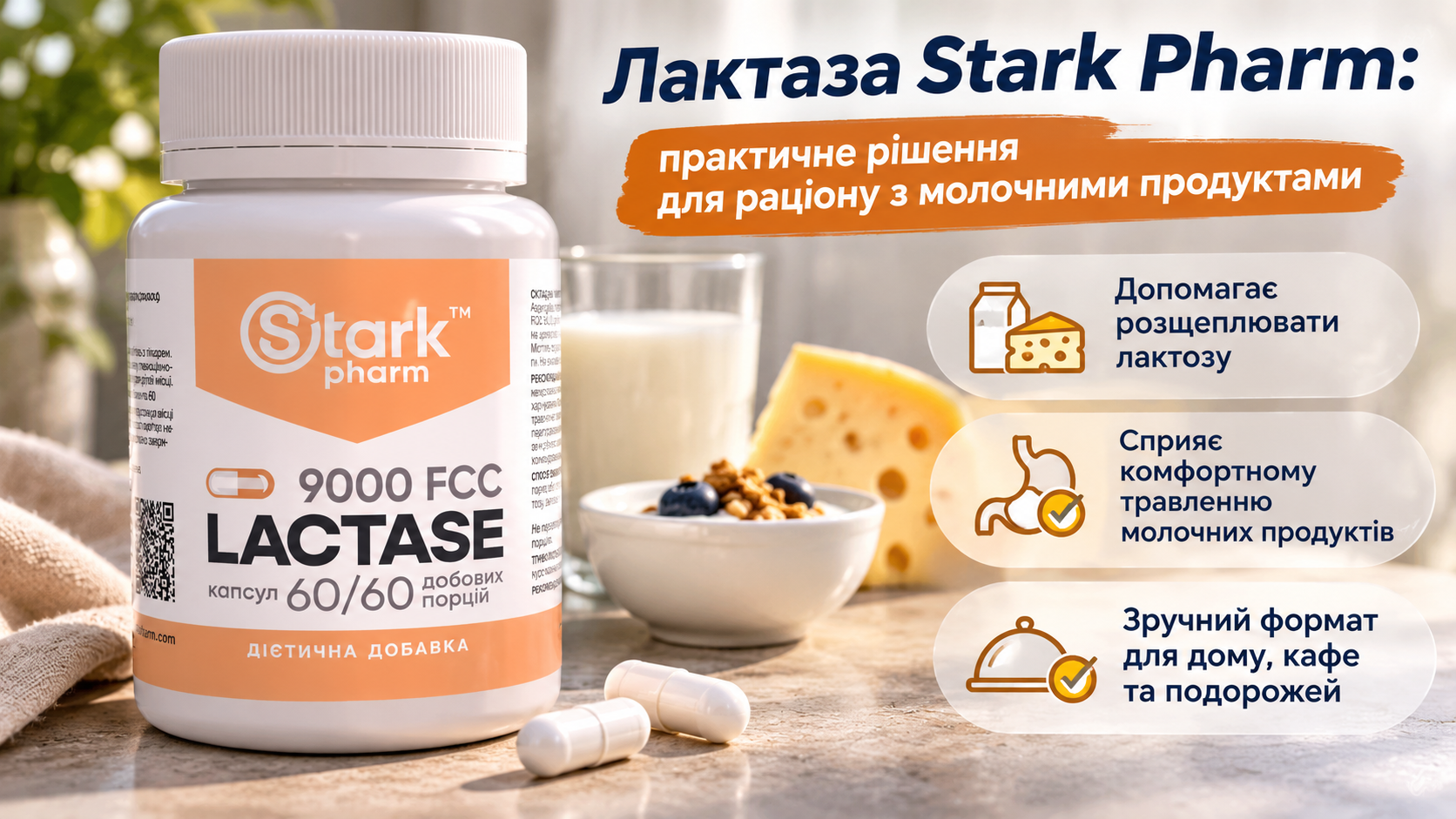
How to choose an option for your diet: a short algorithm
- Determine what is causing the discomfort. If the reaction is not related to lactose, both methods may not resolve the issue.
- Look at where you consume dairy products most often. At home, it's easier to switch up your regular drink; on the road, the availability of specialty products can be more difficult.
- Read the ingredients per serving. For a beverage, check the labeling and nutritional information; for a ferment product, check the activity and recommended method of use.
- Consider other dairy ingredients. Coffee with lactose-free milk does not mean that all desserts on the same menu are lactose-free.
- Maintain a balanced diet. If you limit dairy products, consider alternative food sources of calcium and other nutrients.
- Do not make independent conclusions based on one symptom. For persistent symptoms or signs of an allergy, consult a medical professional.
The practical comparison can be summarized as follows: lactose-free milk is a product with a pre-modified amount of milk sugar, and lactase is an enzyme that can be used with lactose-containing foods. The former is more convenient for a repetitive home scenario, the latter can be more flexible for a variety of meals outside the home. Neither option replaces careful attention to the composition of products and the reasons for individual reactions.
Frequently asked questions
How is lactose-free milk different from regular milk?
In lactose-free milk, the lactose is usually broken down by an enzyme or its content is significantly reduced. The proteins of cow's milk remain.
Can lactase replace lactose-free milk?
In some situations, the enzyme is used together with lactose-containing foods. The result depends on the activity of the enzyme, the amount of lactose, and individual characteristics.
What's more convenient for coffee at home?
For everyday homemade beverages, it is often easier to use milk with a known label and composition. This allows you to avoid having to evaluate a separate enzyme product each time.
Why does lactose-free milk taste sweeter?
When lactose is broken down, it produces glucose and galactose, which can create a sweeter taste without adding table sugar.
Does lactose-free milk contain carbohydrates?
Yes, enzymatic breakdown of lactose does not mean the disappearance of all carbohydrates. The exact amount should be checked on the label of a specific drink.
Can I use lactase with dairy dessert?
The possibility of using it depends on the instructions of the enzyme product and the composition of the dessert. If the ingredients are unknown, it is better to clarify them first.
Do I need lactase with already lactose-free milk?
If the beverage contains virtually no lactose, there is usually no obvious purpose in adding an enzyme. Ultimately, it comes down to labeling and individual circumstances.
Is lactose-free cow's milk suitable for people with milk protein allergies?
No. The absence of lactose does not mean the absence of milk proteins to which the immune system can react.
Do all enzyme products work the same?
No, they may differ in enzymatic activity, form of release, and instructions. It is incorrect to compare them based on the weight of the capsule alone.
When should you see a doctor?
If symptoms persist, worsen, there is unintended weight loss, or a reaction to milk proteins is suspected, medical evaluation is necessary. If breathing is difficult, emergency care is required.
Sources
- Shaukat A et al. (2010). Systematic review: effective management strategies for lactose intolerance. Annals of Internal Medicine. PubMed.
- Lactose-Free Dairy Products: Market Developments, Production, Nutrition and Health Benefits (2019). Nutrients. PubMed.
- Advances in Low-Lactose/Lactose-Free Dairy Products and Their Production (2023). Foods. PubMed.
- Effect of lactase on symptoms and hydrogen breath levels in lactose intolerance: A crossover placebo-controlled study (2021). JGH Open. PubMed.
- Enzyme replacement therapy for primary adult lactase deficiency (1984). Gastroenterology. PubMed.
- Effect of a single dose of lactase on symptoms and expired hydrogen after lactose challenge in lactose-intolerant subjects (1992). Clinical Pharmacy. PubMed.
- Update on lactose malabsorption and intolerance: pathogenesis, diagnosis and clinical management (2019). Gut. DOI.
- A New Food Composition Database of Lactose-Free Products Commercialized in Spain: Differences in Nutritional Composition as Compared to Traditional Products (2021). Foods. PMC.
- Nutritional management of lactose intolerance: the importance of diet and food labelling (2020). Journal of Translational Medicine. PMC.
Dietary supplement. Not a medicine. Consult a doctor before use.
Products related to this post
Related Posts
Comments
Information
Customer Service
Extras
My Account


Sports nutrition manufacturer in Ukraine StarkPharm © 2026


