Your shopping cart is empty!

Which vitamins and minerals should not be taken together: compatibility table
Published: 23/11/2026
Times Read: 36
Comments : 0
The combination of iron, calcium, zinc, and magnesium is often described as a set of strict prohibitions: as if the two minerals in one serving necessarily interfere with each other. In fact, the effect depends on the amount of the elemental mineral, the composition of the food, the form of the substance, the experimental conditions, and the condition of the person. Iron and calcium can interact during absorption, high amounts of iron can interfere with zinc absorption, and excessive zinc intake over a long period of time can impair copper availability.
Below is a practical compatibility table and an explanation of which combinations really require attention. This material does not suggest changing the prescription of drugs on your own: the most critical are often not the interactions of minerals with each other, but their simultaneous administration with certain medications.
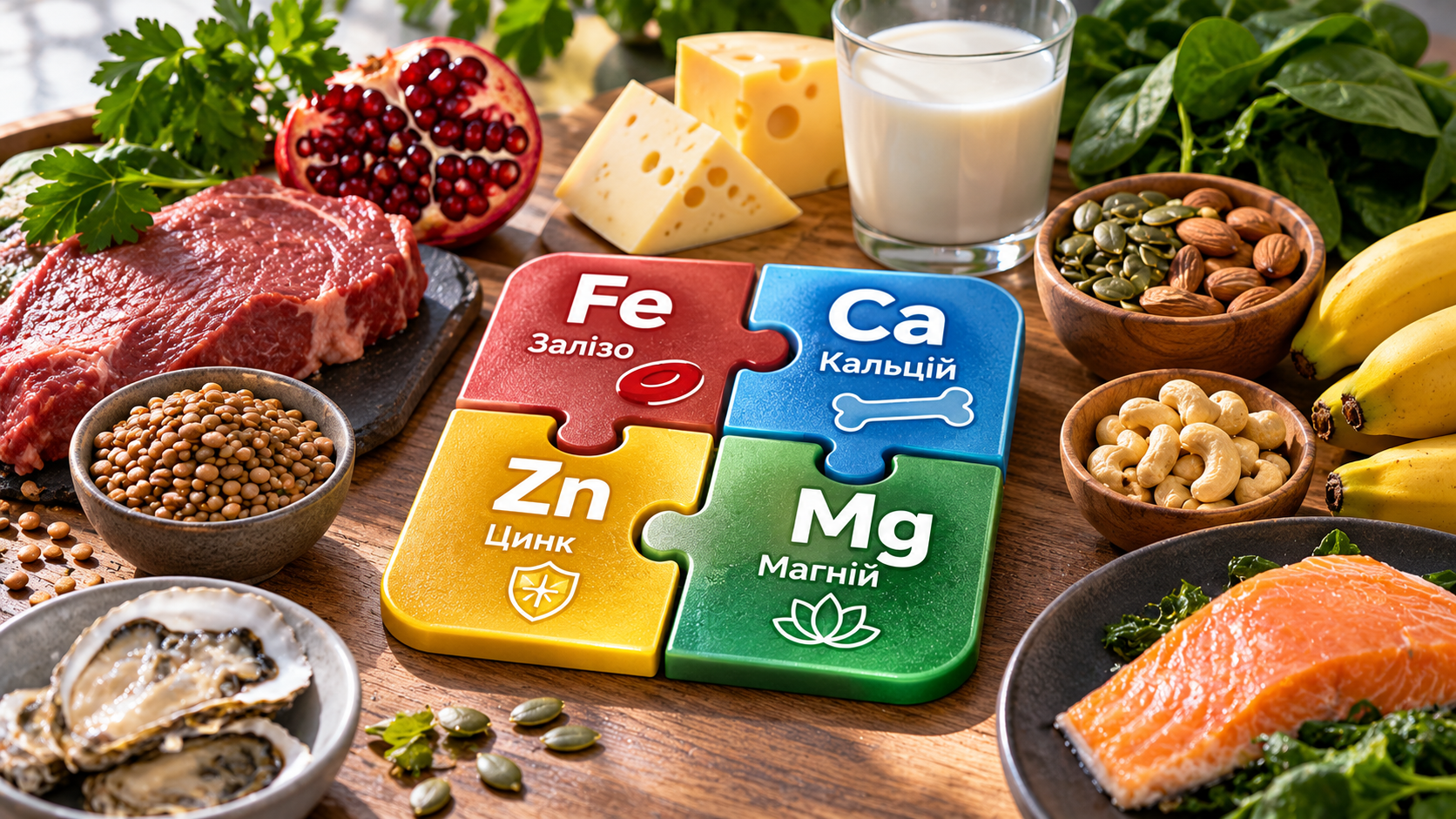
Why minerals sometimes affect each other's absorption
After ingestion, the compound must release the mineral and pass through the intestinal wall. This is influenced by solubility, pH, transport proteins, and binding of other substances in the intestine. If two substances affect one of these steps, the amount absorbed in a laboratory experiment may vary.
However, a decrease in absorption during a single intake does not always translate into a noticeable change in mineral stores after weeks or months. The overall balance is influenced by intake from different foods, body needs, adaptation, assimilation and losses. Therefore, the results of a short test with labeled isotopes should not be transferred without reservations to a normal diet.
It is also important whether you take a concentrated mineral supplement on an empty stomach or with a complete meal. In studies of iron-zinc interactions, the results have varied depending on the route of administration and the ratio of the components. So, the same advice does not fit all formulas and all scenarios.
Iron, zinc, calcium and magnesium compatibility table
| Combination | What is known | Practical guideline |
|---|---|---|
| Calcium + iron | Calcium sometimes reduces iron absorption during a single dose; long-term results are inconsistent. | It is more common to distribute certain concentrated supplements according to an agreed schedule. |
| Iron + zinc | Concentrated iron, especially on an empty stomach, can impair zinc absorption; the effect depends on the ratio. | Check the composition and do not duplicate high quantities in multiple products. |
| Zinc + copper | Prolonged excessive intake of zinc is associated with a decrease in copper availability. | The total amount of zinc and duration are important, not just the time between capsules. |
| Magnesium + calcium | For normal food quantities, there is no convincing universal prohibition on combining. | Focus on the tolerability and composition of a specific supplement. |
| Zinc + magnesium | The effect on magnesium balance has been described primarily for very high amounts of zinc. | Don't consider ordinary complexes automatically incompatible. |
| Vitamin C + Iron | Ascorbic acid helps the absorption of non-heme iron in food; the added benefit of a separate supplement is not always confirmed. | It is not necessary to add separate vitamin C without a justified need. |
| Iron + tea/coffee | Polyphenols in beverages may reduce the absorption of non-heme iron from food. | To optimize iron absorption, the composition of a particular meal is important. |
The “better to split” label means that there may be an interaction under certain conditions, not that a small amount of the mineral in a regular meal is useless. If a doctor has prescribed iron or another mineral, his instructions take precedence over the general table.
Calcium and Iron: Why a Short Test Doesn't Tell the Whole Picture
Calcium can reduce the absorption of both non-heme and heme iron in individual experiments. For example, Hallberg and colleagues examined different amounts of calcium and changes in iron absorption. Roughead and colleagues (2005) also studied the initial absorption and subsequent retention of heme and non-heme iron. Such studies help to see the interaction in a specific situation.
But studies with longer follow-up provide a different question: does the actual iron balance change with regular calcium intake? In a randomized trial, calcium supplementation over 34 days did not affect the estimated bioavailability of iron. Therefore, it would be incorrect to state that any dairy meal alongside an iron source will inevitably lead to a deficiency of the mineral.
The practical implication is that a person is receiving a separate concentrated iron supplement due to an established need. In such cases, the NIH ODS recommends considering the potential impact of calcium and taking these supplements frequently at different times. This is not a reason to completely eliminate calcium from the diet.
Iron and Zinc: When Competition Occurs
However, other studies have shown that the effect is not consistent across ratios. Olivares and colleagues (2007) in a study of non-heme iron absorption noted a dependence on the zinc to iron ratio. The food matrix and whether the concentrates are taken without food are also important.
The NIH ODS professional material states that supplements containing 25 mg of iron or more taken at the same time may reduce zinc absorption. This is provided as a context for possible interactions, not as an individual dosage recommendation. When purchasing multiple supplements, it is important to compare the total content of both minerals first.
Zinc and copper: why duration matters, not just the time of intake
Copper is involved in the function of enzymes that ensure iron utilization, connective tissue metabolism, and other processes. When zinc is consumed in excessive amounts over a long period of time, it can alter intestinal copper metabolism. One mechanism involves metallothionein, a protein that is able to retain copper in intestinal cells.
This is not a problem that can be solved by simply switching one pill from morning to evening. If the total zinc intake is systematically too high, a few hours' gap will not eliminate the risk. According to the NIH ODS, long-term consumption of large amounts of zinc can reduce copper availability. Therefore, it is important to consider all products, including multivitamins, mono-supplements, and fortified mixtures.
A decrease in copper supply can have serious consequences, so when using concentrated supplements for a long time, it is advisable to discuss the diet and composition with a specialist. It is not a safe strategy to independently add another high-dose supplement “for balance”.
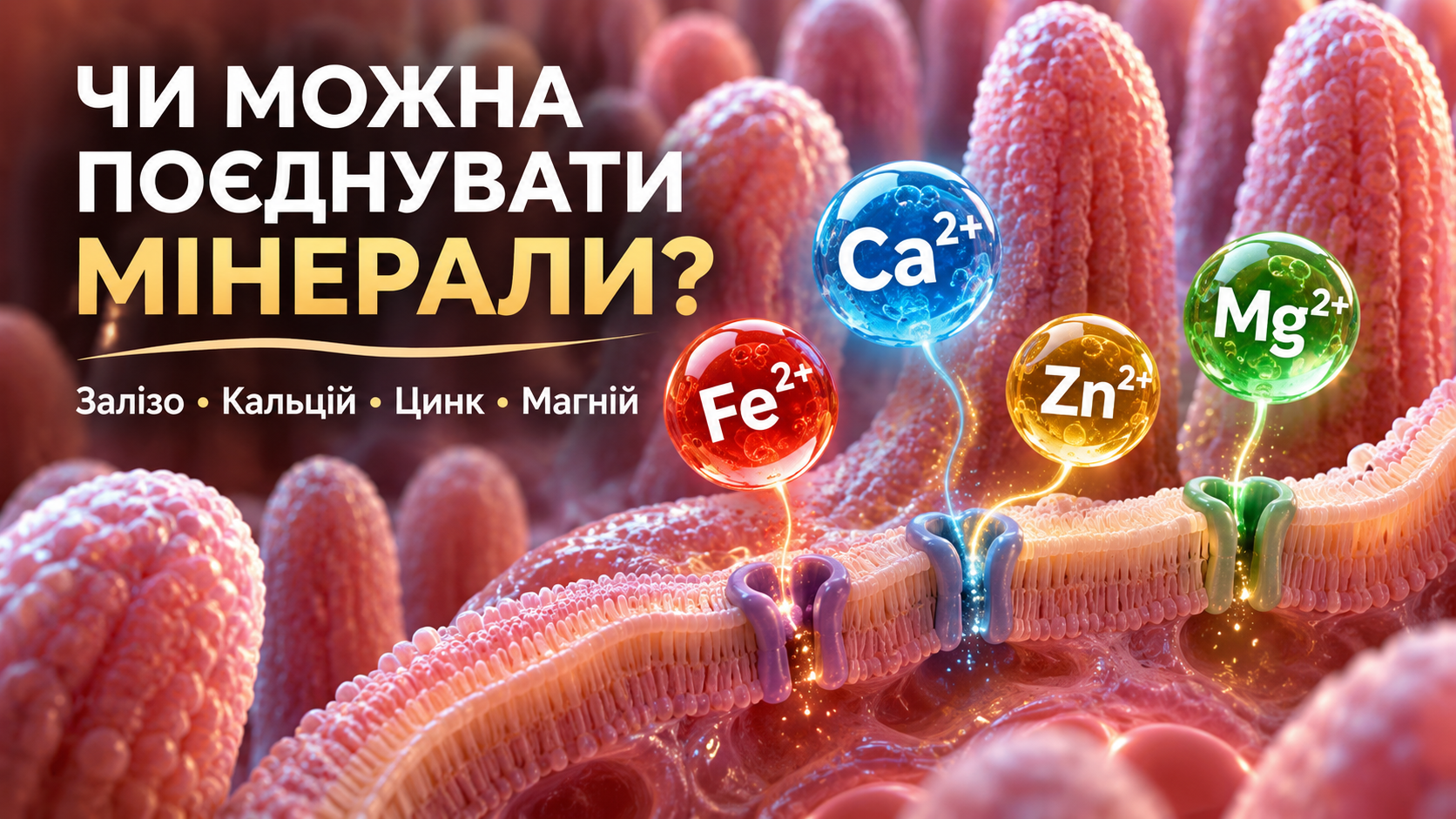
Calcium and magnesium: can they really not be taken together?
In the diet, calcium and magnesium are often naturally present in the same foods. The body has mechanisms to regulate the absorption of each mineral, and the data do not support a universal rule that they always block each other. Therefore, categorical schemes such as “calcium only in the morning, magnesium only in the evening” do not have sufficient scientific justification for all people.
Some people tolerate magnesium supplements better with food; certain forms may cause loose stools in higher amounts. Calcium forms also vary: carbonate is more dependent on an acidic environment than citrate. It is more practical to check the form and instructions rather than automatically banning combination products.
If a person is taking medications for medical purposes, evaluating individual interactions is more important than general considerations about competition between calcium and magnesium.
Zinc and magnesium: when to pay attention to the amount
Sometimes it is written on forums that zinc and magnesium must be taken with a large interval. For usual amounts in a balanced diet, there is no such requirement. Observations about the possible negative effect of zinc on magnesium balance relate primarily to very high zinc intake, and not to any joint capsule.
In the actual assessment of the composition, it is worth looking not only at the name of the complex. The inscriptions “zinc glycinate” or “magnesium citrate” sometimes describe the mass of the entire compound; the content of the corresponding elemental mineral is decisive. It is also necessary to take into account the repetition of these substances in other products.
Vitamin C and iron: should they always be combined?
Ascorbic acid can improve the solubility and absorption of non-heme iron from plant foods. Therefore, vegetables and fruits containing vitamin C naturally complement meals with legumes or grains. This is a well-known dietary mechanism, but it should not be confused with the need to constantly buy a separate vitamin C supplement.
In a randomized trial by Li et al. (2020) of 440 adults with iron deficiency anemia, the addition of vitamin C to oral iron did not provide a clinically meaningful benefit on key measures compared to iron alone. This is a result of the specific clinical population and does not negate the nutritional effect of ascorbic acid on non-heme iron.
A sensible approach is to consider the combination of vitamin C with dietary sources of iron as a feature of the diet. The issues of individual iron preparations and their combinations should be addressed based on established need.
Coffee, tea, phytates and food composition: not just the interaction of capsules
Substances in food can affect mineral absorption. Phytates from legumes and whole grains bind some metals in the gut. Polyphenols in tea and coffee can reduce the absorption of non-heme iron from food. However, plant foods contain many beneficial nutrients, so there is no need to eliminate them from your daily diet.
Soaking, fermentation, and other cooking methods sometimes reduce the amount of phytate. The presence of meat, fish, or foods with vitamin C can alter the absorption of iron. Therefore, an isolated interaction table cannot fully predict the benefits of a particular food intake.
If you have an iron deficiency or specific dietary restrictions, it is appropriate to discuss a holistic diet with a specialist, rather than simply rearranging the capsules in your daily schedule.
Some antibiotics form complexes with divalent or trivalent minerals, which can reduce their absorption. Calcium, magnesium, iron, and zinc can interact with certain drugs from the tetracycline and fluoroquinolone groups. You cannot transfer one interval to all drugs: it depends on the specific drug and instructions.
Calcium and iron supplements may also interfere with the absorption of levothyroxine. For some bisphosphonates, it is important to take them separately from magnesium supplements. The official NIH ODS materials describe such interactions, but the exact scheme should be checked with the instructions for the prescribed drug.
| Drugs | Potentially important interaction | What to do |
|---|---|---|
| Some tetracyclines and fluoroquinolones | Calcium, magnesium, iron, and zinc can impair the absorption of the antibiotic. | Check the interval in the specific instructions; agree it with the pharmacist. |
| Levothyroxine | Calcium and iron may reduce its absorption. | Do not change the assigned schedule without approval. |
| Some oral bisphosphonates | Magnesium and other minerals may impair absorption. | Follow special rules for using the drug. |
If you need to take both medication and dietary supplements, it is important to show your doctor or pharmacist the entire list of medications. You should not reduce the amount of medication or postpone the dose to another day on your own.
How to read the composition of the complex and not make a mistake with the amount of minerals
One package may say “magnesium bisglycinate,” another may say “magnesium (from bisglycinate).” These are different formats for presenting the composition. It is necessary to determine whether the mass of the entire compound or that of elemental magnesium is indicated. A similar difference applies to iron, zinc, and calcium. Unless this is clearly explained, it is incorrect to directly compare the figures for different products.
The second step is to find the serving size. One product may list the contents for one pill, another for two or three. The third is to check to see if an ingredient is repeated in a multivitamin, sports blend, and individual capsule. It is the total amount, not the number of cans, that determines the actual intake.
| On the label | What to check | Why is it important? |
|---|---|---|
| Name of chemical form | Is it citrate, oxide, bisglycinate, or another compound? | The shape affects the properties and the way in which quantity is indicated. |
| Amount of mineral | Is elementary content marked? | The mass of a compound is not identical to the mass of an element. |
| Portion | How many units make up the specified serving? | Comparisons should be made on the same basis. |
| Additional components | Are there any vitamins or other minerals? | They may duplicate substances from another supplement. |
| Reservation | Age restrictions, special conditions, medications. | Give important terms of use. |
How to organize the use of multiple supplements without unnecessary restrictions
Start with the goal: is there a proven need for a particular mineral, or is it just a simple desire to “add for support.” Be especially careful with iron: supplementing without an established reason is not universally beneficial. In cases of confirmed deficiency, the schedule is selected taking into account the person’s condition, tolerance, and concomitant medications.
Then, compile all the labels into one list. List the basic amounts, number of servings, medications, and meal times. This will help you see any overlap before you need to change your schedule. If two concentrated medications may interact, a convenient interval can be agreed upon with your healthcare professional. For a simple combination with no significant interactions, there is no need to complicate the schedule.
Trying to spread everything out as much as possible can worsen regularity and create a false sense of control. In practice, it is more important to read the ingredients correctly, not to exceed the recommended serving size, to take medications into account, and not to replace a complete diet with a set of individual components.
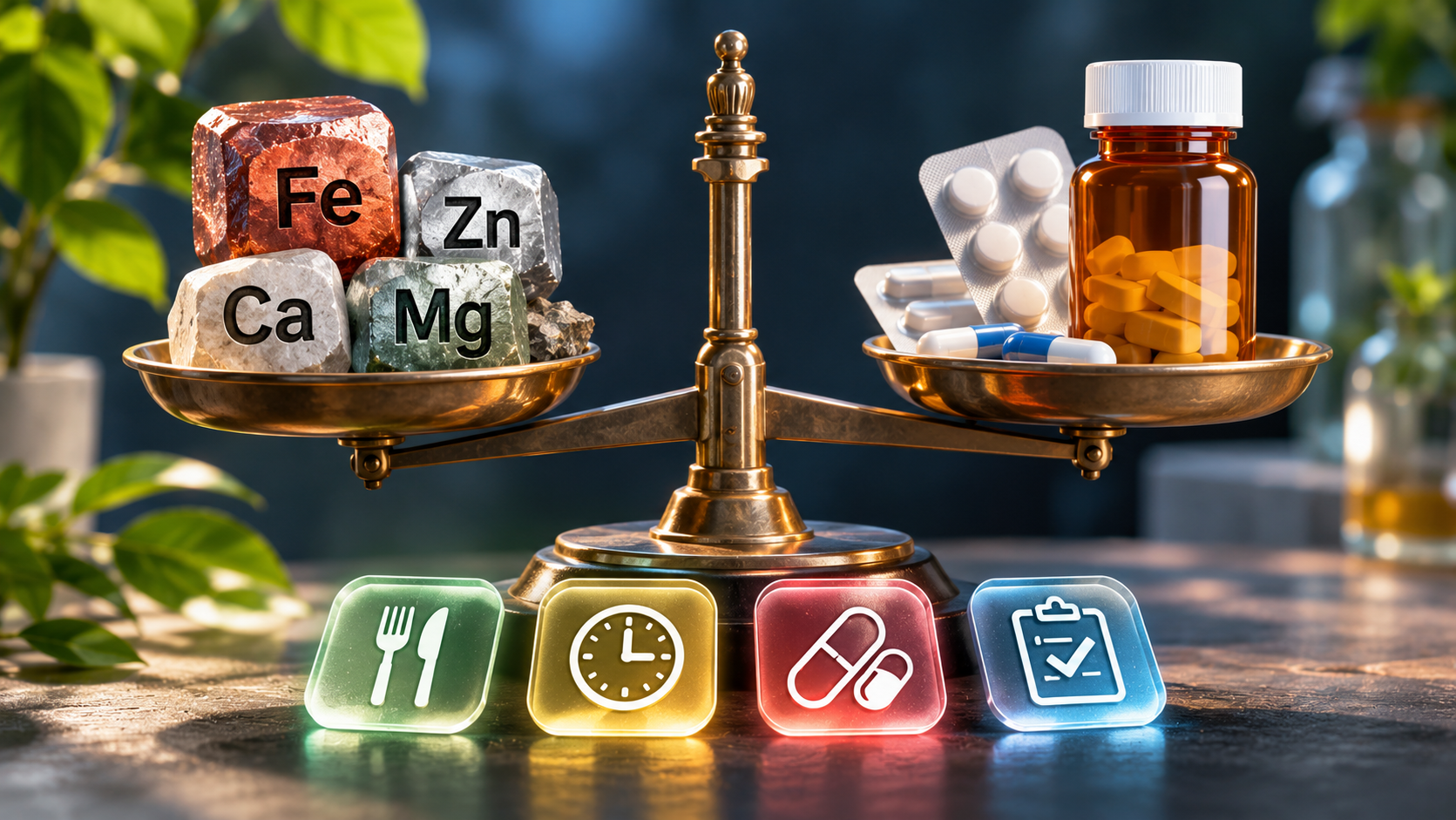
Common mistakes when evaluating compatibility
- Absolute prohibition regardless of quantity. Regular food with calcium and iron is not equal to concentrated preparations on an empty stomach.
- Confusion between short test and long observation. A one-time decrease in absorption does not always mean a deterioration in reserves.
- Ignoring medications. The interaction of a mineral with an antibiotic may be more significant than the interaction of two supplements.
- Comparison of the mass of salts. 1000 mg of a compound does not necessarily contain 1000 mg of the elemental mineral.
- Duplication in complexes. The total composition of all additives is important.
- Independently changing the regimen. Prescribed medications should not be canceled or postponed based on general advice from the Internet.
So, the question “which minerals cannot be taken together” should be replaced with a more precise one: what forms and amounts can interact in my situation? For calcium and iron or high amounts of iron and zinc, there are reasons to consider the conditions of intake. For the usual combination of calcium with magnesium, there is no universal prohibition. And if there are medications, the first check should be their instructions.
Frequently asked questions
Can calcium and magnesium be taken together?
There is no convincing general prohibition for normal amounts. Form, tolerability, and other medications are important.
Why is iron often recommended to be taken separately from calcium?
Calcium can reduce iron absorption when taken alone. Certain highly concentrated supplements should be taken according to the instructions.
Can I take iron and zinc at the same time?
High amounts of iron may reduce zinc absorption, especially when taken simultaneously on an empty stomach. Dosage and conditions of use should be evaluated.
Is it true that zinc lowers copper levels?
Prolonged excessive zinc intake can impair copper availability. The problem is related to the total amount, not just the timing of intake.
Is it necessary to take zinc and magnesium at different times?
There is no universal requirement for normal amounts. Data on adverse effects mainly relate to very high zinc intakes.
Do I always need to add vitamin C to iron?
Ascorbic acid helps absorb non-heme iron from food, but a separate vitamin C supplement is not needed by everyone.
Does coffee interfere with iron absorption?
Coffee polyphenols may reduce the absorption of non-heme iron from food. The effect depends on the composition and conditions of intake.
Can I take minerals with antibiotics?
For some antibiotics, calcium, magnesium, zinc, and iron can interfere with absorption. You should check the instructions for the specific drug.
How do I determine the amount of magnesium or zinc on a label?
Look for the elemental content of the mineral per serving. The mass of the entire compound is not equal to the mass of the mineral.
Do I need to separate all vitamins and minerals by hours?
No. Separation only makes sense for specific interactions or when instructed; an overly complex schedule is not always helpful.
Sources
- National Institutes of Health, Office of Dietary Supplements. Iron: Fact Sheet for Health Professionals. NIH ODS.
- National Institutes of Health, Office of Dietary Supplements. Zinc: Fact Sheet for Health Professionals. NIH ODS.
- National Institutes of Health, Office of Dietary Supplements. Calcium: Fact Sheet for Health Professionals. NIH ODS.
- National Institutes of Health, Office of Dietary Supplements. Magnesium: Fact Sheet for Health Professionals. NIH ODS.
- Roughead ZK et al. (2005). Inhibitory effects of dietary calcium on the initial uptake and subsequent retention of heme and nonheme iron in humans: comparisons using an intestinal lavage method. American Journal of Clinical Nutrition. PubMed.
- Hallberg L et al. (1991). Calcium supplementation: effect on iron absorption. American Journal of Clinical Nutrition. PubMed.
- One-month of calcium supplementation does not affect iron bioavailability: a randomized controlled trial. (2013). Nutrition. PubMed.
- Troost FJ et al. (2003). Iron supplements inhibit zinc but not copper absorption in vivo in ileostomy subjects. American Journal of Clinical Nutrition. PubMed.
- Olivares M et al. (2007). Zinc inhibits nonheme iron bioavailability in humans. Biological Trace Element Research. PubMed.
- Studies on the bioavailability of zinc in humans: mechanism of the intestinal interaction of nonheme iron and zinc. (1983). Journal of Nutrition. PubMed.
- Calcium and zinc decrease intracellular iron by decreasing transport during iron repletion in an in vitro model. (2017). PubMed.
- Li N et al. (2020). The Efficacy and Safety of Vitamin C for Iron Supplementation in Adult Patients With Iron Deficiency Anemia: A Randomized Clinical Trial. JAMA Network Open. PubMed.
- Lynch SR. (2002). The effect of calcium consumption on iron absorption and iron status. European Journal of Clinical Nutrition. PubMed.
Dietary supplement. Not a medicine. Consult a doctor before use.
Products related to this post

Related Posts
Comments
Information
Customer Service
Extras
My Account


Sports nutrition manufacturer in Ukraine StarkPharm © 2026


