Your shopping cart is empty!

500 mg of magnesium on the label: how much of the mineral is actually in the supplement?
Published: 24/11/2026
Times Read: 31
Comments : 0
The label “500 mg” on a mineral supplement doesn’t tell you exactly how much magnesium, calcium, zinc, or iron is in a serving. The number could be describing the mass of the active ingredient, the mass of its chemical compound, or the amount of a mixture. Confusion arises when a consumer compares these three different metrics as one.
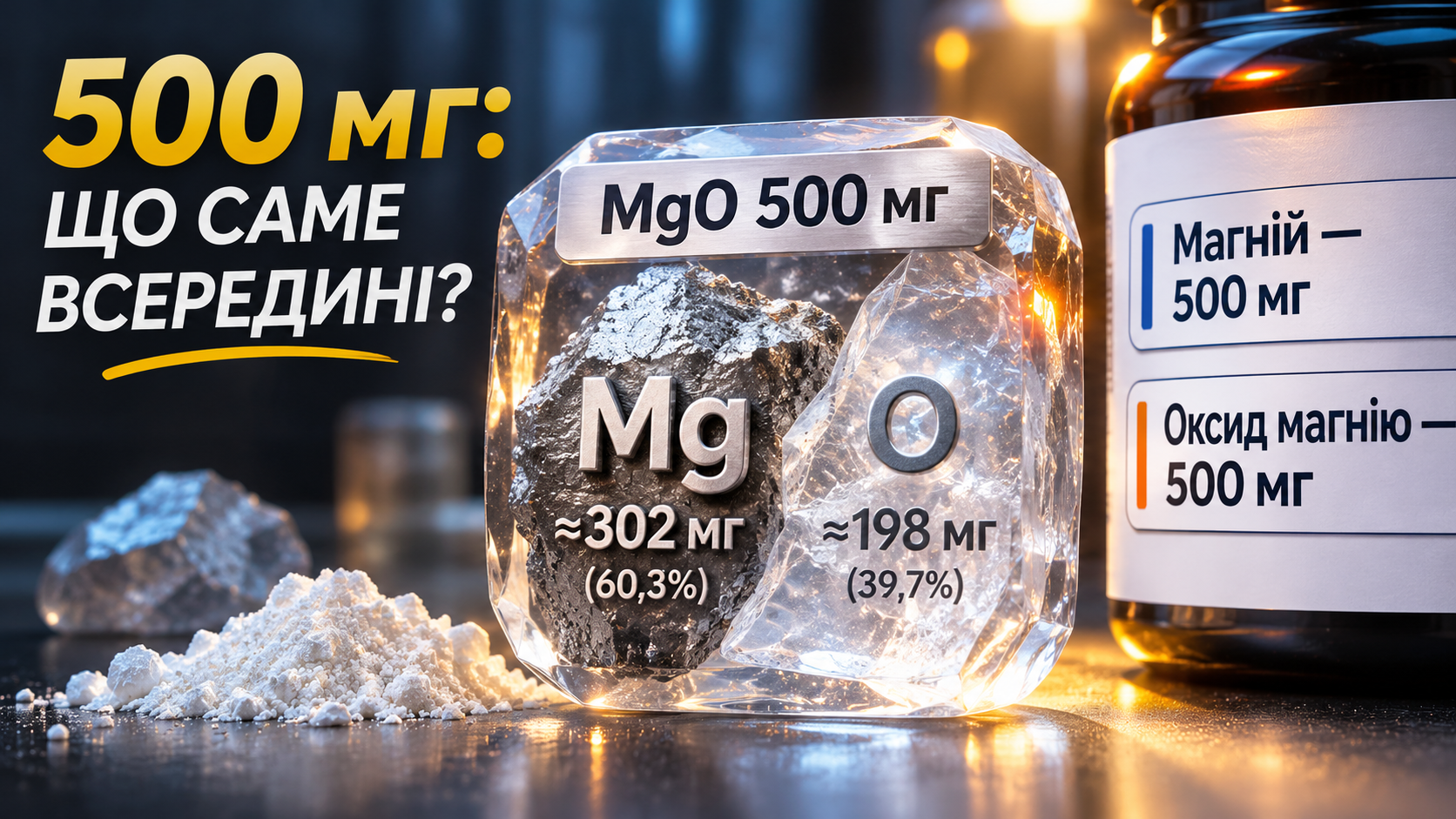
Let's consider a practical example: “Magnesium (in the form of oxide) — 500 mg” and “Magnesium oxide — 500 mg” are not the same labels. In the first case, if the data is presented correctly, 500 mg refers to magnesium as an element; in the second — to the mass of the entire compound. According to the NIH Office of Dietary Supplements, the American Supplement Facts table for magnesium indicates elemental magnesium. But free advertising text outside the table should be interpreted with caution.
Elemental Mineral and Its Salt: What Exactly Are We Comparing?
Magnesium, zinc, calcium, and iron are often found in supplements as salts or other compounds: citrates, gluconates, oxides, bisglycinates. Part of the mass of such a compound is due to the atoms of the mineral, the rest to other elements of the molecule. That is why 1000 mg of a substance does not mean 1000 mg of the corresponding mineral.
The term “elemental” in this context means the mass of the chemical element itself within the compound. It is not a separate grade of magnesium and is not synonymous with “better absorption.” Imagine two packages containing 1000 mg of different salts: the amount of mineral in them may differ even with the same mass of powder.
When the label says “magnesium (from magnesium citrate),” the main reference should be the line with the amount of magnesium per serving. The name of the form helps to understand the source of the mineral. When comparing two products, read both parts of the label, not just the largest number on the front of the package.
Three labels with the number 500 mg: do they have the same content?
| Example of inscription | What does the number mean? | How to interpret it |
|---|---|---|
| "Magnesium — 500 mg (in the form of oxide)" | Amount of elemental magnesium | If this is a correctly filled out composition table, the mineral is listed at 500 mg. |
| "Magnesium oxide - 500 mg" | Mass of the compound MgO | Theoretically about 302 mg Mg in 500 mg of pure oxide |
| "Mineral complex - 500 mg" | Mixture weight | It is impossible to determine the quantities of individual minerals without detailing |
| "Magnesium bisglycinate — 500 mg" | Mass of the named raw material | The exact Mg yield depends on the confirmed composition of the raw material |
The examples provided are illustrative, not photos of specific products. Their purpose is to show the difference between grammatically similar lines. If the inscription is unclear or the amount of an elemental mineral is not listed separately, it is worth looking for the full composition table and raw material specification, rather than drawing conclusions from the name.
Also, pay attention to the unit of measurement: 500 mg is half a gram, and 500 mcg is only half a milligram. For complexes with several substances, mixing mg and mcg can give a thousandfold error. The percentage of the reference intake value is also not the percentage of the mineral in the entire compound.
How to calculate an elemental mineral if the formula of the compound is known
The theoretical calculation is based on the molecular weight. For a compound, the total mass of atoms of all elements is known; the fraction attributable to magnesium, zinc, calcium or iron is separately found. This fraction is multiplied by the specified mass of the pure compound. The calculation is not a measurement of the finished additive: commercial raw materials may contain water of crystallization, other salts or technological components.
Example for magnesium oxide. The MgO molecule contains one Mg atom and one O atom. The molar mass of Mg is approximately 24.3, and O is 16.0; therefore, the Mg fraction in pure MgO is approximately 24.3 / 40.3 = 60.3%. If the MgO powder is exactly 500 mg, the theoretical yield is 500 × 0.603 ≈ 302 mg of elemental Mg. This is a mathematical example, not a guideline for the amount of additive.
Example for calcium carbonate: According to the NIH ODS, this compound contains about 40% calcium by weight. Accordingly, 500 mg of pure carbonate contains about 200 mg of calcium. In contrast, for calcium citrate, the NIH ODS gives about 21% elemental calcium, meaning that from the same 500 mg of salt, we get about 105 mg. The conclusion is that the same weight of salt does not guarantee the same content of the element.
Why the percentage of a mineral does not equal its digestibility
The tabulated 60% for magnesium oxide describes the chemical composition, not the fraction that the body will absorb. Elemental content, solubility, and bioavailability are three different characteristics. Solubility depends on the compound, digestive conditions, and food; actual absorption also depends on the individual condition of the person.
That is why it is incorrect to choose a supplement according to the rule “the higher the percentage of magnesium in the compound, the better the product”. The oxide has a higher mass fraction of Mg, but this does not establish advantages in terms of absorption. To compare the forms of magnesium, separate clinical studies are needed, and to read the label, a reliable amount of the element per serving. These tasks should not be mixed.
Also, you should not automatically conclude from the percentage about tolerability. It depends on the quantity, form, accompanying ingredients and individual characteristics. The composition table does not provide complete information about the body's reaction to a particular product.
For magnesium, “mass bisglycinate” and “magnesium bisglycinate” are often confused. There are differences in the starting materials on the market, particularly in terms of hydration and combinations with other compounds. Without a confirmed specification, one percent cannot be substituted for any powder labeled “magnesium chelate.”
The situation is similar with citrate: there are different chemical and hydrated forms. The calculation according to the anhydrous formula does not necessarily correspond to a powder with a different amount of water of crystallization. Therefore, at the level of the finished label, look for exactly “Magnesium — ... mg”, and if in doubt, ask the manufacturer for clarification. A detailed table of individual magnesium salts is a separate topic; here the main emphasis is on how to avoid mistakes when buying.
Another common situation is when the number on the front of the package is for one capsule, while the nutritional information is for two. In this case, comparing the labels of two products without converting them to the same serving size is incorrect. Be sure to look for the line “Quantity per serving” and the number of capsules in it.
Zinc, calcium and iron: the same principle for different minerals
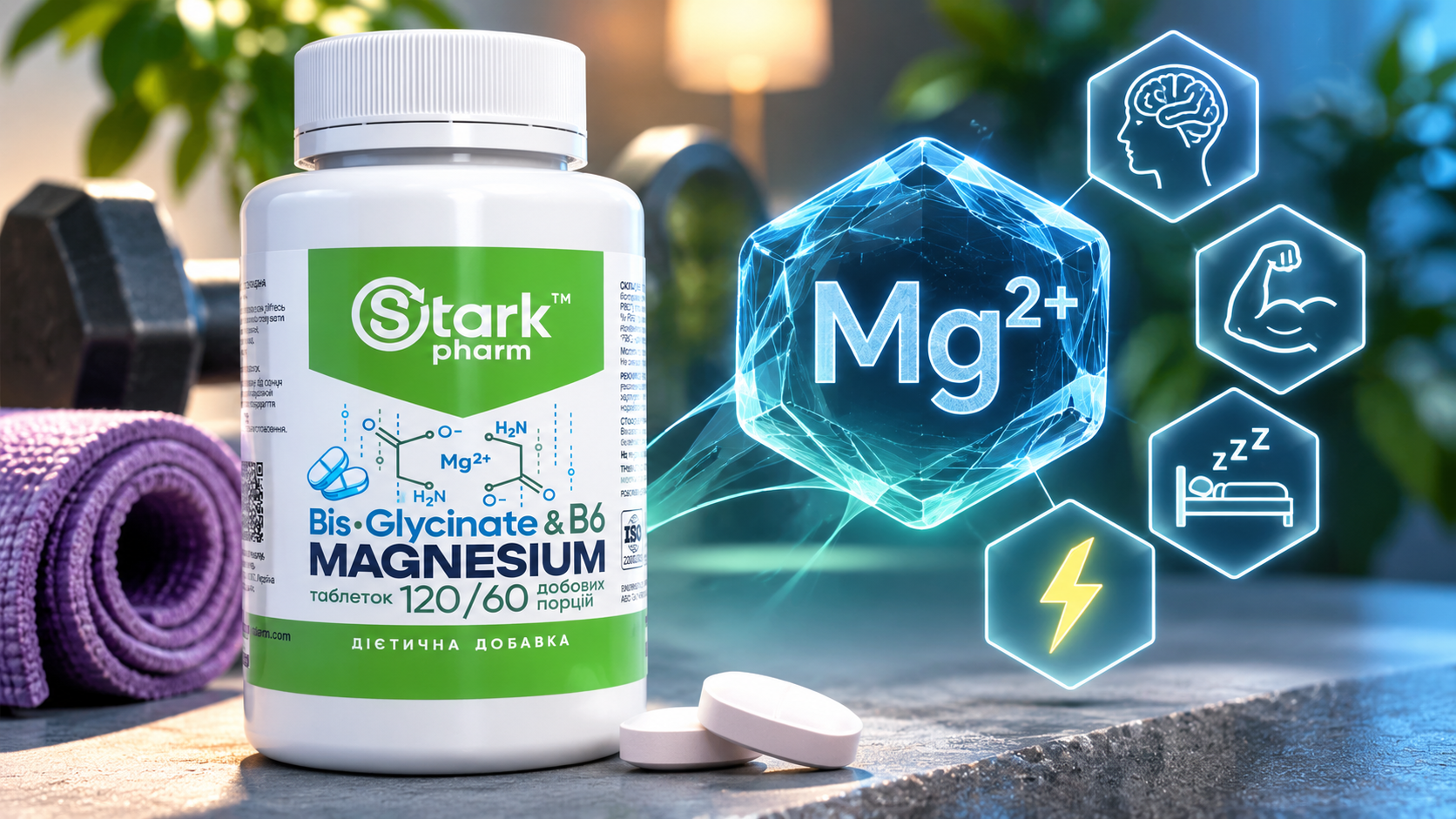
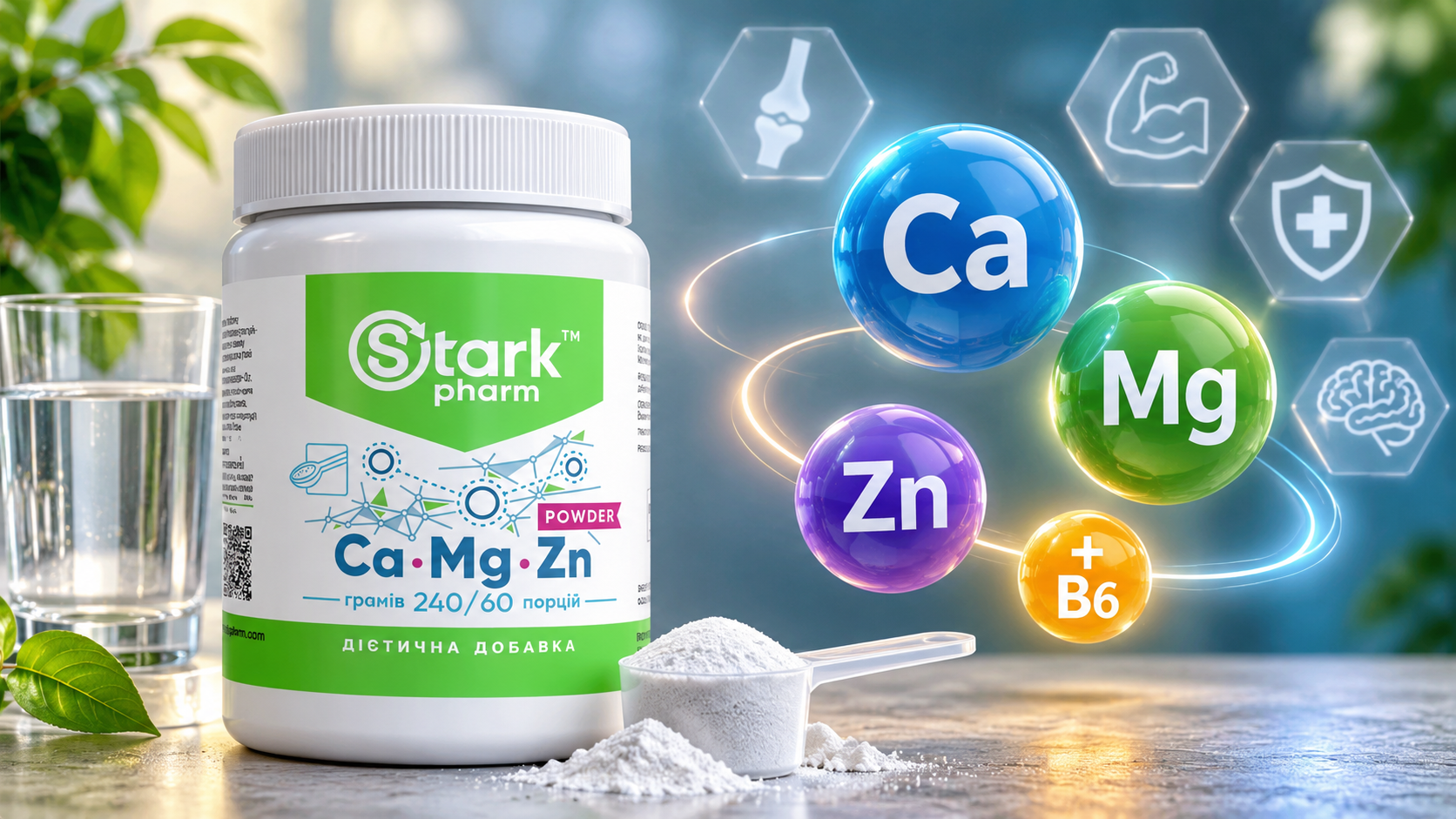
NIH ODS notes that the US Supplement Facts list elemental zinc, not the total mass of the compound. For iron, an indicative range can be given: according to NIH ODS, ferrous fumarate contains about 33% elemental Fe, sulfate — 20%, gluconate — 12%. These figures illustrate the principle of different mass fractions and do not mean that all three forms are equally absorbed.
| Substance | Example form | Approximate element fraction | Conditional calculation for 500 mg of pure compound |
|---|---|---|---|
| Calcium | Carbonate | 40% Ca | About 200 mg Ca |
| Calcium | Citrate (NIH ODS example) | 21% Ca | About 105 mg Ca |
| Iron | Ferric fumarate | 33% Fe | About 165 mg Fe |
| Iron | Ferric sulfate | 20% Fe | About 100 mg of Fe |
| Iron | Ferric gluconate | 12% Fe | About 60 mg of Fe |
| Zinc | Various compounds | Depends on the chemical form | Need a specific formula or label |
The figures for calcium and iron are taken from the NIH ODS; they are rounded and for illustrative purposes only. They should not be used to determine your own intake, especially for iron. The actual label values take precedence over the simplified calculation from the common salt name.
In a complex supplement "zinc + copper" two separate quantities of elements may be indicated, while the mass of the tablet mixture is much larger. You cannot subtract one number from another and get the amount of pure filler: the total mass includes auxiliary components, the shell and other substances.
Amount per capsule and amount per serving are not the same thing
Tables may indicate the composition per capsule, two tablets, one measuring spoon, or daily serving. Comparisons only make sense after the numbers are brought to the same base. If one label gives 100 mg of an elemental mineral in one capsule, and another gives 200 mg in two capsules, then according to this indicator their concentration per unit is the same.
Powders require extra attention: “one scoop” does not always mean a fixed mass without weighing. An accurate label should state the weight of the serving in grams. Additionally, find out whether the amount of mineral indicated is for the entire measured portion or for a specific 100 g of the product.
Label design may vary in different countries. Therefore, you should not transfer the rule of the American Supplement Facts table to any advertising inscription in any place on the package. Compare the standardized composition table, and check the unclear inscription with the documentation.
What is the difference between the percentage of the reference consumption value
The designation “full reference intake (RV)” indicates that the amount of a nutrient in a serving corresponds to a set reference value. This does not mean that the entire mass of the capsule consists of that mineral, nor does it indicate how much of it will be absorbed. If it says “magnesium — 100 mg, 27% RV”, the mass of the element is still equal to the declared 100 mg.
For children, adults and certain groups, reference needs may vary. Therefore, the percentage on the label is a guideline for reading the composition, not an individual prescription. It is possible to compare products by the amount of an element and by percentage at the same time only after checking that both use the same appropriate reference bases.
How to read a multi-mineral complex
First, find a list of elements: calcium, magnesium, zinc, iron, and others. Then, opposite each, the amount per serving. Then, compare the names of the chemical forms, which are often given in parentheses. If the product contains several salts of the same mineral, the label may show the total amount of the element; you do not need to add the individual masses of the salts to it.
| What is visible on the label | The right question | Typical error |
|---|---|---|
| "Magnesium 150 mg, in two forms" | Is this the total Mg per serving? | Add up to 150 mg more of both salts |
| "Calcium 200 mg, citrate" | For one or two pills? | Compare with another portion |
| "Iron 20 mg" | Is this an element, not a mass of a compound? | Consider 20 mg as the mass of all salt. |
| "Mineral mixture 1000 mg" | Are individual quantities disclosed? | Consider 1000 mg as the mass of each mineral |
| "Full RVS" | What quantity of the element is given next to it? | Confusing RVS with assimilation |
Complex formulas sometimes contain the same ingredient in different forms. For example, iron may be included in a separate supplement and a multivitamin. When estimating total intake, the stated amount of the element in each product is taken into account, not the number of salt names. This is important to avoid unintentional duplication of ingredients.
Algorithm for comparing two additives: six simple steps
Step 1. Find the full ingredient list for both products, not just the big words on the packaging. Step 2. Check the serving size: one capsule, two tablets, a certain number of grams of powder. Step 3. Find the amount of the mineral itself, if it is listed separately.
Step 4. Read the name of the compound, but do not substitute it for the element value. Step 5. Check if the product contains other minerals or vitamins that overlap with the rest of the supplements. Step 6. If necessary, check with the manufacturer for the raw material specification or method for determining the elemental content.
It is also useful to compare the number of servings and the actual price for the same amount of the element. However, a cheaper conditional “price per 100 mg” does not automatically make different chemical forms clinically equivalent. The choice also depends on the composition, tolerability and purpose of use, which are not described by a single number.
What not to do if the labeling is unclear
Do not guess the elemental content from advertising or automatically use a percentage from a random table on the Internet. This is especially true for bisglycinates, hydrated salts, multicomponent mixtures and preparations where the form is stated in general. The formula should correspond exactly to the raw material used.
Do not try to compensate for the label's ambiguity by increasing the number of capsules. Mistakes in mineral dosage can cause adverse reactions and drug interactions. For iron, the need for intake should be determined by medical indications, not just by the label on the percentage of absorption.
If the composition does not allow you to distinguish the mass of the compound from the mass of the mineral, you should find official instructions or contact the manufacturer. If the product has multiple packaging formulas or an updated label, the information about the actual batch that the buyer receives takes priority.
Quick reminder: how not to confuse 500 mg
| Audit | What to see |
|---|---|
| Item name | Namely "magnesium", "zinc", "calcium" or "iron" with the amount |
| Form name | For example, "in citrate form" or "from bisglycinate" |
| Serving size | How many capsules, tablets or grams does the indicator refer to? |
| Total composition | Is there no repetition of the same substance in other supplements? |
| Unintelligible entry | Search for a label, specification or manufacturer's clarification |
The main conclusion is simple: the 500 mg figure alone does not say enough. For a meaningful comparison, you need to know what exactly it measures, what portion it is per, and whether the form of the substance is confirmed. And scientific data on absorption are evaluated separately from the calculation of chemical mass.
Frequently asked questions
What is elemental magnesium?
This is the amount of magnesium as a chemical element within the compound. It is not equal to the mass of the entire salt.
Does 500 mg of magnesium oxide mean 500 mg of magnesium?
No. In pure MgO oxide, the theoretical proportion of magnesium is about 60.3%, so 500 mg of the compound contains approximately 302 mg of the element.
What does the inscription "magnesium 200 mg from citrate" mean?
In a properly compiled table, this means 200 mg of magnesium itself, and citrate is its chemical form. The serving size is checked separately.
Can magnesium be identified by the word "chelate"?
No. Without the specific composition and specification of the raw material, the exact amount of the element cannot be determined.
Why do calcium citrate and calcium carbonate have different numbers?
The compounds have different chemical formulas and mass fractions of calcium. The NIH ODS gives an estimate of 21% for citrate and 40% for carbonate.
Does a higher percentage of a mineral equal better absorption?
No. The mass fraction of an element and bioavailability are different indicators.
How do you compare two supplements with different serving sizes?
First, determine the amount of the element and the number of capsules or grams in one serving of each product. Only then compare.
What does the percentage of PVA on the label mean?
It shows the ratio to the reference intake value, not the proportion of the element in the compound or its digestibility.
How to account for a mineral in a complex supplement?
Look at the amount of each element per serving and consider it in other products as well. Do not add the mass of salts again to the already indicated amount of the element.
What to do if only the mass of salt is indicated?
Check the official composition table and raw material characteristics. Do not determine the intake amount only by the approximate chemical percentage.
Sources
- National Institutes of Health, Office of Dietary Supplements. Magnesium: Fact Sheet for Health Professionals. NIH ODS.
- National Institutes of Health, Office of Dietary Supplements. Calcium: Fact Sheet for Health Professionals. NIH ODS.
- National Institutes of Health, Office of Dietary Supplements. Zinc: Fact Sheet for Health Professionals. NIH ODS.
- National Institutes of Health, Office of Dietary Supplements. Iron: Fact Sheet for Health Professionals. NIH ODS.
Dietary supplement. Not a medicine. Consult a doctor before use.
Products related to this post

Related Posts
Comments
Information
Customer Service
Extras
My Account


Sports nutrition manufacturer in Ukraine StarkPharm © 2026


