Your shopping cart is empty!

Does magnesium help with stress: what studies show
Published: 15/11/2026
Times Read: 65
Comments : 0
Magnesium and stress are linked through nervous system function, communication between cells and the body's response to strain. Magnesium is essential for the normal functioning of the nervous system, but this does not mean that taking extra magnesium will necessarily reduce perceived stress. It is important to distinguish magnesium's physiological role, insufficient dietary intake and the results of clinical supplement trials.
Researchers have studied magnesium both alone and in combination with vitamin B6. Some findings are encouraging for particular groups, but conclusions are limited by small samples, different assessment methods and the absence of placebo groups in some important trials. Below, we examine what science actually shows about magnesium for stress, without promising a rapid or identical effect for everyone.

How magnesium is involved in nervous system function
Magnesium participates in hundreds of enzymatic processes, energy metabolism and maintenance of cellular electrical activity. Its role in regulating ion channels, transmitting signals and balancing excitation and inhibition is important for the nervous system. Magnesium interacts, in particular, with systems involving NMDA receptors, but a specific cellular mechanism should not be equated with a proven effect of a supplement on psychological well-being.
During a stress response, the body engages the autonomic nervous system and hormonal adaptation mechanisms. Researchers therefore ask whether magnesium stores affect the responsiveness of these systems. Yet even a biologically plausible mechanism needs to be tested in humans, using control groups and clearly defined outcomes.
According to the NIH Office of Dietary Supplements, insufficient magnesium intake can affect magnesium status, while a pronounced deficiency may be accompanied by various neuromuscular and other manifestations. However, an ordinary feeling of tension is not a specific sign of magnesium deficiency: it has many possible causes.
Can prolonged stress affect magnesium levels?
The scientific literature discusses a two-way relationship: magnesium status may influence the body's responses to stress, while prolonged tension may be accompanied by changes in diet, sleep and mineral metabolism. This is described as an association, not an automatically proven cause-and-effect cycle.
During stressful periods, people sometimes eat irregularly, skip balanced meals or change their usual diet. Such behavior can indeed alter magnesium intake. However, the claim that every stressful day necessarily “washes out” a certain amount of the mineral has no reliable universal numerical confirmation.
Another issue is determining magnesium status. Serum concentration does not always fully reflect the body's total magnesium, because most of the mineral is stored in bones and inside cells. It is therefore inappropriate to diagnose a deficiency independently from nonspecific symptoms.
Can magnesium supplements reduce perceived stress?
A systematic review by Boyle, Lawton and Dye (2017) summarized intervention studies of magnesium's effects on subjective anxiety and stress in adults. The authors identified possible positive signals in certain groups but emphasized the low quality and heterogeneity of the available evidence. Many studies tested combinations rather than magnesium alone, making the mineral's individual contribution difficult to isolate.
Thus, the phrase “magnesium helps with stress” needs qualification: for whom, with what initial magnesium status, measured by which scale and compared with what? Correcting dietary intake in someone who consumes too little magnesium is different from giving extra magnesium to someone already obtaining enough.
Later reviews also noted the diversity of studies assessing anxiety and sleep. Changes in subjective ratings do not always translate into clinically meaningful outcomes, and sleep findings should not automatically be interpreted as evidence of reduced stress.
Magnesium with vitamin B6: what an eight-week study found
One of the most frequently cited trials was published by Pouteau and colleagues (2018). It enrolled adults reporting considerable stress and with low or suboptimal serum magnesium. Participants were randomly assigned to two groups: one received 300 mg of magnesium daily, while the other received 300 mg of magnesium plus 30 mg of vitamin B6 daily. The trial lasted eight weeks.
Changes in the DASS-42 stress subscale score were assessed in both groups. Among participants with severe or extremely severe stress, the magnesium-plus-B6 combination produced a greater score reduction than magnesium alone. The authors reported a relatively greater change of 24% in that subgroup at week eight.
However, three major caveats are essential for interpreting the results correctly:
- There was no placebo group. Improvements over time cannot therefore be confidently attributed solely to magnesium: natural fluctuations in stress, expectation effects and other factors may have contributed.
- The combination's advantage concerned a defined subgroup. It should not be generalized to everyone regardless of initial stress severity.
- The study used magnesium lactate. Its findings are not direct evidence of an equivalent effect from bisglycinate, citrate or threonate.
These doses describe an experimental protocol, not a recommendation to replicate it independently. This is especially important for B6 combinations: the safety of additional vitamin intake depends on the total amount, duration and individual circumstances.
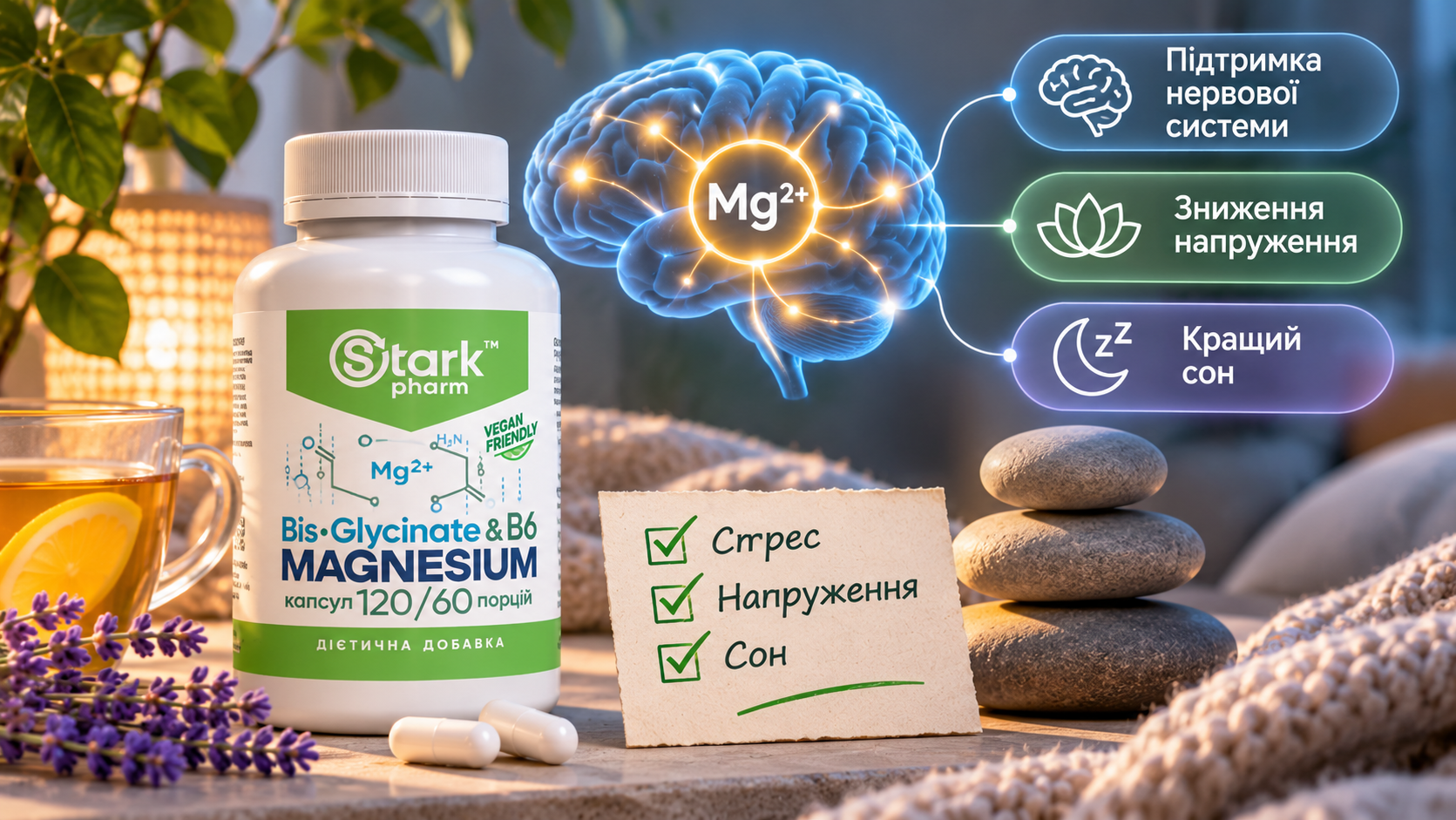
What additional analyses of the same trial taught us
Researchers later reanalyzed data from this eight-week trial. Noah and colleagues (2021) assessed a broader range of mental well-being and quality-of-life outcomes. Another secondary analysis explored magnesium status markers alongside changes in perceived stress.
Such analyses can clarify which specific outcomes changed, but they do not create a new independent sample. Several papers analyzing the same participants do not amount to several separate trials confirming an effect. The overall strength of evidence therefore remains limited.
The findings concerned adults with certain stress levels and specified laboratory markers. They cannot automatically be applied to children, pregnant women, people with chronic diseases or individuals without evidence of inadequate magnesium status.
Stress, anxiety and sleep problems are not the same
In everyday speech, “stress” may refer to fatigue, irritability, difficulty falling asleep and persistent worry. Studies, however, measure these phenomena using different scales. Perceived stress reflects how a person experiences demands; anxiety has its own psychological manifestations; and sleep quality is evaluated through duration, sleep onset, awakenings and well-being.
A 2024 systematic review of supplemental magnesium, anxiety and sleep examined heterogeneous outcomes across clinical studies. A positive finding on one scale does not demonstrate that a supplement changes all the other outcomes.
This distinction also matters for advertising headlines. Changes in self-reported outcomes in a specific group do not mean that magnesium “calms the nerves” for everyone, treats anxiety disorders or replaces professional help. Such claims require separate compelling studies.
Does the form of magnesium matter for stress?
Magnesium forms differ in chemical structure, solubility and certain absorption measures. In stress studies, however, the specific form, dose, duration and target outcome all matter. Consequently, data on magnesium lactate do not automatically prove an effect from bisglycinate or L-threonate.
| Form | What is known in this context | Limitations of the conclusion |
|---|---|---|
| Magnesium lactate | Used in the eight-week stress trial by Pouteau and colleagues | Without a placebo group, the independent effect of magnesium cannot be established |
| Magnesium bisglycinate | Studied for bioavailability, tolerability and certain sleep outcomes | This does not directly confirm stress reduction under the lactate protocol |
| Citrate and oxide | Examined in various absorption studies and studies of other outcomes | Comparisons of bioavailability do not establish effectiveness for stress |
| Magnesium L-threonate | A distinct form studied for specific outcomes | Cannot be equated with findings from the magnesium-plus-B6 trial |
The practical takeaway is simple: the name of a magnesium form does not by itself answer whether perceived stress will change. We need to examine which outcomes were actually measured in humans and whether the compound studied matches the one being discussed.
What determines the outcomes of magnesium studies?
First, participants' baseline condition. People with lower magnesium markers, restricted diets or considerable tension may differ from healthy individuals with adequate nutrition. Including only one such group limits how broadly findings can be generalized.
Second, assessment methods. Questionnaires reflect people's own perceptions, while laboratory markers describe other aspects of physiology. Both approaches are useful but not interchangeable. Lack of blinding or a placebo group further complicates interpretation.
Third, additional ingredients. When a supplement combines magnesium with B6 or other substances, an appropriate study design is needed to establish each ingredient's separate contribution. Finally, a statistically significant difference between groups does not always translate into a change in well-being that an individual can notice.
Magnesium safety and when to seek advice
Magnesium is supplied by ordinary foods, including legumes, nuts, seeds and whole grains. A balanced diet remains the foundation for meeting magnesium needs. If inadequate intake is suspected, it makes sense to assess overall nutrition and health with a professional rather than diagnose the cause of stress independently.
According to the NIH Office of Dietary Supplements, supplemental magnesium can cause gastrointestinal discomfort, nausea and diarrhea; people with impaired kidney function require particular caution. Magnesium may also affect the absorption of certain antibiotics and interact with some other medications.
Pregnant or breastfeeding women, children and people with chronic conditions should discuss supplementation with their doctor. If stress significantly disrupts daily life, sleep or ability to work, appropriate support is important: correcting mineral intake does not replace evaluation of the causes of these symptoms.

What to remember about magnesium and stress
Magnesium is essential for normal nervous system function, and magnesium status may be one factor relevant to general well-being. Supplement studies on perceived stress show some positive findings, but the overall evidence remains heterogeneous.
An important 2018 trial compared magnesium lactate with magnesium plus B6 in participants reporting elevated stress and having low magnesium markers. It found an additional difference in a particular subgroup but cannot reliably determine magnesium's independent effect because there was no placebo group. Magnesium is therefore an important nutrient, but not a universal solution to stress.
Frequently asked questions
Does magnesium help with stress?
Some studies report positive changes in self-reported outcomes, but the overall evidence quality is inconsistent. An effect cannot be promised to everyone.
Can stress cause magnesium deficiency?
Stress may be accompanied by changes in diet and physiological processes, but feelings alone cannot establish magnesium deficiency.
How do stress and anxiety differ in studies?
They are distinct outcomes measured on different scales. A finding about stress does not establish an effect on an anxiety disorder.
Is magnesium better when combined with vitamin B6?
In one subgroup of an eight-week study, the combination produced a greater change in stress scores than magnesium alone. This result has limitations and cannot automatically be applied to everyone.
Can results for magnesium lactate be applied to bisglycinate?
No. A direct conclusion about a specific form requires studies of that form using relevant outcomes.
Does magnesium help with both stress and sleep problems?
These questions are studied separately. Even an improvement in a sleep measure does not automatically confirm reduced stress.
How can I tell whether I lack magnesium?
Individual symptoms are nonspecific. Assessment considers diet, health and medical testing when appropriate.
Is there one best form of magnesium for stress?
There is no compelling comparative evidence that one form is universally superior specifically for perceived stress.
Are large amounts of supplemental magnesium safe?
Excess intake may cause adverse effects, with greater risks when kidney function is impaired. Research doses should not be copied without medical advice.
Sources
- Boyle NB, Lawton C, Dye L. (2017). The Effects of Magnesium Supplementation on Subjective Anxiety and Stress—A Systematic Review. Nutrients. PubMed.
- Pouteau E, et al. (2018). Superiority of magnesium and vitamin B6 over magnesium alone on severe stress in healthy adults with low magnesemia: A randomized, single-blind clinical trial. PLoS ONE. PubMed.
- Noah L, et al. (2020). Impact of magnesium supplementation, in combination with vitamin B6, on stress and magnesium status: secondary data from a randomized controlled trial. Magnesium Research. PubMed.
- Noah L, et al. (2021). Effect of magnesium and vitamin B6 supplementation on mental health and quality of life in stressed healthy adults: Post-hoc analysis of a randomised controlled trial. Stress and Health. PubMed.
- Examining the Effects of Supplemental Magnesium on Self-Reported Anxiety and Sleep Quality: A Systematic Review. (2024). Cureus. PubMed.
- National Institutes of Health, Office of Dietary Supplements. Magnesium: Fact Sheet for Health Professionals. NIH ODS.
Dietary supplement. Not a medicinal product. Consult your doctor before use.
Products related to this post

Related Posts
Comments
Information
Customer Service
Extras
My Account


Sports nutrition manufacturer in Ukraine StarkPharm © 2026


