Your shopping cart is empty!

Magnesium threonate vs bisglycinate: when to choose which form
Published: 27/10/2026
Times Read: 30
Comments : 0
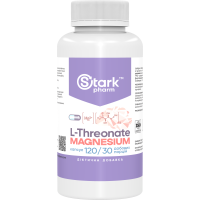
Magnesium L-threonate and magnesium bisglycinate are two organic forms of magnesium that are often compared in terms of their intended use: the former is associated with cognitive function studies, the latter with daily magnesium supplementation and tolerability. But the statement “threonate for the brain, bisglycinate for sleep” oversimplifies the scientific evidence. Both compounds provide magnesium, but differ in their chemical structure, elemental magnesium content, and the extent of clinical research.
The key to comparing is not the name on the front of the package, but the amount of elemental magnesium, the specific composition, the intended use, and the quality of the evidence. There is currently a lack of direct trials that would reliably show the clinical superiority of one of these two forms over the other.

Magnesium threonate and bisglycinate: main differences
| Criterion | Magnesium L-threonate | Magnesium bisglycinate |
|---|---|---|
| Structure | Magnesium salt of L-threonic acid | Magnesium compound with two glycine residues |
| What is measured on the label | Mass of the compound and separately elemental magnesium | Mass of the compound and separately elemental magnesium |
| Clinical direction | Separate trials of cognitive tests and sleep metrics | Specifically, testing subjective symptoms of disturbed sleep |
| Comparison between each other | No convincing direct advantage has been established. | No convincing direct advantage has been established. |
| Practical question | How much elemental magnesium is per serving? | How much elemental magnesium is per serving? |
Both names do not refer to "different types of magnesium" as a chemical element, but to different compounds in which it is contained. The body uses magnesium ions, and the accompanying components affect the physicochemical properties of the salt. The simple formula "one form is absorbed only in the brain, the other only in the muscles" does not correspond to physiology.
Why L-threonate is linked to brain research
Interest in magnesium L-threonate has arisen primarily from experiments on the regulation of magnesium levels in neural tissue. Sun et al. (2016) investigated how L-threonate may affect intracellular magnesium and synaptic processes. Such mechanistic findings are helpful in formulating hypotheses, but do not, by themselves, support memory improvements in humans after supplementation.
In a clinical study by Liu et al. (2016), the MMFS-01 formulation was studied in older adults with cognitive complaints. The study provided a basis for further research, but was not a direct comparison with bisglycinate. In a randomized trial by Lopresti and Smith (2026), 100 adults aged 18–45 years took either the study form of magnesium L-threonate or placebo for six weeks. The authors reported positive differences in some cognitive tests, but the Raven's 2 test did not show a between-group advantage. The study was funded by the manufacturer of the study ingredient, which should also be considered when evaluating the results.
These data do not support the claim that L-threonate is “better for the brain” than bisglycinate. Studies comparing the two forms in similar groups of people, with comparable elemental magnesium intake and similar endpoints, are needed.
What is known about bisglycinate and sleep?
Bisglycinate is often described as a milder form, but subjective tolerability depends not only on the name of the salt, but also on individual characteristics, the amount of magnesium, and the composition of the supplement. Qualitative direct comparisons of the tolerability of bisglycinate and L-threonate are not sufficient to promise the absence of digestive reactions.
Schuster et al. (2025) conducted a randomized, placebo-controlled trial in 155 adults reporting poor sleep. The study used bisglycinate with 250 mg elemental magnesium daily. After four weeks, there was a small benefit on the insomnia severity index; the effect size was small, and the authors emphasized the need for objective measures of sleep in future work. This is a trial-specific finding and not a universal dosage recommendation.
There are also separate sleep trials for L-threonate: Hausenblas et al. (2024) reported changes in some subjective and sleep monitoring device measures. However, Lopresti and Smith (2026) found a difference on a separate subjective scale but no between-group differences on objective sleep measures. Therefore, it cannot be assumed that one of the two forms is proven to be more effective for sleep.

Bioavailability: Is one form better?
Sometimes, bisglycinate is attributed to "peptide" absorption of the entire molecule as an established mechanism. This generalization is not proven for all people and conditions: the chelate can partially dissociate in the digestive tract. Similarly, for L-threonate, experimental changes in magnesium in nervous tissue should not be equated with the fact that the unchanged salt directly crosses the human blood-brain barrier.
How to compare the amount of magnesium on the label
The label “2000 mg of magnesium L-threonate” refers to the mass of the entire compound, not 2000 mg of pure magnesium. The same applies to bisglycinate. Comparing just the big numbers on the front of the package can be misleading: different salts contain different amounts of magnesium by mass, and the finished supplement may also include other ingredients.
For a meaningful comparison, pay attention to:
- the amount of elemental magnesium in a full daily serving;
- the form of the compound and the presence of additional sources of magnesium in the composition;
- recommendations and warnings on the label, as well as magnesium from other supplements.
Research protocols with different weights of salts cannot be compared as if they contained the same amount of elemental magnesium. Furthermore, results from studies with a specific standardized ingredient do not prove that every product that uses the same salt name will perform similarly.
When to pay attention to each form
If the interest is in the scientific data on cognitive tests, L-threonate has a separate clinical literature on this topic. If the main question is the study of bisglycinate on subjective sleep indicators, such literature also exists. However, these are different research programs, not evidence that one salt should be chosen exclusively for a single task.
To routinely assess dietary magnesium intake, the first step is to determine your total dietary magnesium needs and the amount you get from your diet. The name of the salt alone does not determine whether you need to take a supplement. Pregnant women, lactating women, people with kidney disease, and people who take regular medications should discuss supplement choices with their doctor. Magnesium can interfere with the absorption of some antibiotics and other medications; excessive amounts from supplements can cause diarrhea and discomfort.
Therefore, it is advisable to choose between L-threonate and bisglycinate not based on advertising labels "for the brain" and "for peace", but on composition, amount of elemental magnesium, tolerability and how well the results of specific studies meet the reader's question. There is no proven general advantage of one form over the other.

Frequently asked questions
Which is better: magnesium threonate or bisglycinate?
No universally best form has been established. They differ in composition and set of studies, but there is a lack of high-quality direct comparisons of clinical effectiveness.
Is it true that threonate only affects the brain?
No. Experimental studies of nervous tissue do not mean that magnesium from this salt works exclusively in the brain.
Is bisglycinate better absorbed than L-threonate?
There is insufficient reliable direct data to draw such a conclusion. Absorption depends on many factors, including the shape, quantity, and condition of the organism.
Which form of magnesium is best studied for sleep?
There are separate placebo-controlled trials for both. They do not provide evidence that one form is superior to the other.
Is 2000 mg of threonate equal to 2000 mg of magnesium?
No. This is the mass of the compound. To compare supplements, you need to look at a separate figure for elemental magnesium.
Is bisglycinate better for the stomach?
It is often described as a well-tolerated form, but individual reactions are possible. There are not enough direct studies to guarantee superiority over threonate.
Can I take two forms of magnesium at the same time?
The total amount of elemental magnesium from all supplements and possible drug interactions should be considered. Combining forms does not in itself prove additional benefit.
Sources
- Liu G. et al. (2016). Efficacy and Safety of MMFS-01, a Synapse Density Enhancer, for Treating Cognitive Impairment in Older Adults: A Randomized, Double-Blind, Placebo-Controlled Trial. Journal of Alzheimer's Disease. PubMed.
- Sun Q. et al. (2016). Regulation of structural and functional synapse density by L-threonate through modulation of intraneuronal magnesium concentration. Neuropharmacology. PubMed.
- Hausenblas HA et al. (2024). Magnesium-L-threonate improves sleep quality and daytime functioning in adults with self-reported sleep problems: A randomized controlled trial. Sleep Medicine: X. PubMed.
- Schuster J. et al. (2025). Magnesium Bisglycinate Supplementation in Healthy Adults Reporting Poor Sleep: A Randomized, Placebo-Controlled Trial. Nature and Science of Sleep. PubMed.
- Lopresti AL, Smith SJ (2026). The effects of magnesium L-threonate (Magtein®) on cognitive performance and sleep quality in adults: a randomized, double-blind, placebo-controlled trial. Frontiers in Nutrition. PubMed.
- Jahnen-Dechent W., Ketteler M. (2012). Magnesium basics. Clinical Kidney Journal. PubMed.
Dietary supplement. Not a medicine. Consult a doctor before use.
Products related to this post

Related Posts
Comments
Information
Customer Service
Extras
My Account


Sports nutrition manufacturer in Ukraine StarkPharm © 2026


