Your shopping cart is empty!

Lactose in tablets and capsules: why is it added and how to check the composition
Published: 21/11/2026
Times Read: 54
Comments : 0
Lactose is not only found in milk, yogurt or cheese. It can be added to tablets and capsules as an excipient - a component that provides the desired mass, flowability or technological properties of the dosage form. This is not always noticeable on the packaging at first glance: information should be sought in the full composition and instructions. At the same time, the presence of lactose itself does not mean that the drug will necessarily cause discomfort in a person with lactose intolerance.
Three different questions are important for practical selection: does a particular formula contain lactose, how much lactose is in one unit, and whether it matters for individual tolerance. Below we will explain how to check this information without making assumptions, why drugs with the same active ingredient may have different excipients, and when it is appropriate to discuss an alternative with a doctor or pharmacist.
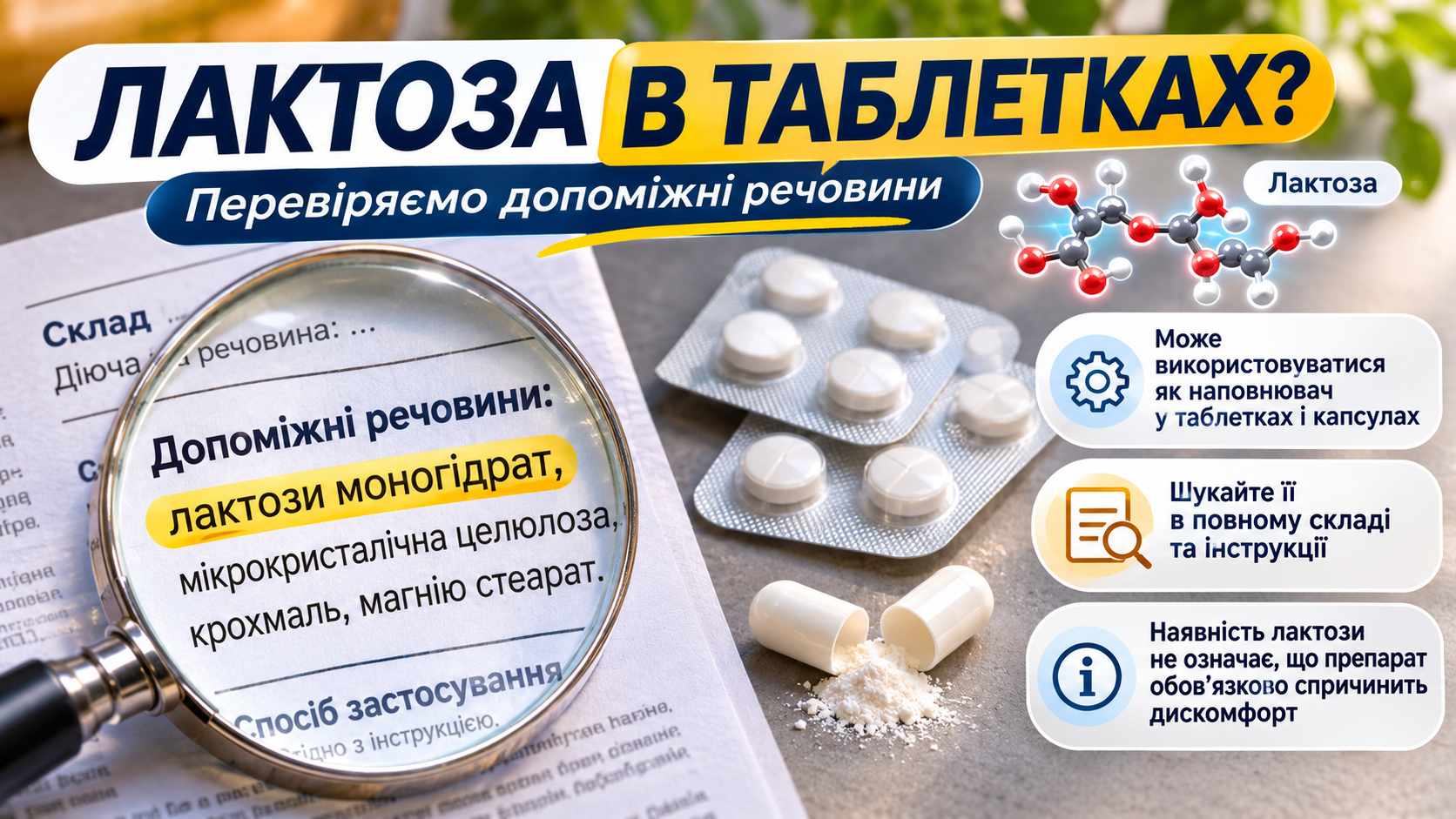
Why do manufacturers add lactose to tablets?
A tablet is not only composed of the substance for which it is used. Sometimes the active ingredient is very small: for example, its mass is measured in milligrams, while the tablet must have a size that is convenient for production, packaging and use. Excipients allow for a homogeneous mixture and predictable physical characteristics of the finished form.
Lactose is used as a filler or diluent. Depending on the type of raw material, it can affect the behavior of the powder mixture during compression, tablet strength and disintegration. The technological role of a particular brand of lactose depends on the particle size, crystal form and method of production. These differences are described in reviews of the pharmaceutical properties of lactose (2022; 2023).
| Tablet component | Main purpose | What does this mean for the reader? |
|---|---|---|
| Active ingredient | Determines the main pharmacological function of the drug | Its name and quantity are usually printed on the packaging. |
| Filler | Supplements the weight and volume of the dosage form | Lactose may be just such a component. |
| Binding component | Helps retain particles in the formed tablet | This is a technological, not a nutritional function. |
| Disintegration enhancer | Affects the destruction of the tablet after contact with liquid | Different formulas have different sets of excipients |
Not all fillers are lactose. Microcrystalline cellulose, starches, and other substances are also used in manufacturing. Even if two tablets have the same active ingredient, their other ingredients may differ.
Lactose and the active ingredient are not the same thing
When the name of a vitamin, mineral, or drug substance is listed in capital letters on the box, it is not a complete list of ingredients. Lactose is often listed in the "Excipients" section. It does not replace the active ingredient and does not determine the purpose of the drug. Its use is associated with the manufacture of a specific dosage form.
Therefore, the phrase “vitamin B12 — 100 mcg” does not say anything about the presence or absence of lactose: the amount of the active ingredient and the full set of excipients must be read separately. In multicomponent tablets or complexes, the composition may be longer, and lactose may be only one of its items.
Lactose is also used in some capsule manufacturing processes. However, the capsule shell itself does not indicate the absence or presence of this ingredient: what matters is the filling and specification of the specific product.
How much lactose can one tablet contain?
A scientific review of the use of lactose in food and pharmaceutical products (2022) states that the content in many solid dosage forms is approximately 100–200 mg per tablet or capsule; however, this is not standard for all formulations. In other formulations, the amount may be higher or lower. A study of excipients in the US Formulary (2019) described examples of almost 600 mg of lactose in a single unit. Such figures should not be extrapolated to a specific product without its documentation.
To put it into perspective, 100 mg is 0.1 g, and 400 mg is 0.4 g of lactose. This is significantly less than the amount in a regular glass of milk, but it is individual tolerance and total intake that matter when a person is taking multiple medications at the same time.
| Conditional amount in a tablet | In grams | What can be concluded? |
|---|---|---|
| 50 mg | 0.05 g | Just an illustration of unit conversion |
| 100 mg | 0.10 g | The order of magnitude value that occurs in the literature |
| 200 mg | 0.20 g | Not a universal tolerance limit |
| 400 mg | 0.40 g | Amount studied separately in a controlled trial |
| 600 mg | 0.60 g | Possible in some formulas, not a typical content of each tablet |
This table explains the arithmetic and range described in the publications. It is not a list of the contents of specific drugs.
Symptoms of lactose intolerance are associated with its incomplete breakdown in the small intestine. The undigested part can reach the large intestine, where it interacts with the intestinal microbiota. The result depends on the total amount of lactose, the individual activity of the lactase enzyme, other foods in the diet, and the state of digestion.
In a randomized, double-blind, crossover study by Montalto et al. (2008), 77 people with lactose malabsorption and symptoms of intolerance were given either 400 mg lactose capsules or placebo. Participants underwent hydrogen breath tests and were assessed for symptoms over an eight-hour period. The results of the experiment showed no statistically significant difference in hydrogen excretion or symptom severity between the two conditions.
This is an important result, but it should be read in the right context: it refers to a specific single dose under specific test conditions. It does not provide grounds to claim that any individual will tolerate all lactose-containing products regardless of total intake or other ingredients.
The NHS Specialist Pharmacy Service (2025) also notes that for most adults, the amount of lactose as an excipient is usually too small to have a significant effect. However, in cases of significant individual sensitivity, it may be necessary to check the total intake from all dosage forms. If symptoms occur after starting a new drug, the cause should not be automatically attributed to lactose: other substances and the drug itself can also affect well-being.
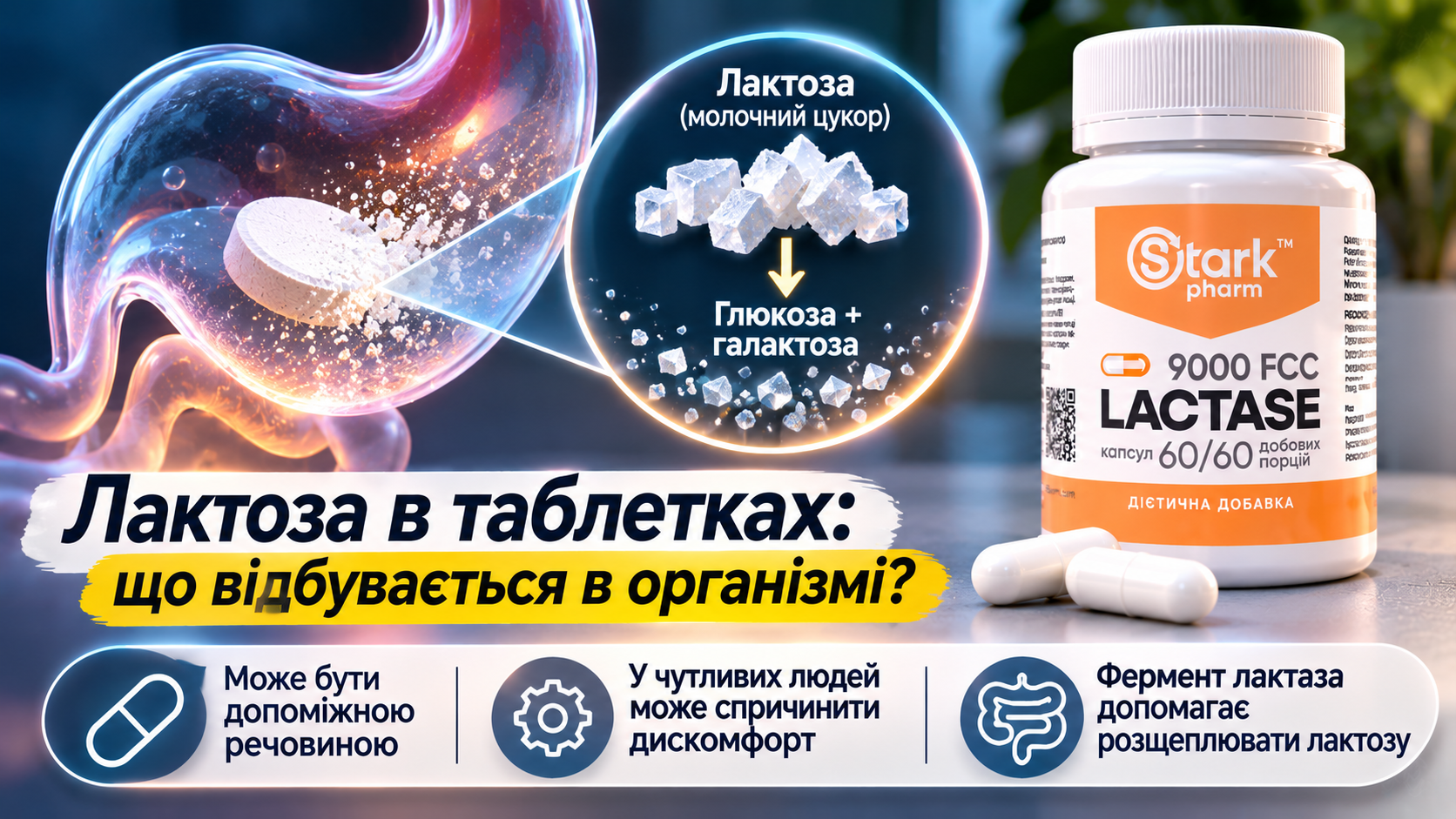
How to find lactose in the instructions and on the packaging
The most reliable way is to read the full composition of a particular product, and not just its name. In the instructions for the medicine, look for the section “Composition” or “Excipients”. In documents in English, these may be excipients or inactive ingredients.
Common name variants: lactose , lactose monohydrate , lactose , lactose monohydrate , sometimes anhydrous lactose. The term "monohydrate" itself describes the crystalline form of the substance and does not mean that the product does not contain milk sugar.
| Where to check | What exactly to look for | Limitation |
|---|---|---|
| Instructions for the drug | List of excipients | The exact amount of lactose may not be specified. |
| Official characteristics of the medicinal product | Release form, composition, auxiliary components | Need information specifically for this strength and manufacturer |
| Manufacturer's page | Current list of ingredients | The description is sometimes abbreviated |
| Pharmacist or manufacturer | Confirmation of lactose content in a unit | The exact name and form of the product is required. |
If the composition in the online store card is incomplete, it is worth finding the official instructions for the same packaging, manufacturer and dosage. You should not replace the data of one form with information about another: a tablet with one dosage and a capsule with another may have different excipients.
Why the inscription "lactose-free" cannot be determined by the form of release alone
Intuitively, it seems that lactose can only be present in a compressed tablet, while a capsule or syrup does not contain it. This rule is unreliable. Manufacturing technology does affect the likelihood of using certain fillers, but does not guarantee a specific composition.
A study of excipients in pharmaceuticals (2019) showed that lactose is often found in solid oral dosage forms. At the same time, lactose-free tablets are available, and different forms of the same active ingredient may differ. For liquid drugs, the situation also depends on the specific formulation. Therefore, the correct approach is to check the composition, and not to judge by the appearance of the packaging.
In 2025, Almukainzi et al. analyzed 635 drug labels in their study: half of them mentioned lactose, but the exact amount was only given in some of the documents. This indicates a practical problem of data availability, not that half of all drugs in the world contain lactose.
Same active ingredient — different excipients
Two packages with the same active ingredient may differ in filler, coating, colorant, or manufacturing method. Differences are possible between brands, generics, dosage forms, and dosages. This is described in studies of the structure of excipients in medicines (2019; 2020).
For the reader, this means: if one drug previously worked, it should not be assumed that any other with the same active ingredient has an identical composition. Conversely, the detection of lactose in one variant does not mean that all alternatives contain it.
At the same time, replacing a drug is not only a question of the filler. The strength of the drug, the method of release, the form of administration and other characteristics are important. Therefore, an alternative option should be discussed with a specialist, and not selected independently only based on the inscription "lactose-free".
If a person is taking multiple medications at the same time, lactose may come from more than one source. To get a rough estimate, you need to know the amount of the substance per tablet or capsule and the number of units used during the day. If the manufacturer does not indicate the quantitative content, it is impossible to make an exact calculation.
For example, when a generic drug contains 100 mg of lactose per tablet and a person uses two tablets, that's 200 mg. If another drug contains 150 mg in one capsule and is used twice, that's another 300 mg. The total is 500 mg, or 0.5 g. All numbers in the example are conditional and are intended only to explain the calculation method.
You should not add the weight of the entire tablet to this amount - you need exactly the amount of lactose. If the composition is not detailed, it is more correct to mark the data as unknown and ask for clarification than to draw a conclusion based on the appearance or weight of the package.
Lactose intolerance and milk protein allergy
Lactose intolerance is related to its breakdown by the enzyme lactase. Milk protein allergy is another condition that involves the immune system's reaction to protein components. This distinction is especially important when evaluating the composition of drugs.
Pharmaceutical lactose is obtained from milk raw materials; during purification, the majority of the proteins are removed. However, the specialized literature describes rare cases where residual milk proteins may be of importance for people with severe allergies. This does not mean that every product with lactose contains a clinically significant amount of proteins. In case of confirmed severe allergy, the choice of drug should be agreed with the doctor and pharmacist (Scientific Reports, 2024; NHS SPS, 2025).
The label “lactose-free” also does not equal “milk protein-free” unless this is directly confirmed by the composition and manufacturing information.
What to do when the instructions indicate lactose
First, check whether it is an excipient, whether there is data on its quantity and whether the formula has changed in the new packaging. For most people with intolerance, small amounts of lactose in dosage forms may not have a noticeable effect, but an individual approach remains important.
If you develop new digestive symptoms after starting a medication, write down the name, dosage, time of onset, other medications, and foods you are taking. This information will help your doctor or pharmacist evaluate possible explanations. Do not stop taking your prescribed medication or change your regimen on your own. If necessary, your doctor may consider a lactose-free version or a different form of the same medication.
When it comes to dietary supplements, it is also advisable to look at the full composition, serving size, and manufacturer's information. However, the presence or absence of lactose does not provide grounds for concluding about the effectiveness of the active ingredients.
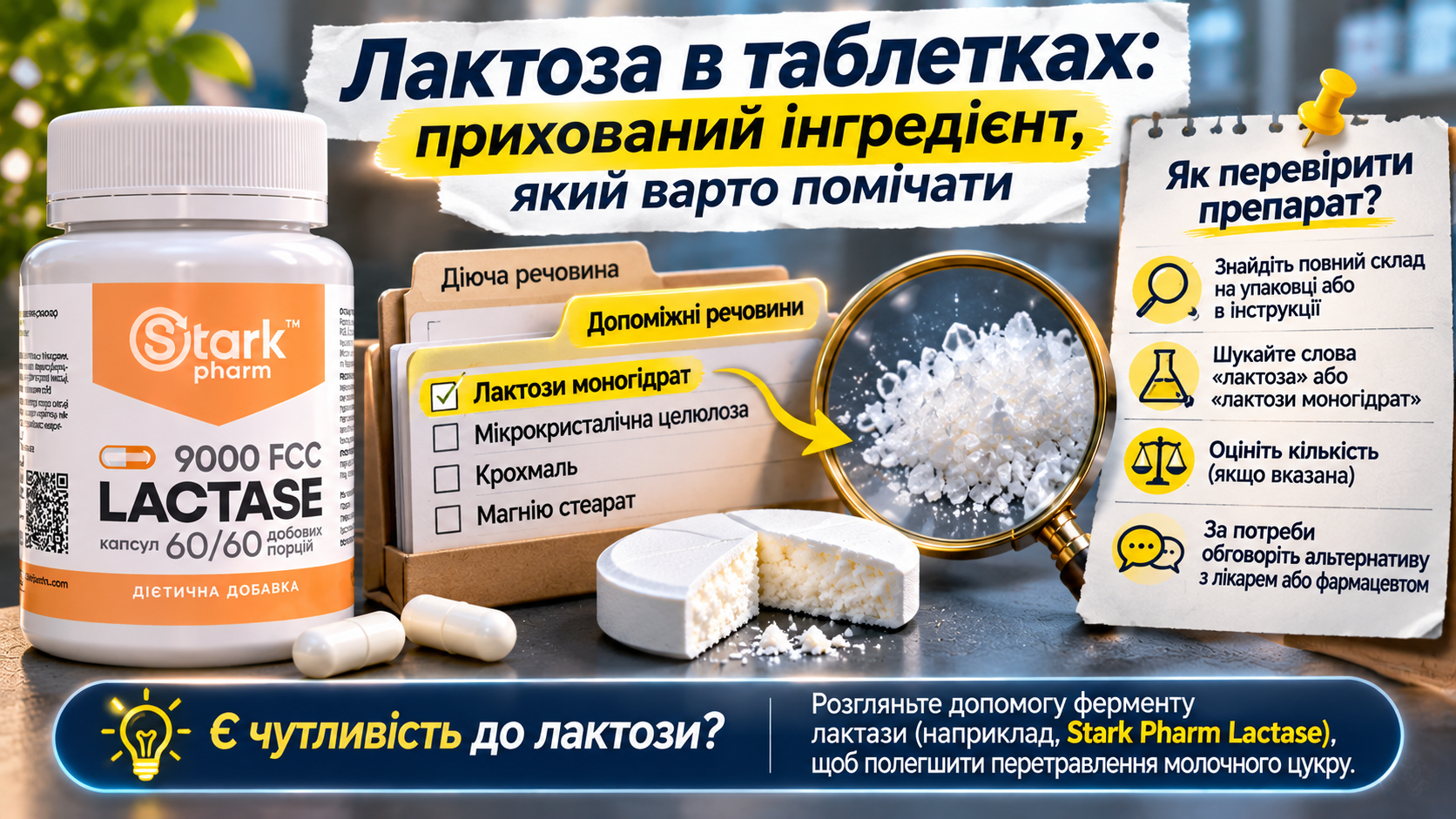
Five mistakes when checking the composition
- Look only at the name of the active ingredient. It does not reveal the full list of auxiliary components.
- Consider all capsules lactose-free. The capsule filling may contain lactose.
- Deduce the amount of lactose from the mass of the tablet. The total mass includes various substances.
- Transferring the composition of one brand to another. Even with the same active ingredient, formulas can differ.
- Self-refusing from prescribed medications. The decision to replace or continue taking medication requires consultation with a specialist.
The main thing to remember
Lactose in tablets most often serves a technological function - it helps to form a stable and convenient dosage form. Its presence can be checked by the official composition, but the exact amount is not always available in the open instructions. Studies show that small amounts usually do not cause significant symptoms in most people with intolerance, but these results should not be taken as a universal rule.
The most accurate solution is to check the specific drug, form, and manufacturer. If the question affects the use of the prescribed medication, consult a doctor or pharmacist rather than replacing the medication yourself.
Frequently asked questions
Why is milk sugar added to tablets?
Lactose can be used as a filler with the necessary technological properties. It is not necessarily an active ingredient.
How is lactose indicated in the composition?
Look for the words "lactose", "lactose monohydrate", lactose or lactose monohydrate in the list of excipients.
Is there lactose in each tablet?
No. The composition depends on the specific manufacturer, formula, and dosage. Many products are made with other fillers.
Is there lactose in capsules?
Yes, it can be in the capsule filling. The type of shell itself does not determine the full composition.
Is the amount of lactose known if it is on the ingredients list?
Not always. Sometimes only the presence of a component is indicated. For the exact content, the manufacturer needs to clarify.
Does 400 mg of lactose cause unpleasant symptoms in everyone?
No. In a controlled study, this single dose did not show a significant difference versus placebo, but individual tolerability may vary.
Does lactose monohydrate differ from lactose?
This is a specific crystalline form of lactose. The word "monohydrate" does not mean that there is no milk sugar.
Is it possible to replace the drug yourself due to lactose?
No. Even variants with the same active ingredient may differ in important characteristics. Substitutions should be discussed with a doctor or pharmacist.
Do lactose-free tablets contain milk proteins?
The label "lactose-free" alone does not describe all possible components. In the case of a confirmed allergy, the composition and origin of the substances should be evaluated separately.
How to check several drugs at the same time?
You need to know the amount of lactose per unit of each medication and the number of units per day. If this information is not available, check with the manufacturer or pharmacist.
Sources
- Montalto M et al. (2008). Low-dose lactose in drugs neither increases breath hydrogen excretion nor causes gastrointestinal symptoms. Alimentary Pharmacology & Therapeutics. PubMed.
- Reker D et al. (2019). “Inactive” ingredients in oral medications. Science Translational Medicine. PubMed.
- (2022). Lactose: Characteristics, Food and Drug-Related Applications, and Its Possible Substitutions in Meeting the Needs of People with Lactose Intolerance. Molecules. PMC.
- (2023). Lactose in tablets: Functionality, critical material attributes, applications, modifications and co-processed excipients. Drug Discovery Today. PubMed.
- Almukainzi M et al. (2025). Using medications containing lactose as an excipient for lactose intolerance patients: Insights of clinical practices and regulators roles. Journal of the American Pharmacists Association. PubMed.
- (2008). Quantifying the 'hidden' lactose in drugs used for the treatment of gastrointestinal conditions. Alimentary Pharmacology & Therapeutics. PubMed.
- (2020). Historical Evolution and Provider Awareness of Inactive Ingredients in Oral Medications. Journal of General Internal Medicine. PubMed.
- (2024). Risks of dairy derived excipients in medications for lactose intolerant and cow milk protein allergic patients. Scientific Reports. PMC.
- NHS Specialist Pharmacy Service (2025). Assessing the clinical impact of lactose in medicines. NHS SPS.
Dietary supplement. Not a medicine. Consult a doctor before use.
Products related to this post
Related Posts
Comments
Information
Customer Service
Extras
My Account


Sports nutrition manufacturer in Ukraine StarkPharm © 2026


