Your shopping cart is empty!

Chelated forms of minerals: what are they and are they really better absorbed?
Published: 24/11/2026
Times Read: 26
Comments : 0
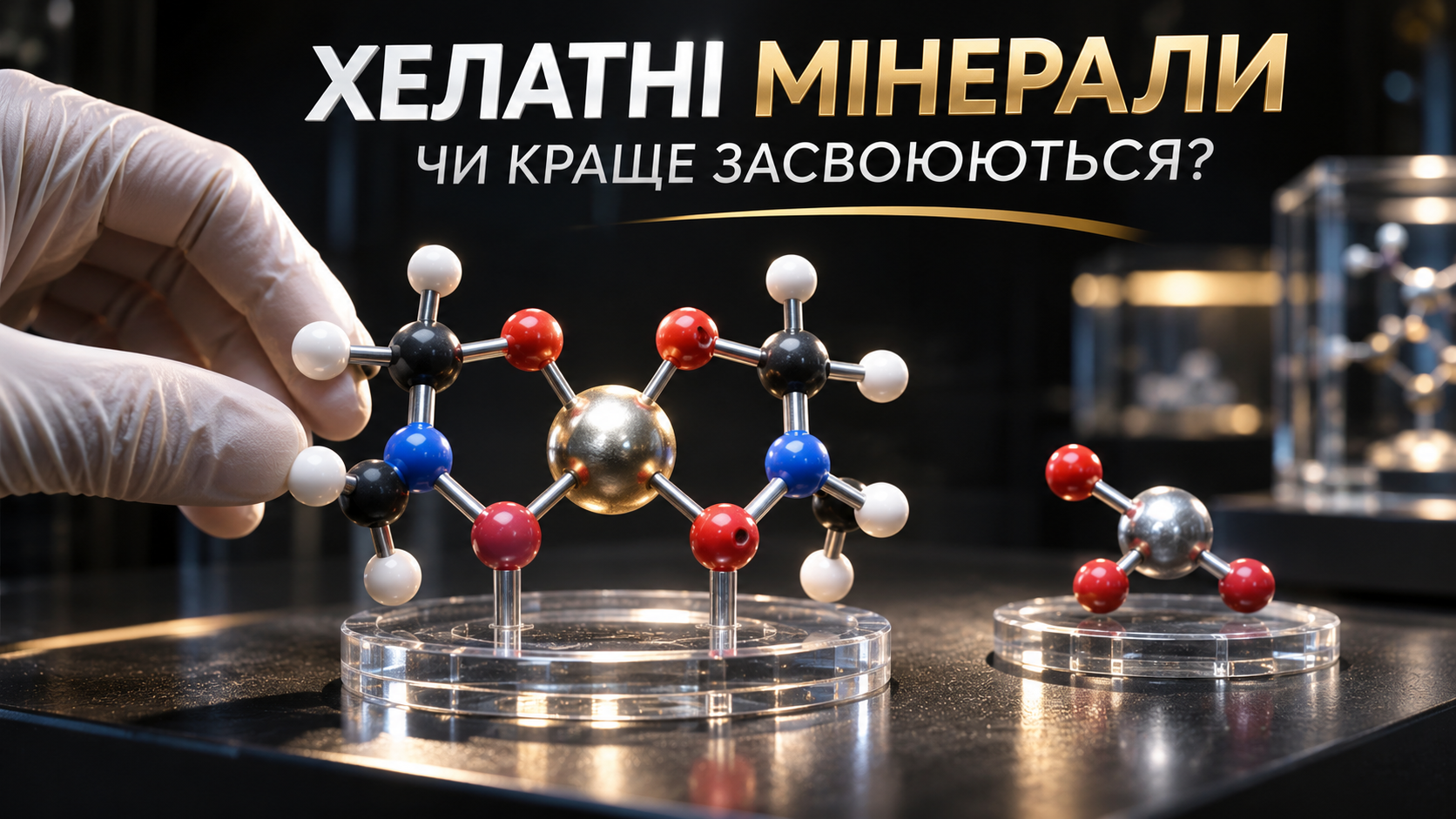
The word "chelate" on a mineral supplement label describes the type of chemical compound, not a ready-made conclusion about its absorption. The most famous examples are magnesium, iron, and zinc bisglycinates, in which the mineral is bound to molecules of the amino acid glycine. This bond can affect the behavior of the substance in the digestive tract, but the result depends on the specific formula and the conditions of the study.
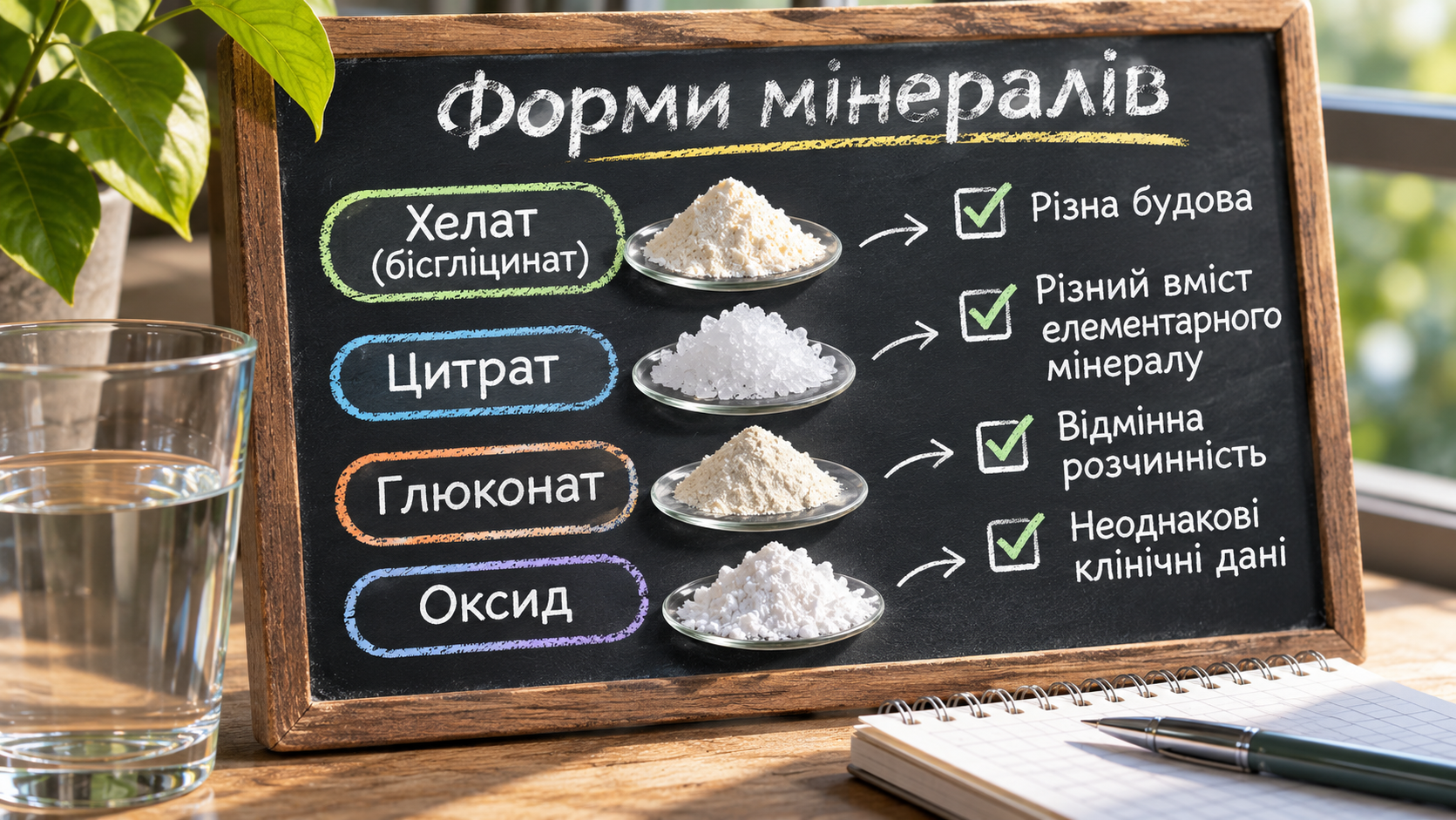
When a consumer compares “magnesium chelate,” citrate, and oxide, they are actually comparing compounds with different structures, amounts of the elemental mineral, and clinical trial data. The label “chelated” alone does not indicate that a supplement will necessarily be better absorbed, less uncomfortable, or more beneficial than other forms.
Chelated forms of minerals: a quick table of differences
| Form | Chemical feature | What can really be said? |
|---|---|---|
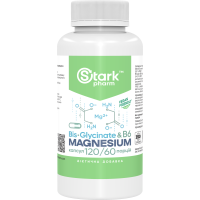
| Magnesium bisglycinate | Magnesium complex with glycine | There are biochemical reasons to study absorption, but there are not enough direct comparisons with all other forms |
| Magnesium citrate | Citric acid salt | There are human absorption studies for citrate; non-chelated form does not mean low quality |
| Magnesium oxide | Inorganic oxide | High magnesium mass fraction, but excellent solubility and absorption |
| Iron bisglycinate | Ferric glycine complex | Clinical comparisons showed promising results in individual groups |
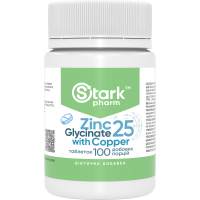
| Zinc bisglycinate | Zinc complex with glycine | In a small study, bioavailability exceeded that of gluconate |
| Zinc gluconate | Gluconic acid salt | Has its own absorption data; don't assume it's "weak" just because it doesn't have the word chelate |
The table compares the type of evidence and features of the forms, rather than ranking the effectiveness. The results for iron do not automatically transfer to magnesium or zinc: each element has its own mechanisms of regulation and absorption.
What does chelate mean and how is it formed?
In chemistry, chelation is the formation of a coordination complex in which a single molecule or ion— the ligand —is bound to a central metal ion through multiple donor atoms. This can be thought of as a molecule holding the ion at multiple points. It is this multipoint interaction that distinguishes typical chelation from the simple proximity of two substances in a mixture.
In bisglycinate, glycine molecules serve as ligands. The composition of the complex depends on the metal, the acidity of the medium, the presence of water, and other substances. A certain structure can be described in a laboratory vessel, but this does not prove that it will be completely preserved after passing through the stomach and intestines.
Therefore, a description such as “the mineral is protected by an amino acid and passes into the cell unchanged” should not be taken as a proven universal mechanism. In the digestive tract, compounds interact with water, acids, food, transport proteins, and other ions. Additional transport pathways have been proposed for some complexes, but clinical advantage needs to be demonstrated by separate studies.
Chelate, citrate, gluconate and oxide: can we compare only the names?
Citrates and gluconates are often called organic salts, while amino acid complexes are called chelates. This is a convenient household distinction, but the name itself does not provide complete information about the spatial structure, stability of the compound, or its behavior in aqueous solution. The actual coordination bonding may be more complex than the label on the front of the package.
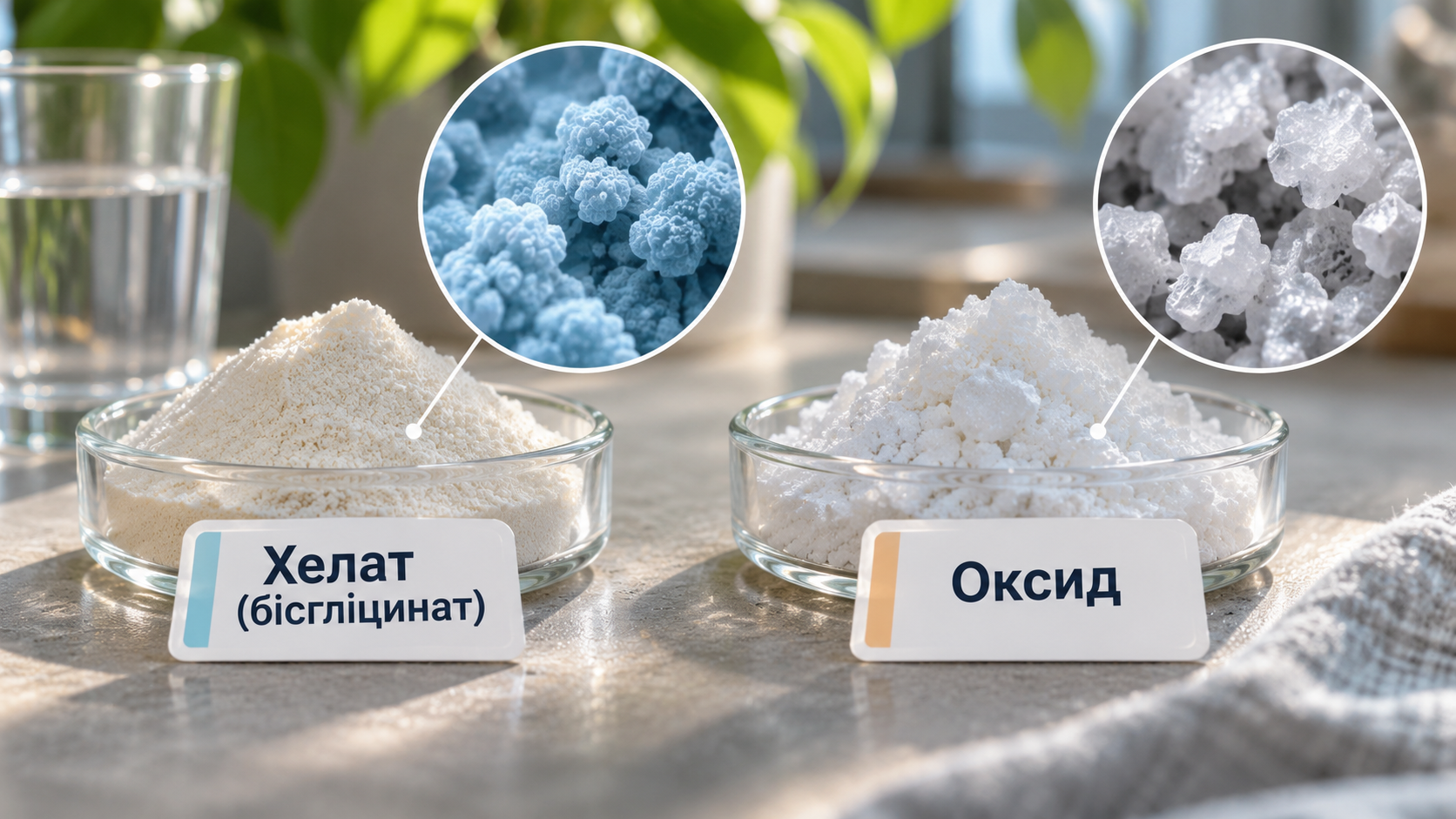
Mineral oxide has a different structure and often a higher proportion of the element by mass. But a larger amount of an element in a gram of powder does not equal a larger amount that will enter the body. For comparison, it is necessary to separate three indicators: the mass of the chemical compound, the amount of the elemental mineral and its absorption. These are different numbers that cannot be replaced by each other.
The NIH Office of Dietary Supplements' findings on magnesium specifically state that soluble forms generally have better absorption, and that citrate, lactate, chloride, and aspartate have often outperformed oxide in studies. However, this finding does not provide direct evidence that any one chelate is superior to all magnesium salts.
Are chelated minerals really better absorbed?
The term “bioavailability” also needs to be clarified. Studies may measure the proportion of a mineral absorbed, changes in its concentration in the blood, excretion in the urine, or long-term indicators of the body’s supply. These results are not interchangeable. For example, a short-term increase in zinc concentration after a single dose does not prove better health after several months.
Results are affected by the initial mineral supply, food composition, co-ingredients, dosage, and measurement method. Comparing two forms with different amounts of an elemental mineral may be inaccurate. Similarly, results on an empty stomach should not be interpreted as an accurate prediction for intake with a regular meal.
Magnesium bisglycinate: what is known without marketing exaggeration
Magnesium bisglycinate is popular because of its combination of magnesium with glycine and claims of convenience. However, to definitively conclude that it is the “best,” large-scale head-to-head trials against citrate, malate, chloride, and other forms with comparable amounts of elemental magnesium are needed. Such data is insufficient for an overall ranking.
A common mistake is to compare 1000 mg of bisglycinate powder with 500 mg of another salt and make a conclusion based on the numbers on the front of the label. These values may refer to the mass of the compounds, not the magnesium itself. The exact content depends on the chemical specification, the hydrated form, and possible mixtures. Therefore, the buyer should first find the elemental Mg per serving.
Tolerability is also important. Some forms of magnesium may cause loose stools or discomfort, especially in larger amounts. However, the absence of such complaints in one person does not prove the superiority of a form over another. If there is kidney disease or concomitant medication, the choice of supplement requires additional attention.
Iron bisglycinate: where clinical results are more convincing
There is a more robust clinical basis for iron. A meta-analysis of randomized trials published in 2023 compared ferric bisglycinate with other supplements. In a subgroup of pregnant women, the studies lasted approximately 4–20 weeks; the authors found higher hemoglobin levels and fewer reports of gastrointestinal adverse events in the bisglycinate groups. These are the results of specific studies and are not a recommendation to use such regimens on their own.
The researchers also noted the heterogeneity of the included studies, differences between doses, groups, and assessment methods. Because of this, it cannot be said that ferric bisglycinate is always better tolerated or produces the same results in any person. Furthermore, the results of iron studies should not be extrapolated to zinc or magnesium.
In a practical context, it is important to separate the choice of form from the question of whether additional iron is needed at all. Excessive iron intake is not harmless; its status is assessed taking into account nutrition, laboratory data and physician recommendations. The choice of chelated form does not eliminate these caveats.
Zinc bisglycinate: what the comparative study results mean
In a small crossover study of 12 healthy women, Gandia et al. compared the bioavailability of zinc bisglycinate and gluconate after a single dose. The bisglycinate formulation was found to have approximately 43.4% higher bioavailability. This is an interesting result, but the sample size was small and the assessment was performed over a short period of time after administration.
This experiment does not mean that any zinc chelate is better than any other form. Another randomized crossover study published in 2014 found that the absorption of zinc citrate was comparable to gluconate and higher than oxide under the specific experimental conditions. Therefore, non-chelated forms may also have adequate absorption rates.
Comparing real products requires information on elemental zinc, supplement composition, serving size, and validated chemical form. If two products have different dosages or co-ingredients, the difference in results cannot automatically be explained by the word “chelate” alone.
Why chelation doesn't promise better tolerability for everyone
Tolerability includes many parameters: from nausea to changes in bowel habits and general discomfort after taking. It is influenced by the amount of substance, taking it with food, the state of the digestive system and other components. Even if a certain form caused fewer complaints in one trial, the result cannot be transformed into a statement that side effects do not occur.
It is especially incorrect to draw conclusions from a single review. People often change their diet, time of use, number of capsules, or multiple products at the same time. To assess differences between forms, a controlled comparison under similar conditions is needed. It does not eliminate individual differences, but it helps to separate the property of the substance from random observation.
What does "buffered bisglycinate" mean?
The term "buffered" may be used to refer to a mixture to which another mineral compound, such as an oxide, has been added, or to a technologically modified composition. However, the term itself is not a sufficient chemical specification. Two products with similar labels may contain different amounts of bisglycinate itself and other components.
If the package only lists the generic name “magnesium chelate,” the consumer cannot verify the percentage of a particular complex by the word itself. It is worth looking for a complete list of compounds, elemental content per serving, and, if necessary, the manufacturer’s information on the raw materials. This is especially important when one supplement claims an unusually high amount of a mineral for a small mass of the complex.
How to read a chelate supplement label
| What to look for | Why is this important? | Typical error |
|---|---|---|
| Exact name of the compound | Helps distinguish bisglycinate from a mixture or other salt | Consider "chelate" as the full formula |
| Elemental mineral per serving | This is the amount of Mg, Fe or Zn itself | Confusing it with the mass of the entire compound |
| The indicator may refer to several capsules. | Compare one capsule to a full serving | |
| Additional components | They can change the composition and tolerability | Do not notice oxide, other salts or duplication |
| Confirmed manufacturer data | Specify the specification and composition | Drawing a conclusion based on an advertising slogan alone |
For example, the entry "magnesium - 100 mg (from bisglycinate)" with correct labeling means the content of the element itself, while "magnesium bisglycinate - 100 mg" indicates the mass of the specified substance. How much elemental Mg is contained in the second case depends on the exact composition. You cannot automatically substitute one value for another.
The same principle applies to iron and zinc. It is important to avoid comparisons where one label lists the mass of chelate and another lists the amount of the element. This can create an artificial advantage for one product, even if the actual amount of the mineral is completely different.
Is it worth overpaying for the chelated form?
The premium price is justified not by the word on the package, but by verifiable value: clear composition, proper labeling, appropriate amount of element and data on the specific form. For certain situations, the buyer may consider portability more important, for others - affordable price or convenience of the serving. There is no universal optimal choice.
If a study proves a particular bisglycinate is superior to a particular salt, it does not prove the same superiority over all other salts, formulas, and manufacturers. The end result is also important: absorption, laboratory status, or clinical outcome. It is wiser to compare these characteristics separately and not pay extra just for the name of the technology.
What is the difference in the quality of evidence for the three chelates?
| Mineral | What was researched? | What the conclusion does not prove |
|---|---|---|
| Iron | Randomized trials and meta-analyses with hemoglobin, ferritin, and tolerability measures | Equal benefit for every person, indications for use without checking iron status |
| Zinc | Small direct comparison of bisglycinate with gluconate for short-term bioavailability | Best long-term results of all zinc bisglycinate supplements |
| Magnesium | Scientific data on different salts and their solubility, limited direct comparisons of bisglycinate | Advantages of all magnesium chelates over citrate or other forms |
This distinction is especially important when choosing supplements based on reviews. One study might measure blood levels after a few hours, another might measure changes in lab values over a few weeks, and yet another might measure comfort during use. It’s impossible to sum them up on a single “better absorbed” scale without analyzing how the researchers measured the results.
For different groups of people, the same result will also have different meanings. For example, with an initial deficiency of a mineral, its absorption may differ from that of a person with sufficient intake. In addition, the diet, phytate content, and the time of simultaneous use of other substances affect the observed indicators. That is why a correct article does not recommend one form for all visitors.
A brief algorithm for comparing two mineral supplements
- Determine which mineral you are interested in and whether there is a confirmed need for its additional intake.
- Find the amount of a specific elemental mineral in a serving of each product.
- Check the chemical form and other components, including mixtures.
- Pay attention to the scientific data specifically on this mineral, not the entire group of chelates.
- Compare serving size, cost, tolerability, and compatibility with medications.
- Do not change your self-prescribed mineral intake regimen because of the advertising claim that it is “better absorbed.”
It is especially important: mineral supplements can change the absorption of certain medications. For example, for magnesium and zinc, interactions with some antibiotics are important, and for iron, the peculiarities of its intake and compatibility with other substances. When using medications simultaneously, you should follow the instructions and consult a specialist.
Frequently asked questions
What is a chelated form of a mineral?
This is a form in which a metal ion is bound to a ligand through multiple coordination interactions. Amino acid complexes are often used in supplements.
Are all bisglycinates chelates?
The name bisglycinate usually refers to a complex with two glycine ligands. The actual form and proportion of the complex in the finished mixture is specified in the specification.
Is chelate always better absorbed than citrate?
No. The result depends on the specific mineral and the forms tested. Good absorption rates have also been obtained for some citrates.
How is a chelate different from an oxide?
The oxide and amino acid chelate have different chemical structures. They may differ in their mineral mass fraction, solubility, and absorption.
Does magnesium bisglycinate mean it has more magnesium?
No. You need to look at the amount of elemental magnesium per serving, not just the mass of the substance or the name of the form.
What does buffered magnesium bisglycinate mean?
This may be a complex with additional magnesium compounds. The exact composition should be checked in the manufacturer's information.
Can iron bisglycinate and magnesium bisglycinate be compared in terms of absorption?
No. These are different minerals with their own absorption mechanisms. Research results for one do not confirm the properties of the other.
Is chelated iron better tolerated?
In some clinical studies, iron bisglycinate has been associated with fewer gastrointestinal complaints, but the results are not the same for everyone.
Should we focus on the words “maximum absorption”?
No. Without specific comparative studies, this is an advertising assessment. It is better to check the form, portion, and results of scientific studies.
How to choose between chelated and regular salt?
Compare elemental content, form, available research, and tolerability. If you have chronic conditions or medications, consult a specialist.
Sources
- National Institutes of Health, Office of Dietary Supplements. Magnesium: Fact Sheet for Health Professionals. NIH ODS.
- National Institutes of Health, Office of Dietary Supplements. Iron: Fact Sheet for Health Professionals. NIH ODS.
- National Institutes of Health, Office of Dietary Supplements. Zinc: Fact Sheet for Health Professionals. NIH ODS.
- The Effects of Oral Ferrous Bisglycinate Supplementation on Hemoglobin and Ferritin Concentrations in Adults and Children: A Systematic Review and Meta-Analysis of Randomized Controlled Trials (2023). Nutrition Reviews. PubMed.
- Gandia P et al. (2007). A Bioavailability Study Comparing Two Oral Formulations Containing Zinc (Zn Bis-Glycinate vs. Zn Gluconate) After a Single Administration to Twelve Healthy Female Volunteers. International Journal for Vitamin and Nutrition Research. PubMed.
- Wegmüller R et al. (2014). Zinc Absorption by Young Adults from Supplemental Zinc Citrate Is Comparable with That from Zinc Gluconate and Higher than from Zinc Oxide. Journal of Nutrition. PubMed.
- Comparative Absorption and Bioavailability of Various Chemical Forms of Zinc in Humans: A Narrative Review (2024). PubMed.
Dietary supplement. Not a medicine. Consult a doctor before use.
Products related to this post


Related Posts
Comments
Information
Customer Service
Extras
My Account


Sports nutrition manufacturer in Ukraine StarkPharm © 2026


