Your shopping cart is empty!

Sleep and immunity: how lack of sleep affects the risk of catching a cold
Published: 14/11/2026
Times Read: 5
Comments : 0
Sleep deprivation and immunity are not only linked on a well-being level: in two controlled studies, people who slept less were more likely to show signs of a cold after experimental exposure to a rhinovirus. This does not mean that one short night will necessarily result in a cold. However, the duration and quality of sleep are among the factors that can influence the body's response to infectious stimuli.
Interestingly, the researchers didn't just study the answers to the question "how much sleep do you get?" In their study, Prather et al. (2015) used actigraphy, a wrist-worn device that measures movement. This helped clarify the relationship between actual sleep habits and the results of the viral experiment. Let's look at what was found, where the evidence ends, and why the conclusion "more sleep means stronger immunity" would be too simplistic.
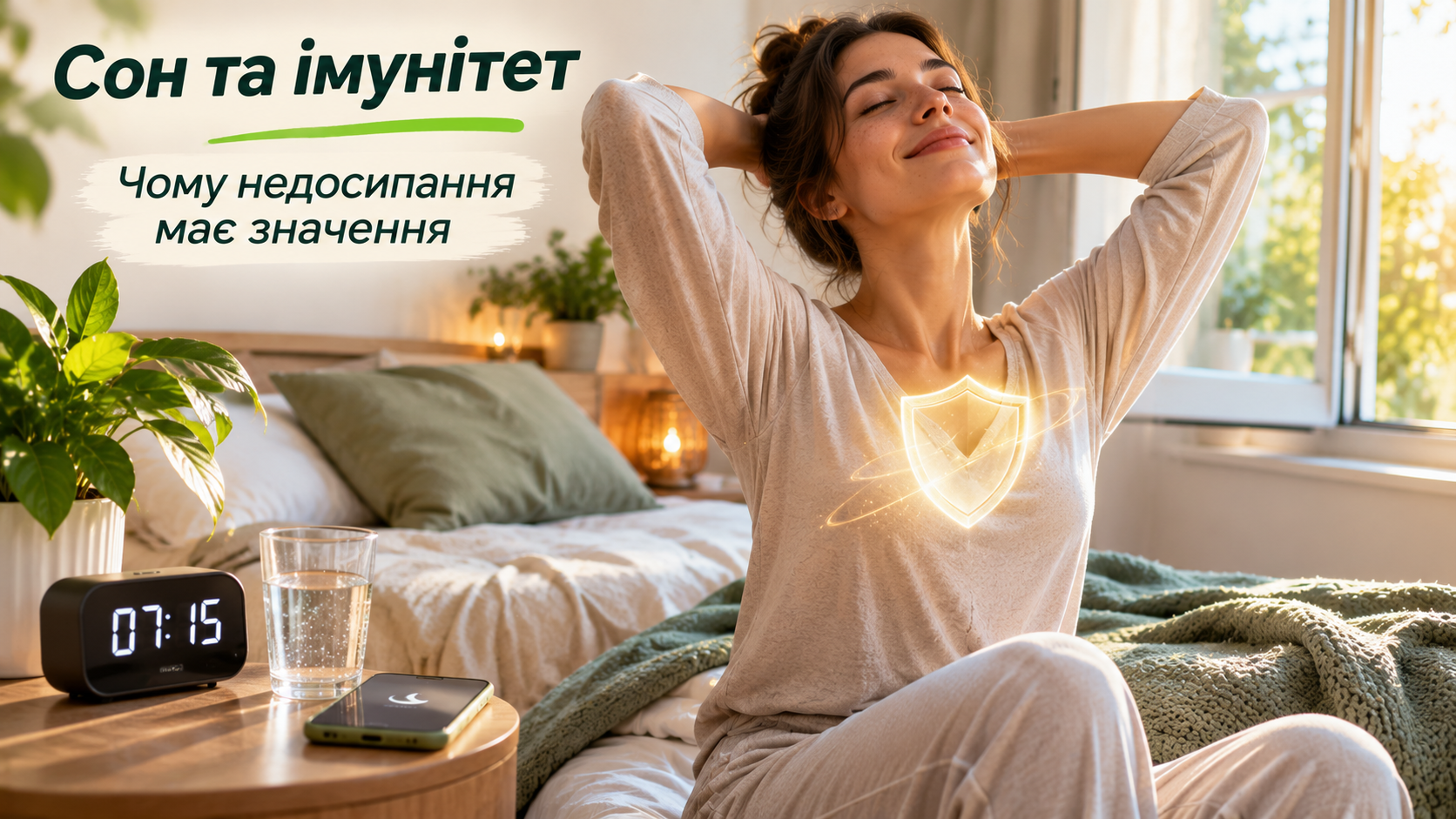
How sleep is related to the functioning of the immune system
The immune system operates 24/7, but the activity of its individual components varies throughout the day. Sleep is associated with the redistribution of immune cells, changes in hormonal signals, and the regulation of cytokines, molecules that cells use to communicate with each other. In a large review by Besedovsky, Lange, and Haack (2019), this process is described as a two-way interaction: sleep affects immune processes, and immune system signals, in turn, can alter sleep.
For example, the number of T cells in the bloodstream and their migration between tissues change during certain phases of the day. Nighttime sleep also creates different hormonal conditions than daytime wakefulness. Lange, Dimitrov, and Born (2010) emphasize that it is not easy to separate the actual effect of sleep from circadian rhythms: these mechanisms partially overlap.
Therefore, it is more correct to speak not about abstract “immunity enhancement”, but about the conditions for a coordinated immune response. An overly active inflammatory response is not a sign of better protection, just as one laboratory indicator does not describe the state of the entire immune system.
Does lack of sleep really increase the risk of catching a cold?
Some of the most striking data have come from controlled exposure studies to rhinovirus, one of the causative agents of the common cold. Participants were first interviewed about their sleep or had their sleep monitored, then, under controlled conditions, rhinovirus was administered and the presence of infection and objective signs of illness were assessed. Such experiments help reduce the uncertainty associated with the varying number of incidental exposures to viruses in everyday life.
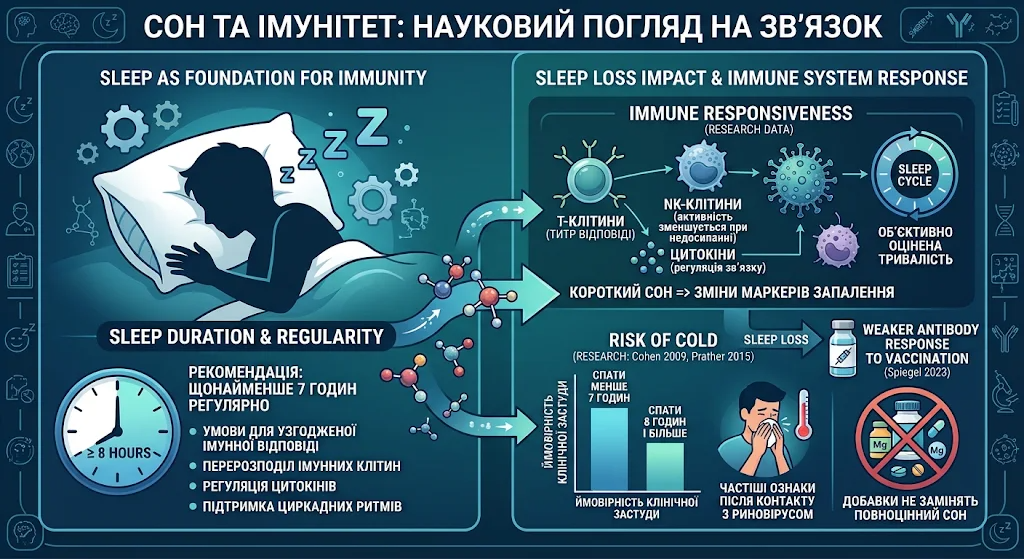
Cohen et al. (2009) analyzed data from 153 adults aged 21–55 years. Sleep was assessed for two weeks prior to experimental exposure to rhinovirus. Participants who slept an average of less than 7 hours were approximately 2.94 times more likely to develop a clinical cold than those who slept 8 hours or more. The results took into account a number of other factors, including age, season, and psychological indicators.
Prather et al. (2015) studied 164 healthy adults. Sleep duration was assessed using actigraphy and diaries for the seven days prior to rhinovirus exposure. Shorter sleep was associated with a higher likelihood of a clinical cold. The association was particularly pronounced among those with the shortest sleep duration.
An important note: In both studies, the researchers didn’t randomly assign people to sleep 5 or 8 hours before exposure. They compared their previous sleep habits. So the results are stronger than a simple survey, but they don’t prove that simply increasing your sleep by a certain number of minutes will definitely reduce your risk of catching a cold by a specific percentage.
Five, six, seven or eight hours: how to read the results
A popular question is whether there is a specific threshold after which immunity “turns off.” The data does not support this: it is about statistical differences between groups, not a universal threshold for every person.
| Sleep duration | What can be said from the research? | Important clarification |
|---|---|---|
| 5 hours or less | In Prather's (2015) study, short sleep was among the groups with the strongest association with colds. | This is not a personal forecast for each person. |
| Approximately 6 hours | In the same study, shorter sleep duration was also associated with a higher susceptibility to colds. | Habitual sleep before exposure to the virus was assessed. |
| Less than 7 hours | Cohen (2009): about 2.94 times higher odds of a clinical cold compared to the 8-hour group. | "Chances" in statistics are not the same as a multiple of absolute probability. |
| 7–8 hours or more | They serve as comparison groups in viral experiments; general expert recommendations for adults are to regularly sleep at least 7 hours. | A longer duration does not guarantee the absence of a cold. |
The consensus of the American Academy of Sleep Medicine and the Society for Sleep Research (Watson et al., 2015) recommends that healthy adults regularly sleep at least 7 hours per night. This is a guideline for general health, not a set “sleep dose” to prevent a specific infection. Individual needs may vary.
The immune response consists of several interrelated processes. T cells are involved in recognizing and coordinating the response to foreign antigens. Natural killer, or NK, cells are part of the innate immune system. Cytokines regulate communication between cells, particularly during inflammation. These processes can be altered by sleep deprivation—but not all in the same direction.
In a small study by Irwin et al. (1994) in 23 healthy men, partial sleep deprivation late at night was associated with a decrease in laboratory-measured NK cell activity. Another study by this group (1996) studied partial sleep deprivation early in the night in 42 healthy men and also observed changes in cellular immune responses. These data suggest a biological sensitivity of immune markers to sleep patterns, but do not directly predict cold risk.
A meta-analysis by Irwin, Olmstead, and Carroll (2016) systematized research on sleep and inflammatory markers. It showed that sleep disturbances are associated with increased measures of systemic inflammation across groups and study designs. However, the associations varied depending on whether insomnia, sleep duration, or experimental deprivation were assessed. Therefore, the statement “poor sleep always lowers all immune markers” is incorrect.
Sleep and Antibody Response: What Vaccination Studies Have Shown
Another way to investigate the link is to measure antibodies after vaccination. In a study by Lange et al. (2003), volunteers who slept the night after receiving a hepatitis A vaccine had almost twice the titer of the corresponding antibodies four weeks later compared with participants who did not sleep that night. The result was specific to the experimental protocol and does not mean that an extra hour of sleep always doubles the antibody titer.
In a study by Prather et al. (2012) of hepatitis B vaccine recipients, shorter sleep was also associated with lower antibody responses. In a meta-analysis by Spiegel et al. (2023), data from studies of short sleep and antibody responses to vaccination were pooled. For objectively measured short sleep, an association with a lower antibody response was found. For sleep assessed only by self-report, statistical power was lower. This highlights the importance of the method of measurement.
There are also findings that caution against making definitive conclusions: in the study by Benedict et al. (2012), one night of complete sleep deprivation did not result in a sustained decrease in antibody titers for seven weeks after vaccination against H1N1 influenza. Thus, the type of immune response, the duration of follow-up, the characteristics of the sample, and the specific pattern of sleep loss are important.
Sleep duration, quality and regularity: what's the difference?
Sleep duration — how many hours a person actually slept. Sleep continuity — how often sleep was interrupted by awakenings. Regularity — how consistent the hours of falling asleep and waking remain. These characteristics are related, but not identical.
For example, a person may spend nine hours in bed but actually sleep six because of prolonged awakenings. Another person sleeps seven and a half hours, but at different times each day. In a study by Cohen (2009), lower sleep efficiency was also associated with a higher likelihood of a clinical cold. At the same time, Prather (2015) showed a particularly convincing relationship with objectively assessed duration.
For a general understanding, it is important to consider not only the number on the clock, but also whether the sleep is restorative enough. Constant snoring with breathing pauses, severe daytime sleepiness, or prolonged insomnia are reasons to see a doctor, and not just try to increase the time in bed.
Can supplements compensate for sleep deprivation?
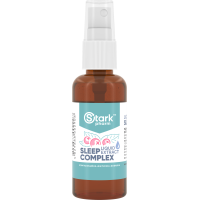
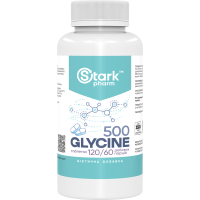
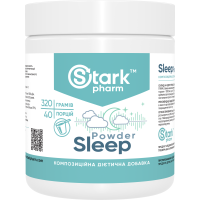
Studies on sleep and colds do not prove that any dietary supplement can replicate the immune effects of adequate sleep. This is a fundamental limitation of the evidence: observations about hours of nightly rest cannot be automatically extrapolated to melatonin, magnesium, glycine, or combination formulas.
Melatonin is a hormone involved in the dark signal and circadian regulation. Data on its use for specific sleep problems do not provide evidence that it reduces the likelihood of catching a cold. Magnesium and glycine also require separate, high-quality studies with specific immune endpoints before such conclusions can be drawn.
The most reasonable approach is to first assess the cause of sleep deprivation: a shifted schedule, nighttime awakenings, workload, light, noise, stress, or symptoms of sleep disturbance. If the problem persists, the choice of additional means should be discussed with a specialist, especially if you are taking regular medications or have chronic conditions.
What really helps maintain adequate sleep
The practical goal is to create conditions where you can get enough sleep most nights without turning it into another source of anxiety. A guideline for healthy adults is at least seven hours regularly, but tolerability of the specific regimen is also important.
- Consistent wake-up time. Try to wake up at about the same time whenever circumstances allow.
- Sufficient sleep window. If you need seven to eight hours of actual sleep, also allow time for falling asleep and possible awakenings. Light during the day, darkness at night. Daylight supports circadian signals; reduce the brightness of the light before bedtime.
- Control caffeine. Coffee may increase alertness, but it does not replace the biological processes of a night's sleep. Sensitive people should avoid caffeine in the afternoon.
- Moderate regular activity. Movement during the day is good for your routine; intense exercise right before bed can make it difficult for some people to fall asleep.
- Favorable environment. If possible, cool, less noise and light, comfortable conditions for relaxation.
In the Ukrainian realities of night air raids, safety is more important than perfect continuity of sleep. If the night was interrupted, you should not blame yourself for not having the “right” regime. When the situation allows, you can return to your usual schedule, give yourself the opportunity to rest and avoid excessive stress. One such night in itself does not mean that a person will definitely get sick.
What can and cannot be inferred from scientific data
Available evidence strongly suggests an association between chronically short sleep and higher susceptibility to clinical colds in rhinovirus studies. Laboratory experiments and reviews further demonstrate that immune regulation is sensitive to sleep and circadian rhythms.
At the same time, these results should not be translated into promises like "8 hours of sleep will protect against viruses." The immune response depends on many factors: contact with the pathogen, previous immune experience, age, concomitant diseases and general health. Sufficient sleep is an important part of everyday life, but it is not a separate guarantee of health.
Frequently asked questions
Does lack of sleep reduce immunity?
Insufficient sleep can alter the functioning of individual components of the immune system. However, “immunity” is not measured by a single indicator, so it is more correct to talk about changes in immune regulation.
Can you catch a cold from one sleepless night?
A sleepless night alone does not cause a viral cold without exposure to the pathogen. Most studies of cold susceptibility have assessed sleep over several days or weeks.
How much sleep does an adult need?
Expert consensus recommends that most healthy adults get at least seven hours of sleep regularly. Individual needs may be higher.
Is six hours of sleep really not enough for immunity?
Studies have linked shorter sleep to a higher risk of catching a cold, but that doesn't mean everyone who gets six hours of sleep will get sick.
What is more important: quality or duration of sleep?
Both parameters are important. Duration shows the amount of actual sleep, while quality helps to understand how continuous and restorative it is.
Is sleep related to vaccination response?
Some studies and meta-analyses have found an association between short sleep and weaker antibody responses. Results vary depending on the methodology, vaccine type, and time of measurement.
Will melatonin or magnesium replace a good night's sleep?
No, there is no scientific evidence to support these substances as a complete replacement for adequate sleep. Findings about sleep and colds cannot be automatically extrapolated to dietary supplements.
What to do if sleep is constantly interrupted?
It is worth assessing the causes of awakenings and, if possible, improving the conditions of rest. If the problem is persistent, accompanied by significant daytime sleepiness or breathing disorders, consult a doctor.
Sources
- Cohen S et al. (2009). Sleep Habits and Susceptibility to the Common Cold. Archives of Internal Medicine. PubMed.
- Prather AA et al. (2015). Behaviorally Assessed Sleep and Susceptibility to the Common Cold. Sleep. PubMed.
- Besedovsky L et al. (2019). The Sleep-Immune Crosstalk in Health and Disease. Physiological Reviews. PubMed.
- Lange T et al. (2010). Effects of Sleep and Circadian Rhythm on the Human Immune System. Annals of the New York Academy of Sciences. PubMed.
- Besedovsky L et al. (2012). Sleep and Immune Function. Pflügers Archiv - European Journal of Physiology. PubMed.
- Irwin M et al. (1994). Partial Sleep Deprivation Reduces Natural Killer Cell Activity in Humans. Psychosomatic Medicine. PubMed.
- Irwin M et al. (1996). Partial Night Sleep Deprivation Reduces Natural Killer and Cellular Immune Responses in Humans. FASEB Journal. PubMed.
- Irwin MR et al. (2016). Sleep Disturbance, Sleep Duration, and Inflammation: A Systematic Review and Meta-Analysis of Cohort Studies and Experimental Sleep Deprivation. Biological Psychiatry. PubMed.
- Lange T et al. (2003). Sleep Enhances the Human Antibody Response to Hepatitis A Vaccination. Psychosomatic Medicine. PubMed.
- Spiegel K et al. (2023). A Meta-Analysis of the Associations Between Insufficient Sleep Duration and Antibody Response to Vaccination. Current Biology. PubMed.
- Prather AA et al. (2012). Sleep and Antibody Response to Hepatitis B Vaccination. Sleep. PubMed.
- Benedict C et al. (2012). Acute Sleep Deprivation Has No Lasting Effects on the Human Antibody Titer Response Following a Novel Influenza A H1N1 Virus Vaccination. BMC Immunology. PubMed.
- Watson NF et al. (2015). Recommended Amount of Sleep for a Healthy Adult: A Joint Consensus Statement of the American Academy of Sleep Medicine and Sleep Research Society. Sleep. PubMed.
Dietary supplement. Not a medicine. Consult a doctor before use.
Products related to this post
Related Posts
Comments
Information
Customer Service
Extras
My Account


Sports nutrition manufacturer in Ukraine StarkPharm © 2026


