Your shopping cart is empty!

Melatonin for children: why you can't do without consulting a doctor
Published: 03/11/2026
Times Read: 144
Comments : 0
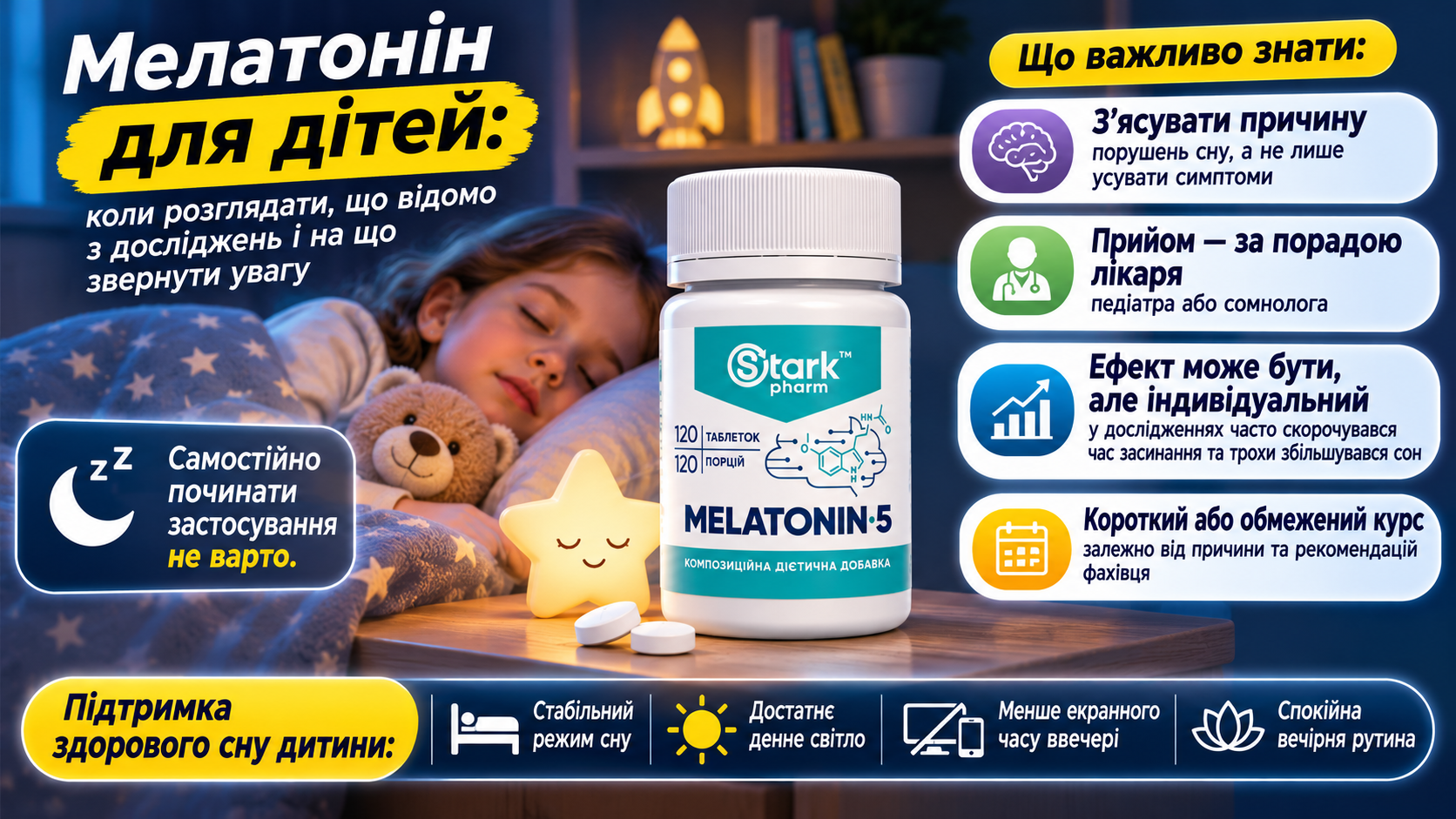
Can I give melatonin to a child if he or she has trouble falling asleep for a long time? The short answer is: you shouldn’t start using it on your own. Melatonin is a hormone that is involved in regulating the circadian rhythm, not a universal remedy that eliminates the causes of poor sleep. In children and adolescents, the time of falling asleep changes with age, and the same complaint can be due to completely different circumstances: from an unstable regime to a condition that requires examination.
Scientific studies have indeed studied melatonin in pediatrics. However, the benefits have varied depending on the group of participants, the nature of the sleep difficulties, the form used, and how the outcome was assessed. It is especially important not to confuse clinical trial data with a recommendation for self-administration at home. Before considering any supplements, it is advisable to understand why a child is not getting enough sleep.
Why does a child's body need its own melatonin?
Melatonin is produced primarily in the pineal gland and helps the body distinguish between biological day and night. When light levels decrease in the evening, the signal from the internal clock changes, and melatonin levels usually increase. In the morning, light helps to reset the circadian rhythm to the active part of the day.
In children, the sleep rhythm is formed gradually, and its time distribution changes with age. A teenager may naturally feel sleepy later than a younger child. If, at the same time, an early start to classes forces you to get up very early, a sleep deficit occurs - even without a separate illness. That is why the time of going to bed should be assessed together with the time of getting up, the duration of rest and well-being during the day.
Supplemental melatonin can affect the time-of-day signal, but it does not automatically compensate for sleep deprivation, a noisy bedroom, anxiety, excessive stress, or regular late-night video viewing. During the consultation, the doctor first determines whether intervention is necessary at all and which mechanism it should target.
Why does a child stay awake for a long time: it is important to establish the cause
The same phrase "can't fall asleep" does not always mean the same problem. In preschoolers, difficulties may be associated with the habit of falling asleep only in the presence of parents, irregular daytime sleep or too late evening bedtime. In schoolchildren - with overload, anxiety, evening lighting or an unstable schedule. In adolescents - with a natural shift in the circadian rhythm and early start of school.
There are also reasons that are difficult to notice without a medical evaluation: snoring with pauses in breathing, constant discomfort, restless legs syndrome, side effects of other medications, psycho-emotional difficulties. It is important whether the child simply falls asleep late, wakes up often, or does not get enough sleep even after a sufficient number of hours in bed.
Your pediatrician may ask you to keep a sleep diary: record approximate times you fall asleep, wake up, nap, use of gadgets, and daytime sleepiness. This description is often more useful than a general assessment of “sleeping poorly.” It can help distinguish between an inconsistent pattern and a problem that requires specialized help.
What melatonin studies show in children
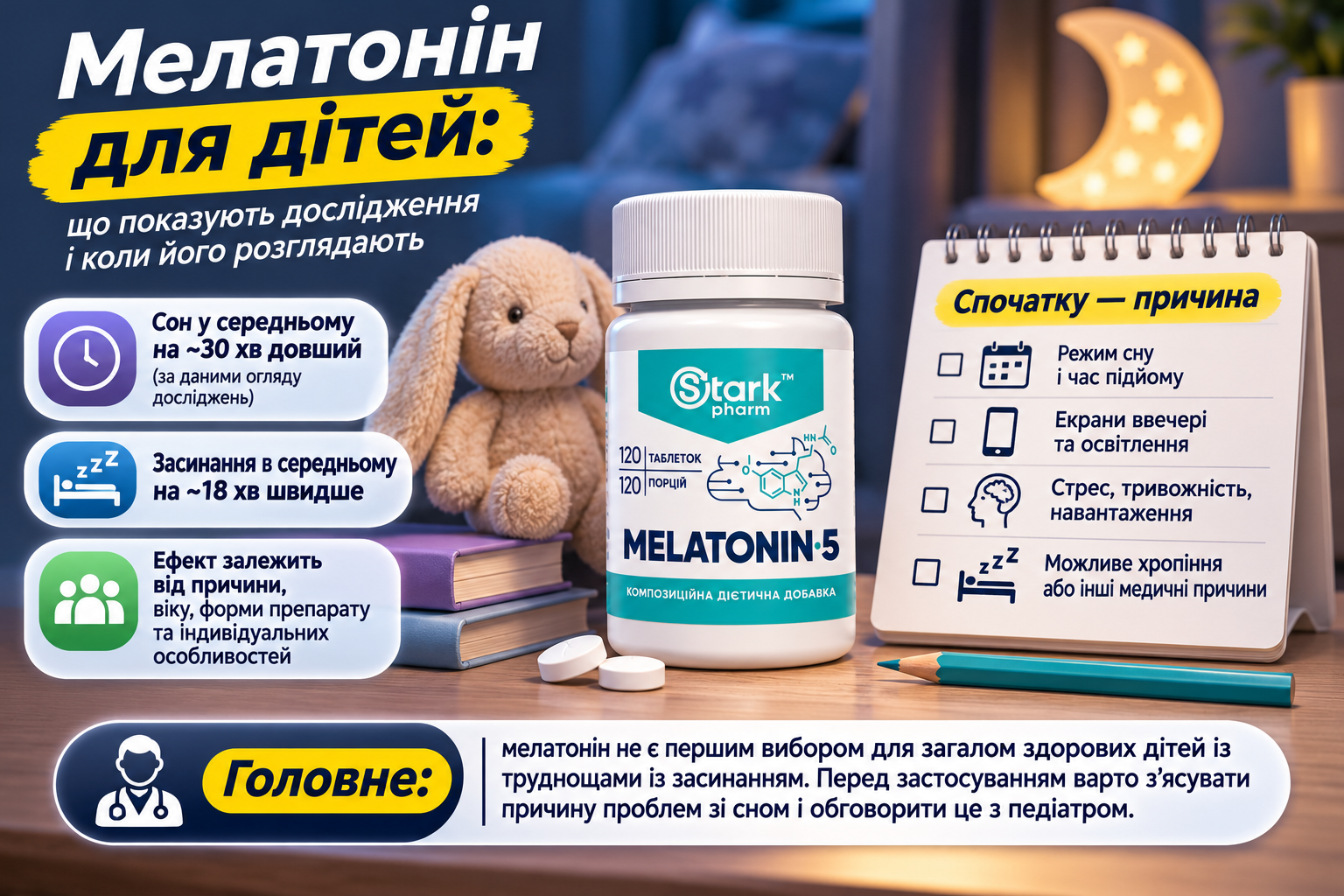
A 2023 systematic review of children and adolescents with chronic sleep difficulties with no other identifiable cause included eight randomized trials involving 419 people. According to sleep diaries, total sleep time in the melatonin groups was on average about 30 minutes longer and time to fall asleep was about 18 minutes shorter. However, the authors rated the certainty of some of the findings as low or very low and stressed that melatonin should not be the first choice for generally healthy children with such complaints.
Other trials have studied children with neurodevelopmental disorders. For example, a randomized trial by Gringras et al. (2017) included 125 children and adolescents, mostly with autism spectrum disorders. Over a 13-week period, researchers evaluated a specific sustained-release form of melatonin after behavioral interventions had failed. This particular group showed improvements in certain sleep measures compared to placebo.
However, a study by Gringras et al. (2012) among children with neurodevelopmental disorders showed an important difference between the indicators: falling asleep occurred earlier, but the overall gain in sleep was much more modest, in particular due to earlier awakenings. Thus, even a positive result in falling asleep does not translate into the same benefit for the whole night.
The trial figures describe the average outcome in the selected groups, not the prognosis for an individual child. They should not be used as a guide to the choice of drug, form, or regimen.
In which cases the data differs: comparative table
| Situation | What is known | What is important to consider |
|---|---|---|
| Unstable evening routine | Changing your habits and sleep time is a key first step | You need to find the reason for falling asleep late. |
| Late bedtime in teenagers | Circadian shift may be a big part of the problem | Morning light, schedule, and wake-up time are important |
| Prolonged sleep difficulties in generally healthy children | In short-term studies, modest changes in sleep parameters are possible | Evidence is mixed; behavioral measures first |
| Certain neurodevelopmental disorders | There are special clinical trials with positive results | Their findings cannot be generalized to all children. |
| Long-term daily use | Some data is available, but the long-term effects are not fully understood. | Individual assessment and regular review of need are required |
This distinction helps to explain why the answer to the question “is melatonin right for my child?” doesn’t come down to age or the number on the label. The doctor looks at the big picture: the regimen, symptoms, underlying conditions, and other approaches that have already been tried.
Why you should change your sleep habits first
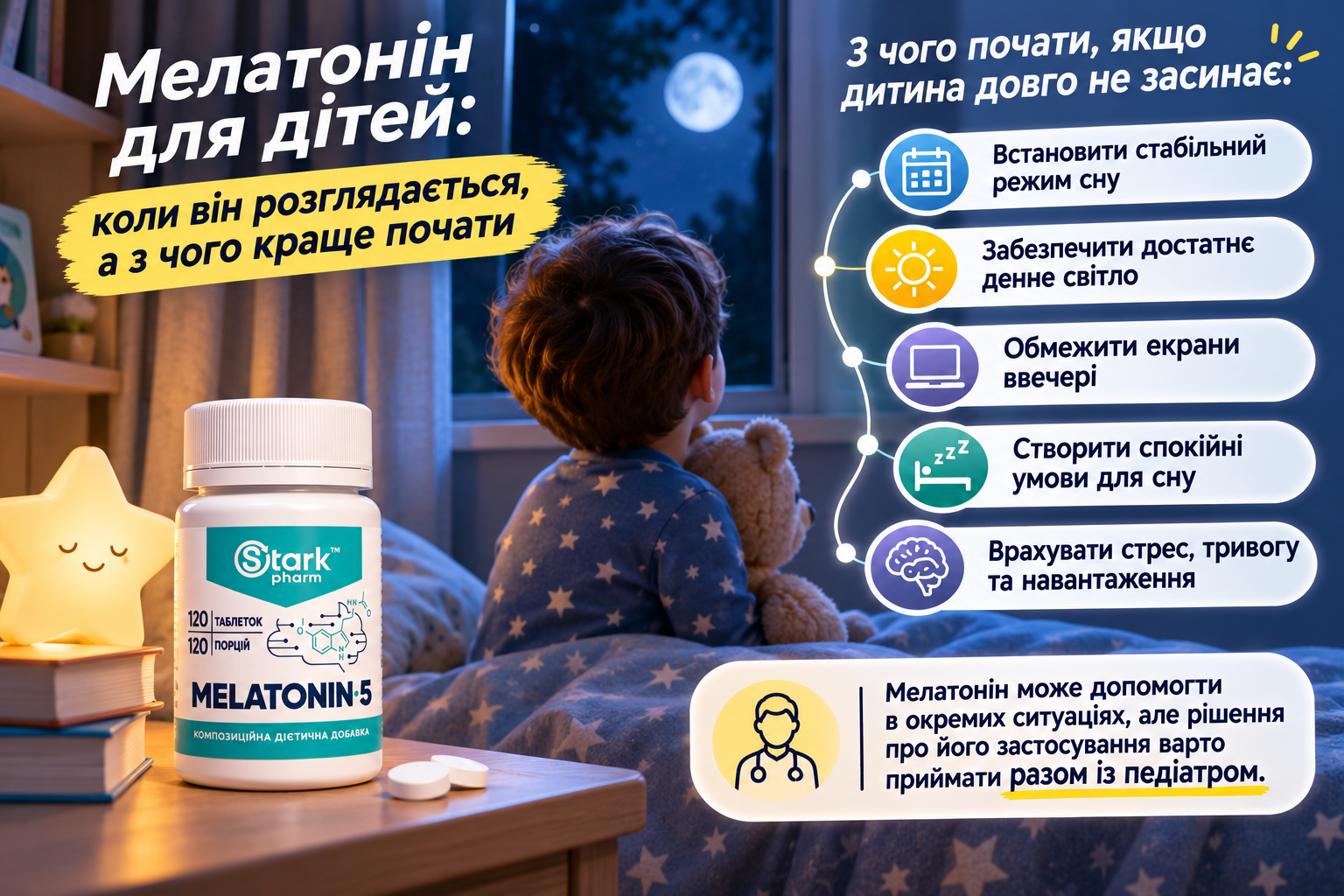
The safest first step is to try to make your circadian rhythm more predictable. This doesn't mean that all your problems will disappear after a few nights. But without a consistent routine, it's hard to know if there's a persistent problem and what's causing it.
- Stable rise. It is advisable to maintain the morning wake-up time as consistent as possible, taking into account age and sleep needs.
- Daylight and movement. Walking and sufficient daylight help the body receive a clearer signal about the beginning of the active part of the day.
- A calmer evening. Before going to bed, reduce the brightness of the lights, intense games, and emotionally charged content.
- A clear ritual. A repetitive sequence of simple actions—hygiene, reading, preparing the room—helps make bedtime predictable.
- A comfortable environment. Silence, a comfortable temperature, and adequate darkness reduce external factors that interfere with rest.
If, despite these changes, your child continues to have trouble sleeping, this is not an argument for self-administering hormone supplementation, but for talking to your pediatrician. In case of prolonged or severe sleep disturbances, a pediatric sleep specialist may be needed.
Side effects and uncertainty of long-term safety
A common mistake is to consider a substance harmless just because the body produces it itself. An endogenous hormone and its additional intake are not identical circumstances. The time of exposure, individual sensitivity, concomitant medications, and duration of use are important.
A systematic review by Händel et al. (2023) analyzed 22 randomized trials involving 1350 children and adolescents. The researchers found no statistically significant increase in serious adverse events in the available trials, but the incidence of non-serious adverse events was higher in the melatonin groups. These may include daytime sleepiness, headache, and other complaints that require attention.
Long-term data on puberty and bone development are much less available. The review included only four observational studies with 105 participants on pubertal development; their results do not allow for broad conclusions. A separate two-year follow-up study by Malow et al. (2021) in children with autism spectrum disorders found no clear negative changes in the parameters of growth and sexual development examined. However, this does not support safety for all children for any duration of use.
The most accurate conclusion: short-term results and observations of individual groups do not close the question of long-term safety. If melatonin is prescribed by a specialist, it is important to periodically return to the question of whether the need for it continues.
Accidental ingestion: why storage matters
A child may perceive chewable tablets or sweet forms of supplements as a treat. This creates a separate risk that is not related to the intended use. American researchers Lelak et al. (2022) analyzed appeals to US poison centers for 2012–2021: more than 260 thousand reports of melatonin ingestion in children and adolescents were registered, and the number of such reports increased sharply during the period. These data describe the USA and are not an estimate of the prevalence for Ukraine.
A separate issue is whether the actual content of individual products matches the label. Cohen et al. (2023) found significant variability in melatonin content in a laboratory study of chewable supplements marketed in the United States. This finding does not prove that each supplement is of incorrect composition, but it does highlight the importance of quality control and caution when selecting products for families with children.
All supplements and medications should be kept out of the sight and reach of children, preferably in a locked place. If a child accidentally swallows an unknown amount of a product, do not wait for symptoms to appear: seek medical advice, stating the name, composition and possible amount. Seek emergency medical attention if the child is unconscious, has convulsions, has difficulty breathing or cannot be awakened.
When to see a pediatrician or sleep specialist
It is helpful to prepare a description of a typical day in advance: study time, physical activity, daytime naps, screen time, bedtime, and wake-up times. It is also worth mentioning any underlying medical conditions and any medications or supplements the child is already taking. Based on this information, the specialist will be able to determine whether a correction in the regimen is sufficient or whether additional testing is needed.
If melatonin is already being used on the advice of a specialist, it is worth having a clear goal and a way to check it: what exactly should change in sleep, how daytime well-being is assessed, and when to review the need for continuation. It is dangerous to independently change the amount or combine melatonin with other means.
What is important for parents to remember?
Melatonin has a scientifically proven role in regulating circadian rhythms; in pediatrics, there are clinical studies with positive results in certain groups. However, melatonin is not a universal solution for children's sleep. First of all, you should find out the cause of the difficulties, help establish a regimen and, if necessary, seek professional evaluation.
Such caution does not negate the research—it takes into account who exactly it concerned, what outcomes were measured, and what questions still remain open.
Frequently asked questions
Can I give melatonin to a child myself?
Don't start without consulting your pediatrician. First, you need to figure out the cause of your child's sleep difficulties and evaluate non-drug approaches.
Will melatonin help if a child falls asleep very late?
Some studies have shown a reduction in the time it takes to fall asleep, but the results depend on the cause and the child's characteristics. This does not mean that everyone needs the supplement.
Are the recommendations the same for preschoolers and teenagers?
No. Age-related sleep rhythms, the need for rest duration, and possible causes of disruption vary, so an individual approach is needed.
Is it enough to simply put away your phone before bed?
Reducing evening light and screen activity can be helpful, but for persistent difficulties, this is not always enough. The entire daily schedule is important.
Has melatonin been studied in children with autism?
Yes. There are randomized trials of specific forms in such clinical groups. They cannot be automatically transferred to children without the corresponding conditions.
Is it known how long-term use affects puberty?
There is not enough data yet to draw a clear conclusion. The small-scale observations available are no substitute for large-scale, long-term studies.
Can adverse reactions occur?
Yes. Studies have reported mild side effects, including drowsiness and headache. Any unusual symptoms should be discussed with your doctor.
What to do if a child accidentally eats melatonin pills?
Seek medical advice, specifying the name of the product and possible quantity. In case of loss of consciousness, convulsions or breathing problems, emergency medical assistance should be called.
Sources
- Händel MN et al. (2023). The short-term and long-term adverse effects of melatonin treatment in children and adolescents: a systematic review and GRADE assessment. EClinicalMedicine, 61, 102083. PubMed.
- Edemann-Callesen H. et al. (2023). Use of melatonin in children and adolescents with idiopathic chronic insomnia: a systematic review, meta-analysis, and clinical recommendation. EClinicalMedicine, 61, 102048. PubMed.
- Gringras P. et al. (2017). Efficacy and Safety of Pediatric Prolonged-Release Melatonin for Insomnia in Children With Autism Spectrum Disorder. Journal of the American Academy of Child & Adolescent Psychiatry, 56(11), 948–957.e4. PubMed.
- Gringras P. et al. (2012). Melatonin for sleep problems in children with neurodevelopmental disorders: randomized double-masked placebo-controlled trial. BMJ , 345, e6664. PubMed.
- Malow BA et al. (2021). Sleep, Growth, and Puberty After 2 Years of Prolonged-Release Melatonin in Children With Autism Spectrum Disorder. Journal of the American Academy of Child & Adolescent Psychiatry, 60(2), 252–261.e3. PubMed.
- Lelak K. et al. (2022). Pediatric Melatonin Ingestions—United States, 2012–2021. MMWR Morbidity and Mortality Weekly Report, 71(22), 725–729. PubMed.
- Cohen PA et al. (2023). Quantity of Melatonin and CBD in Melatonin Gummies Sold in the US. JAMA, 329(16), 1401–1402. PubMed.
- Bruni O. et al. (2024). European expert guidance on management of sleep onset insomnia and melatonin use in typically developing children. European Journal of Pediatrics, 183, 2955–2964. PubMed.
Dietary supplement. Not a medicine. Consult a doctor before use.
Products related to this post
Related Posts
Comments
Information
Customer Service
Extras
My Account


Sports nutrition manufacturer in Ukraine StarkPharm © 2026


