Your shopping cart is empty!

Citicoline and caffeine: does the combination make sense?
Published: 25/10/2026
Times Read: 54
Comments : 0
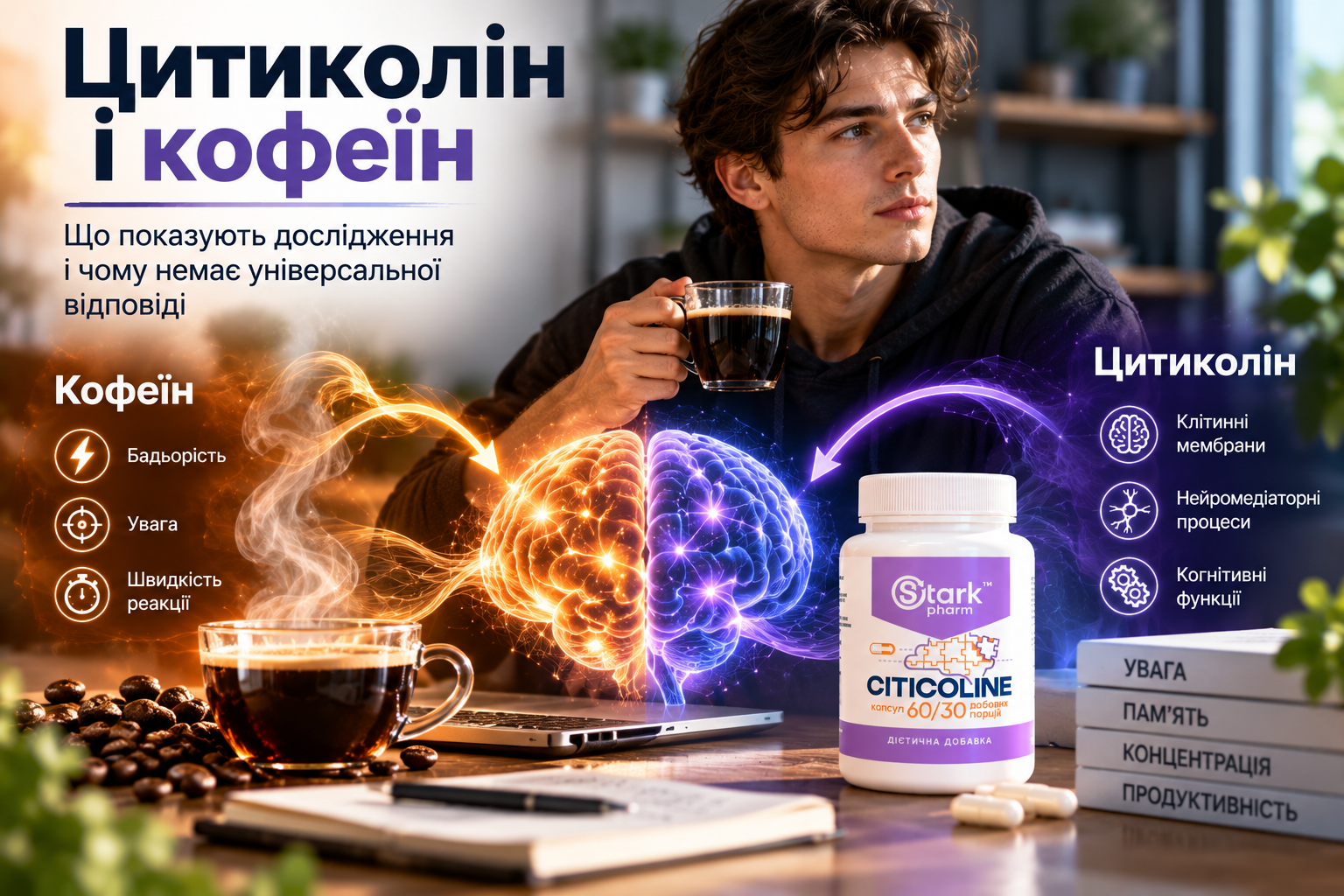
Citicoline and caffeine have been studied together in functional drinks aimed at improving attention and reaction time. In one randomized trial, participants performed better on a number of cognitive tests after taking the drink than after taking a placebo. But this does not mean that citicoline enhances the effects of caffeine: the study did not have separate groups for each ingredient, and the drink formula also contained other ingredients. The difference between the result of a ready-made mixture and evidence of an interaction between the two substances is the key to reading these data correctly.
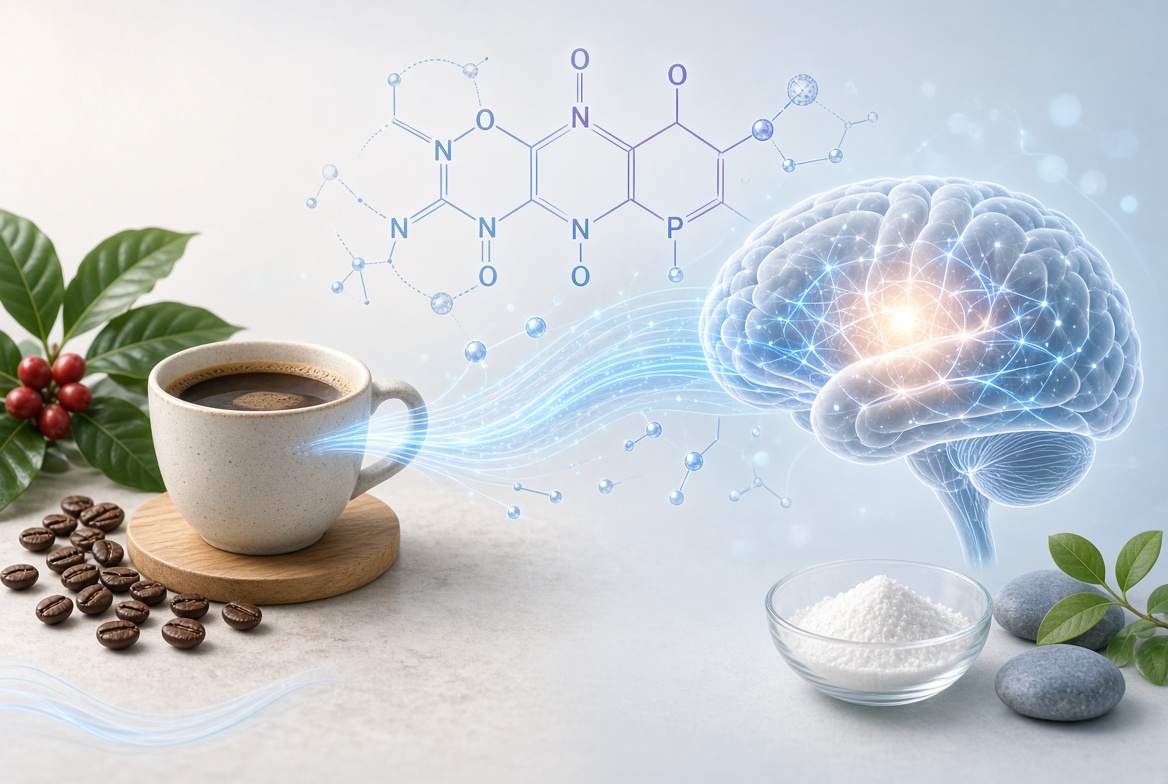
What is the difference between citicoline and caffeine?
Caffeine is a psychoactive compound that temporarily blocks adenosine receptors. Adenosine is involved in the regulation of sleepiness; when its signal is reduced, a person may feel more alert. Scientific evaluations and controlled trials demonstrate the effects of caffeine on alertness and certain measures of attention, but the effect depends on habitual consumption, sleep, time of day, and individual sensitivity.
Citicoline (CDP-choline) is an intermediate in the biosynthesis of phosphatidylcholine, an important component of cell membranes. After entering the body, it undergoes metabolic transformations associated with the exchange of choline and cytidine derivatives. This pathway is not identical to the rapid blockade of adenosine receptors. The biochemical mechanism itself does not prove that adding citicoline to coffee will give a tangible result.
Therefore, calling citicoline a “mild caffeine” is incorrect. The substances have different mechanisms, and their joint effect should be evaluated only in properly designed combination studies.
What a study of the drink in 60 healthy adults showed
Bruce et al. (2014) conducted a randomized, double-blind, placebo-controlled trial of 60 people aged 20–40 years. Half received a citicoline-caffeinated drink and the other half received a placebo drink. The researchers assessed reaction speed, task accuracy, maze learning, and electrophysiological measures.
The functional drink group showed faster reaction times on a sustained attention test, fewer specific types of errors, and better performance on some information processing tasks. There were also differences in electroencephalographic measures that the authors linked to stimulus processing. However, not every test showed a statistically significant difference.
Of particular note is that the multi-ingredient beverage was compared to a placebo. In this design, it is impossible to separate the effects of caffeine from the possible effects of citicoline or other ingredients. The authors explicitly acknowledge this limitation. The study was funded by the beverage company; this does not automatically invalidate the results, but it does reinforce the need for independent replication.
What is known from earlier work with electroencephalography?
In another study, Bruce (2012) studied the electrical activity of the brain after consuming a functional drink that included citicoline along with other ingredients. The work showed differences in individual EEG parameters compared to placebo. However, the recording of electrical signals is not a direct measure of actual work performance, learning ability, or everyday concentration.
Both studies are useful as early experiments with ready-to-drink beverages. They do not demonstrate how much citicoline adds to the established effects of caffeine. The small sample sizes and short observational horizons also limit the generalizability of the results to other age groups and regular consumption.
Why the mixture result is not proof of synergy
Synergy would mean that the combined effect of two substances exceeds the expected effect of either alone. To test this, you need to compare not only the drink and the placebo, but at least four conditions: placebo, caffeine alone, citicoline alone, and both substances together. It is desirable that the other ingredients and taste of the drink remain the same.
| Research option | What question does it answer? |
|---|---|
| Multi-ingredient drink vs. placebo | Does the result of the finished formula differ from the control drink? |
| Caffeine vs. placebo | What is the contribution of caffeine under given conditions? |
| Citicoline vs. placebo | What is the contribution of citicoline under given conditions? |
| Combination vs. each ingredient separately | Is there an added effect and is there a reason to evaluate the interaction? |
In the Bruce et al. (2014) trial, the required individual active groups were not present. Therefore, it is premature to conclude that “citicoline potentiates caffeine” from this study. Even positive test results may be explained by caffeine itself, other components of the beverage, or a combination of both.
What these results mean for attention and memory
Scientific conclusions on citicoline itself cannot be automatically extrapolated to its combination with caffeine. For example, the EFSA (2024) assessment concerned citicoline and memory in middle-aged and older people with complaints of age-related memory changes. After analyzing the available data, the experts did not establish a cause-and-effect relationship for the claimed effect. This is not an assessment of a caffeinated drink, but a reminder that results for different indicators and groups of people should be considered separately.
So, there is a limited positive signal for the combination on individual laboratory tasks, but there is no sufficient basis to promise additional improvements in concentration or memory compared to caffeine alone.
What to look out for due to the presence of caffeine
Caffeine can affect sleep onset, duration and quality even when the individual is no longer subjectively stimulated. According to EFSA (2015), in some adults, even a single dose of 100 mg close to bedtime can alter sleep characteristics. Sensitivity to caffeine varies considerably between individuals.
Not only supplements or specialty beverages are important for tolerability, but also caffeine from coffee, tea, cola, energy drinks, and other sources. Caffeine content varies by product and serving size. Quantities used in individual experiments should not be translated into a single combination regimen.
If you are sensitive to stimulants, have sleep disorders, are pregnant, breastfeeding, have a chronic illness, or are taking medication, you should discuss additional caffeine intake with your doctor. Citicoline should not be considered a way to counteract the undesirable effects of caffeine or compensate for sleep deprivation.
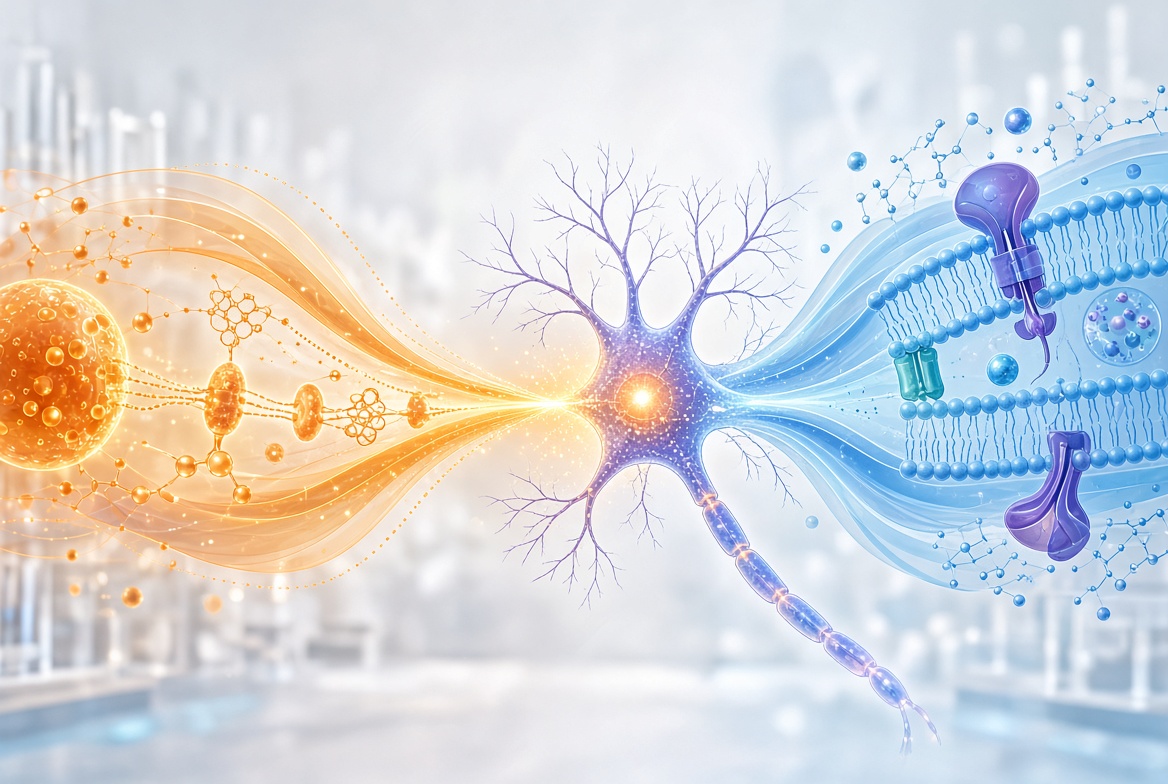
Does the combination make sense: what can we say now?
The idea of combining citicoline and caffeine is of research interest, as the substances are involved in different physiological processes. There are small human trials of multi-ingredient drinks that have shown better results on individual tests compared to placebo. However, these data are not enough to attribute the changes to the interaction of the two components or to recommend such a combination to anyone who wants to work more attentively.
The practical question is not “which ingredients can be put together,” but “whether there is evidence of additional benefit compared to each alone.” For citicoline and caffeine, there is no convincing answer to the second question yet. A more reliable approach is to evaluate the study design, not confuse laboratory tests with real-world results, and consider the risk of sleep disruption from caffeine.
Frequently asked questions
Can I combine citicoline and caffeine?
They have been studied together in functional drinks, but this is not enough to recommend the combination for regular use on its own. Individual circumstances and caffeine tolerance matter.
Does citicoline enhance the effects of caffeine?
The available studies of ready-to-drink beverages do not allow this to be established, as they did not fully compare the combination with each substance separately.
Has citicoline with caffeine been studied in humans?
Yes. Specifically, Bruce et al. (2014) studied a multi-ingredient drink in 60 healthy adults, comparing it to a placebo.
Does this combination improve concentration?
In a separate small study, participants performed better on a series of attention tests after drinking the beverage. Whether the effect was greater than that of caffeine alone is unknown.
Is there evidence of synergy between citicoline and caffeine?
There is no convincing evidence of synergy: this requires studies with separate groups of each component and the combination itself.
Can caffeine affect sleep?
Yes, even relatively small amounts of caffeine near bedtime can impair its duration or structure in sensitive people.
Does citicoline replace caffeine?
No. Citicoline does not act as a direct analogue of caffeine: their biochemical mechanisms are different, and a comparable stimulant effect of citicoline has not been proven.
Sources
- Bruce SE, Werner KB, Preston BF, Baker LM (2014). Improvements in concentration, working memory and sustained attention following consumption of a natural citicoline–caffeine beverage. International Journal of Food Sciences and Nutrition, 65(8), 1003–1007. PubMed.
- Bruce SE (2012). Improvements in quantitative EEG following consumption of a natural citicoline-enhanced beverage. International Journal of Food Sciences and Nutrition, 63(4), 421–425. PubMed.
- EFSA NDA Panel (2011). Scientific Opinion on the substantiation of health claims related to caffeine, increased alertness and increased attention. EFSA Journal , 9(4), 2054. DOI.
- EFSA NDA Panel (2015). Scientific Opinion on the safety of caffeine. EFSA Journal , 13(5), 4102. DOI.
- EFSA NDA Panel (2024). 'Citicoline' and support of the memory function: Evaluation of a health claim pursuant to Article 13(5) of Regulation (EC) No 1924/2006. EFSA Journal , 22(7), e8861. PubMed.
Dietary supplement. Not a medicine. Consult a doctor before use.
Products related to this post
Related Posts
Comments
Information
Customer Service
Extras
My Account


Sports nutrition manufacturer in Ukraine StarkPharm © 2026


