Your shopping cart is empty!

Citicoline: What it is, how it works, and how it is related to choline
Published: 22/10/2026
Times Read: 7
Comments : 0
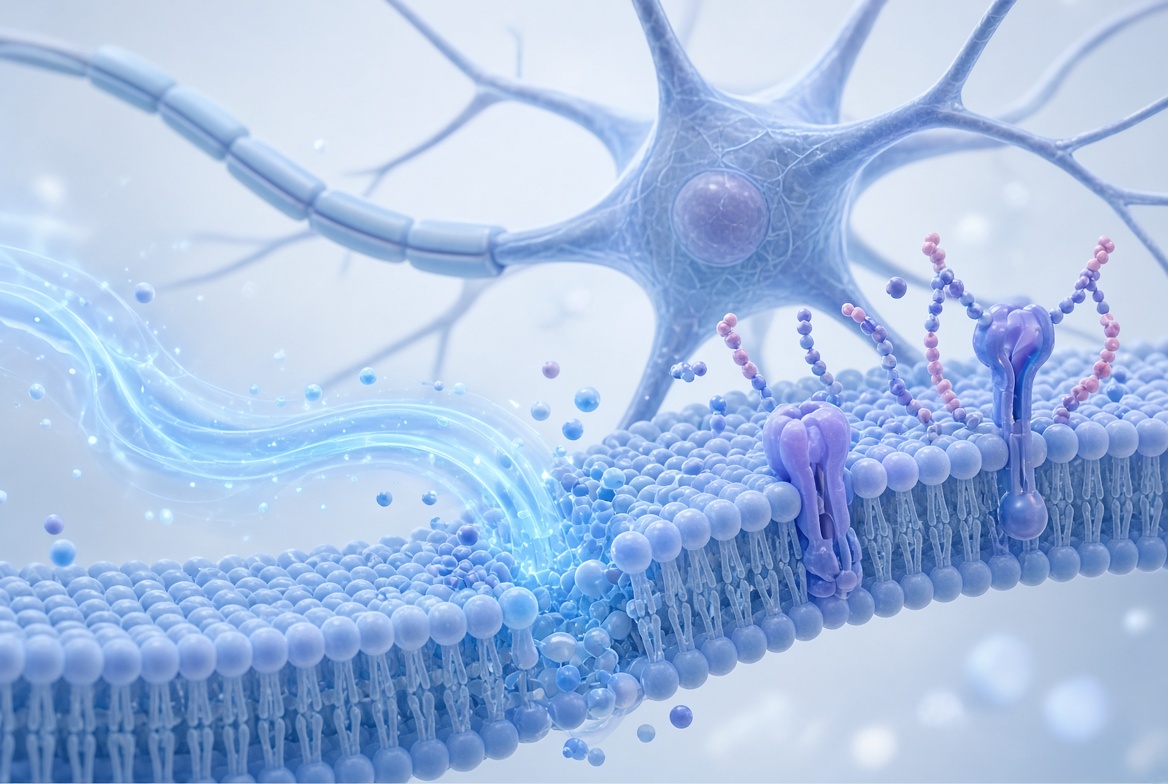
Citicoline (CDP-choline) is a compound that occurs naturally in cells and is involved in the synthesis of phosphatidylcholine, a major component of cell membranes. Its name often appears alongside choline, but the two substances are not identical: choline is a nutrient, and citicoline is an intermediate in a specific biochemical pathway. It is because of this connection that citicoline is being studied in the context of phospholipid metabolism and nerve cell function.
To understand what citicoline is and why the body needs it, it is important to separate three questions: what role it plays inside the cell, what happens after oral administration, and how convincing the results of studies on supplements are. The biochemical role of the substance is well described, but it does not by itself guarantee a specific effect on memory or attention.
What is citicoline (CDP-choline)?
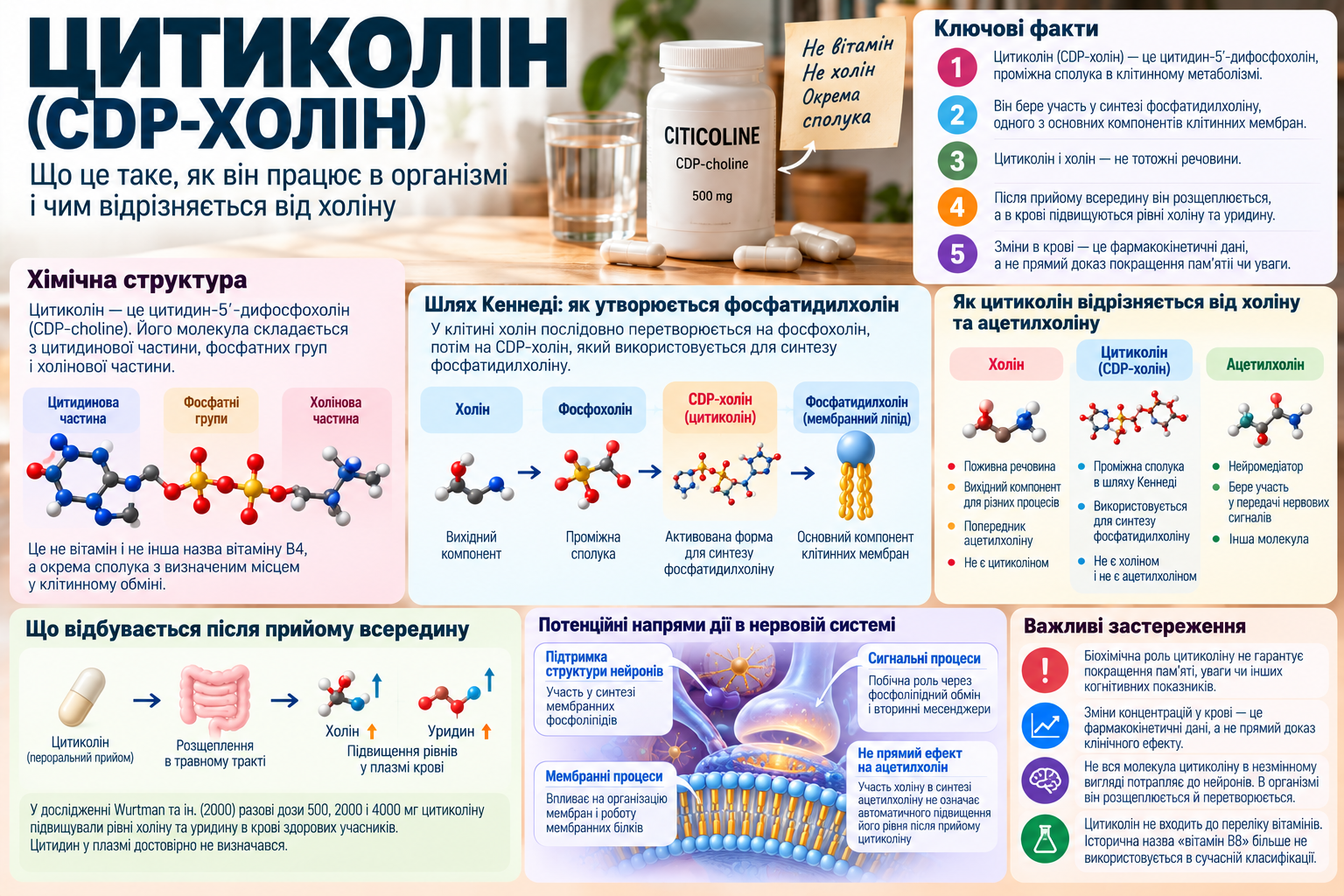
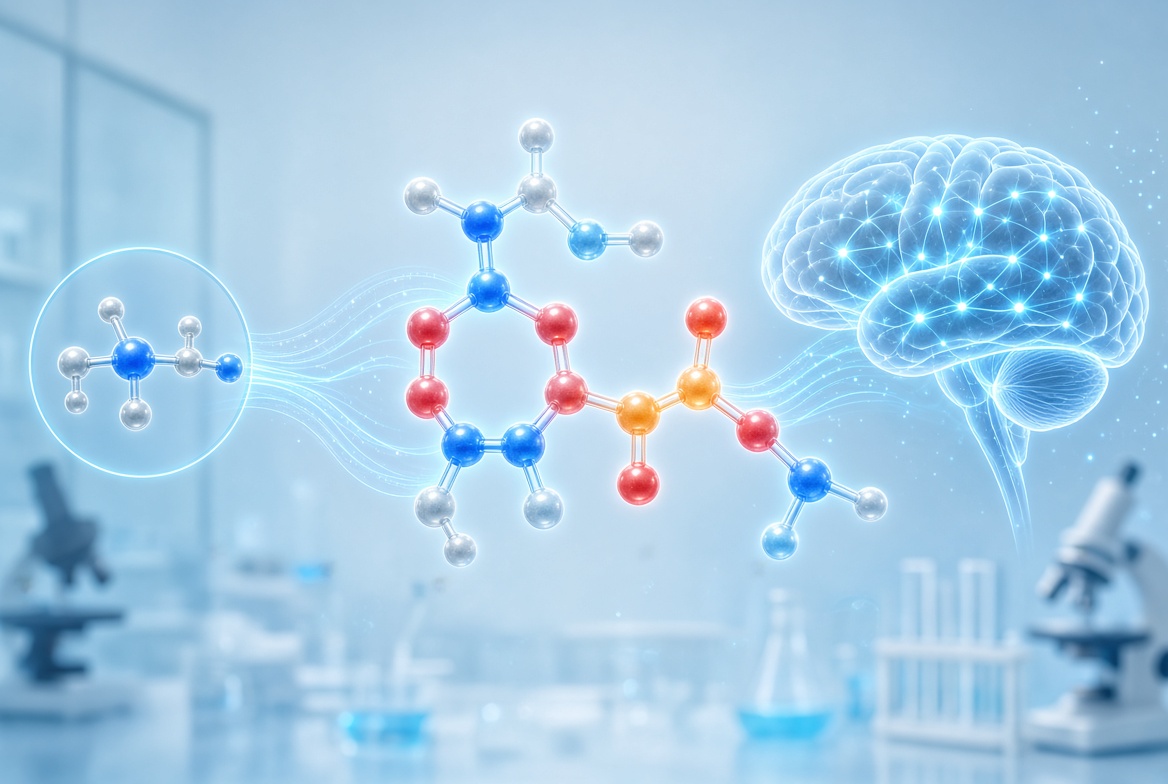
The full biochemical name of citicoline is cytidine diphosphate choline (CDP-choline). Its molecule contains choline and cytidine moieties connected by phosphate groups. It is not a vitamin or another name for vitamin B4: citicoline is a separate compound with a specific place in cellular metabolism.
In cells, CDP-choline is formed as an intermediate in the synthesis of phosphatidylcholine. This sequence of reactions is called the Kennedy pathway, after biochemical studies that established the mechanism of formation of membrane phospholipids. When we talk about citicoline in a dietary supplement, we mean the introduction of the substance from the outside; its further path in the body should not be confused with the functioning of already formed CDP-choline inside the cell (Weiss, 1995; Grieb, 2014).
In scientific literature and on labels, you may find the names “citicoline,” “CDP-choline,” and “cytidine diphosphate choline.” They all refer to the same basic compound, although the specific formulations may differ.
How citicoline is related to choline
Choline is the starting component, and CDP-choline is an intermediate on the way to phosphatidylcholine. In the cell, choline is first converted to phosphocholine. Phosphocholine then reacts with an activated cytidine group to form CDP-choline. In the next step, its phosphocholine moiety is transferred to a lipid component, diacylglycerol, to form phosphatidylcholine.
Phosphatidylcholine is a component of the membranes of many cells, including neurons. The membrane not only separates the interior of the cell from the external environment: its lipid composition affects the organization of proteins, the transport of substances and the course of cellular processes. Therefore, the synthesis pathway of phosphatidylcholine is of fundamental importance for cellular metabolism, and not only for the brain (Weiss, 1995).
Choline is also used in other processes. In particular, it is a precursor to acetylcholine, a neurotransmitter involved in the transmission of nerve signals. However, citicoline and acetylcholine are different molecules, and choline's involvement in the synthesis of the neurotransmitter does not mean that additional citicoline will automatically increase its amount in the brain or improve cognitive performance.
What happens to citicoline after taking it?
After oral administration, citicoline undergoes degradation and transformation. The traditional model of its metabolism describes the formation of choline and cytidine metabolites, which can be reused by cells. However, the details of absorption, the possibility of intermediate forms, and the precise contribution of each mechanism remain under investigation (Grieb, 2014).
In an experiment by Wurtman et al. (2000), 12 participants received placebo or single doses of 500, 2000, and 4000 mg of citicoline on different days. The researchers analyzed the levels of choline, cytidine, and uridine in the blood plasma for 12 hours. After taking citicoline, choline and uridine levels increased; cytidine was not reliably detected in human plasma. These results confirmed that oral citicoline affects the availability of its metabolic components in the blood.
However, changes in blood concentrations are pharmacokinetic data, not direct evidence of improved cognitive performance. Furthermore, it should not be assumed that the entire ingested citicoline molecule reaches neurons unchanged. Available scientific models describe a more complex pathway with cleavage, transport, and reuse of components (Wurtman et al., 2000; Grieb, 2014).
Why does the body need CDP-choline?
The main established role of endogenous CDP-choline is its participation in the construction of phosphatidylcholine. Since phospholipids are constantly being updated, cells require coordinated processes of their synthesis and redistribution. This applies not only to nervous tissue: the Kennedy pathway operates in many tissues of the body.
The literature also discusses the potential relationship of citicoline to acetylcholine metabolism and other signaling processes. However, not every plausible biochemical hypothesis is supported by clinically meaningful changes in attention, memory, or behavior. This is an important distinction between explaining a mechanism and promising a result.
What is known about citicoline and cognitive function?
Citicoline has been studied in different groups of participants, with different tasks, durations of observation, and assessment methods. Therefore, the findings on memory and attention cannot be generalized to the claim that citicoline “improves brain function” for all people.
In a randomized, double-blind study by Nakazaki et al. (2021), 100 people aged 50–85 years with age-related memory complaints participated. For 12 weeks, one group received 500 mg of citicoline per day, the other received a placebo. The authors recorded statistically significant differences in individual secondary measures of episodic memory and a cumulative memory score. This is the result of a specific study, and not a universal recommendation for intake or a proven property of any citicoline supplement.
However, the EFSA (2024) scientific assessment, which collated the available studies on memory, concluded that a cause-and-effect relationship between the use of citicoline and the improvement, maintenance or reduction of age-related memory loss has not been established. A favourable result from one trial has not been sufficiently confirmed by other data. This well illustrates the difference between a promising individual result and the overall strength of the evidence.
Caution is also needed regarding attention: some studies used drinks with several active ingredients, including caffeine, and do not allow isolating the effect of citicoline itself. The issue of the effect on attention and memory should be considered separately, indicating the participants, methods, and limitations of each study.
How is citicoline different from regular choline?
Choline comes from food in various forms, including as part of phospholipids. The body uses it to synthesize membrane components, acetylcholine, and other compounds. Citicoline, on the other hand, contains not only a choline but also a cytidine moiety and occupies a specific place in the phosphatidylcholine formation pathway.
This means that comparing “500 mg of choline” and “500 mg of citicoline” as the same amount of choline is incorrect: these are different substances with different molecular weights and compositions. Similarly, one cannot conclude from the name that citicoline is necessarily more effective than any other source of choline. Such a conclusion requires direct comparative studies with appropriate indicators, and not just theoretical considerations about the metabolic pathway.
So, the key difference is not in the simple division into “regular” and “improved” forms, but in the chemical structure, transformations after intake, and the role of each compound in metabolism.
What to look out for when using citicoline
The doses given in scientific papers characterize the design of specific studies. They are not instructions for self-administration: even with the same number of milligrams, the form of the substance, the characteristics of the participants, the purpose of administration, and the duration of observation may differ.
Citicoline is generally described as well-tolerated in the settings studied, but this does not mean that adverse reactions are completely absent. In the trial by Nakazaki et al. (2021), mild transient digestive events, headache, and other complaints were reported, which were assessed during follow-up. The frequency and nature of such events vary from study to study; a causal relationship cannot always be established.
Before using a dietary supplement, it is worth considering individual sensitivity to the components, concomitant diseases and concomitant medication. For children, pregnant women and women during lactation, self-administration without consulting a doctor is not recommended. Follow the instructions on the package, do not exceed the recommended daily portion and do not use the supplement as a substitute for a full diet.
Thus, citicoline is most accurately viewed as a well-studied biochemically intermediate in choline metabolism, for which the clinical outcomes of supplemental intake require separate, critical evaluation.
Frequently asked questions
What is citicoline in simple words?
Citicoline, or CDP-choline, is a natural intermediate compound that cells use during the synthesis of phosphatidylcholine, an important component of cell membranes.
Are Citicoline and CDP-choline the same thing?
Yes. CDP-choline is the shorthand biochemical name for cytidine diphosphate choline, which is also called citicoline.
Is citicoline a vitamin?
No. Citicoline is not a vitamin, but an intermediate in choline metabolism and phospholipid synthesis.
How is citicoline different from choline?
Choline is a separate nutrient. Citicoline contains choline and cytidine moieties, so it is not identical to pure choline in either composition or mass.
What happens to citicoline after taking it?
After oral administration, it undergoes metabolic transformations. In human studies, increased blood concentrations of choline and uridine were observed.
Some studies have shown encouraging results, but the body of evidence is not yet sufficient to establish a cause-and-effect relationship between supplemental citicoline and improved memory.
Do I need to take additional citicoline?
The mere fact that CDP-choline is involved in cellular metabolism does not mean that every person needs a supplement. The appropriateness of use depends on individual circumstances; it is worth discussing this with a doctor.
Sources
- Weiss GB (1995). Metabolism and actions of CDP-choline as an endogenous compound and administered exogenously as citicoline. Life Sciences . PubMed .
- Wurtman RJ, Regan M, Ulus I, Yu L (2000). Effect of oral CDP-choline on plasma choline and uridine levels in humans. Biochemical Pharmacology . PubMed .
- Grieb P. (2014). Neuroprotective properties of citicoline: facts, doubts and unresolved issues. CNS Drugs . PubMed .
- Nakazaki E. et al. (2021). Citicoline and Memory Function in Healthy Older Adults: A Randomized, Double-Blind, Placebo-Controlled Clinical Trial. The Journal of Nutrition . PubMed .
- EFSA NDA Panel (2024). 'Citicoline' and support of the memory function: Evaluation of a health claim pursuant to Article 13(5) of Regulation (EC) No 1924/2006. EFSA Journal . DOI .
Dietary supplement. Not a medicine. Consult a doctor before use.
Products related to this post
Comments
Information
Customer Service
Extras
My Account


Sports nutrition manufacturer in Ukraine StarkPharm © 2026


