Your shopping cart is empty!

Citicoline and dopamine: an often overstated mechanism
Published: 25/10/2026
Times Read: 55
Comments : 0
Citicoline (CDP-choline) is sometimes described as a substance that “increases dopamine.” There is some basis for this formulation: in several experiments, researchers recorded changes in the content of dopamine in certain structures of the brain of animals after the administration of citicoline. But between the laboratory indicator and the noticeable effect in humans, there are several fundamentally different levels of evidence. These are often missed in popular narratives.
Citicoline is an intermediate in the synthesis of phosphatidylcholine, an important component of cell membranes. It is also being studied in connection with neurotransmitter processes. However, this does not give grounds to call it a direct stimulator of dopamine receptors or to promise increased motivation, productivity, or mood after taking it.
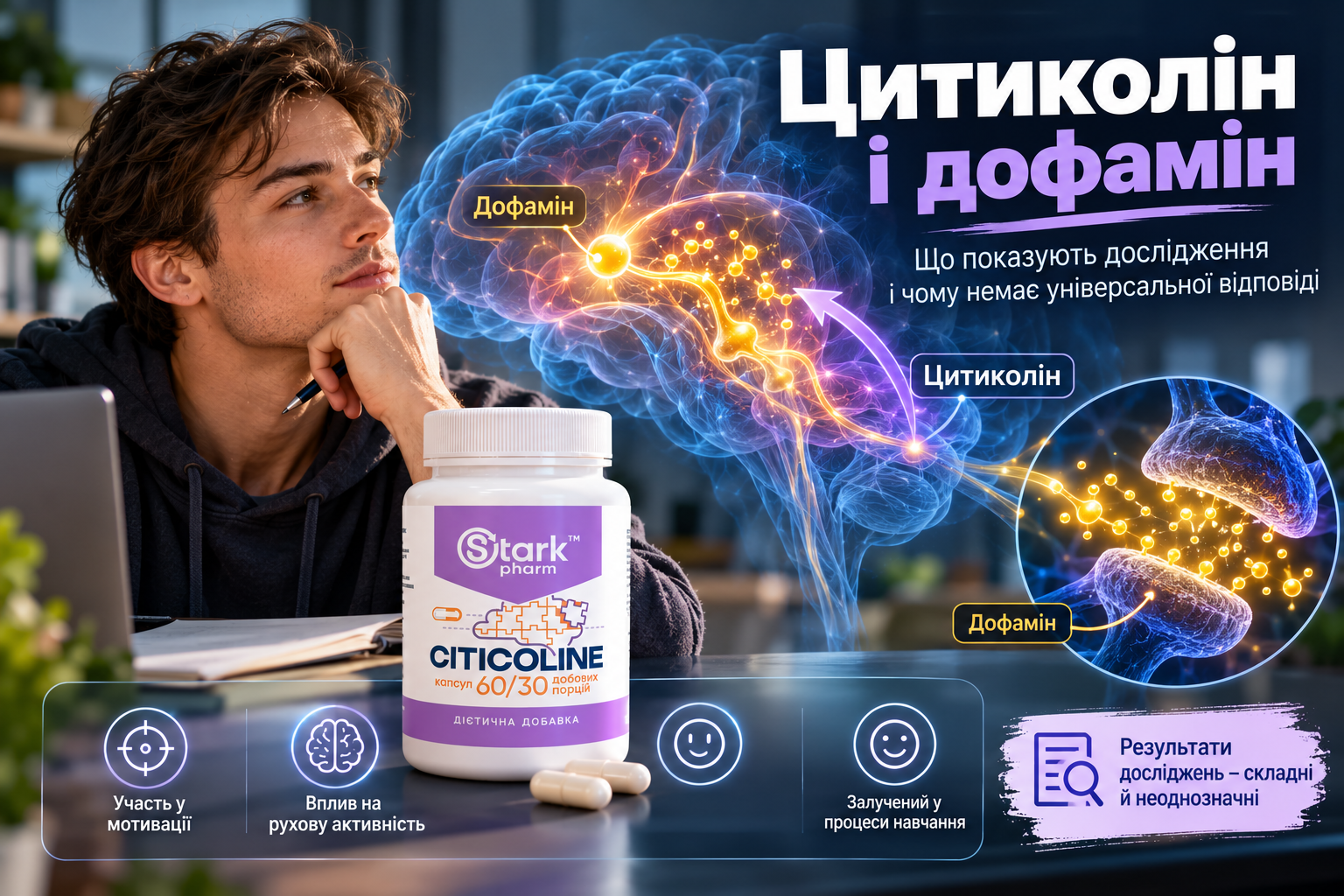
Where did the statement about citicoline and dopamine come from?
Early pharmacological studies have examined how CDP-choline alters concentrations of biogenic amines in brain tissue. Dopamine is one such substance and is involved in the regulation of movement, reward learning, and a number of other functions of the nervous system. The effects vary depending on the specific brain region, cell type, method of measurement, and condition.
In a study by Shibuya et al. (1981), dopamine was measured in the striatum, a structure involved in motor control, after intraperitoneal administration of CDP-choline to rats. The researchers reported an increase in its content after a single injection. However, in the same study, the behavioral effects were ambiguous, and the authors did not interpret citicoline as a direct agonist of dopamine receptors.
Later, Petkov et al. (1990) also recorded an increase in dopamine in the striatum of rats. These results were one of the sources of the popular claim that citicoline affects dopaminergic transmission. This is a correct description of the research direction, but it is not a ready answer to the question of what a person will experience.
What exactly did the experiments show?
In scientific publications, it is important to distinguish between changes in dopamine concentration, behavioral response, and clinical outcome. These measures are not interchangeable.
| Research | Model and protocol | What was discovered | What is not proven |
|---|---|---|---|
| Shibuya et al., 1981 | Rats; 300 mg/kg by injection, assessed at 1 hour; also studied for 7 days | Changes in dopamine content in the striatum and ambiguous motor responses | The effect of oral supplementation on human motivation |
| Petkov et al., 1990 | Rats; 100 mg/kg/day for 7 days | Increase in dopamine in the striatum and changes in other monoamines depending on the brain region | Universal "dopamine boost" throughout the human brain |
| Rejdak et al., 2002 | Rabbits; 50 mg/kg by injection twice daily for 7 days | Higher dopamine content in the retina | Increasing dopamine in the brain or improving a person's well-being |
A separate issue is the route of administration. The experiments cited often used injections and doses in mg/kg body weight. These cannot be directly translated to oral capsules, let alone used as a guideline for daily human intake.
Does more dopamine mean more motivation?
No, such a conclusion cannot be drawn from these experiments. The dopamine system does not work as a single general “motivation meter”. The place and time of release of the neurotransmitter, the activity of receptors, the interaction with other signals and the task that the person is performing have values. Even a recorded increase in concentration in a certain tissue does not tell us how the work of the entire system is changing.
Furthermore, Shibuya et al. (1981) reported that CDP-choline alone did not produce the expected behavioral changes in an experimental model of dopaminergic pathway disruption. Under other conditions, different responses were observed. This is a striking example: a biochemical change does not simply correspond to a behavioral outcome.
Therefore, a statement such as “citicoline increases dopamine, therefore increases energy” contains an unproven logical transition. There is currently no adequate clinical basis to consider this chain established for healthy adults.
Why has citicoline been studied in dopaminergic system disorders?
Because dopamine pathways are important for motor control, citicoline has been investigated as an adjunct in clinical programs involving people with Parkinson’s disease. A systematic review published in Clinical Therapeutics (2021) included seven small studies with different designs, endpoints, and methodologies. The authors described possible positive changes in individual motor symptoms in the study groups, but emphasized the need for better quality trials.
This does not prove that citicoline increases dopamine levels in the brain of healthy individuals after routine oral administration. Studies involving patients who are simultaneously receiving specialized medications cannot be extrapolated to the daily use of dietary supplements. It is not possible to independently change the therapy prescribed by a doctor based on such publications.
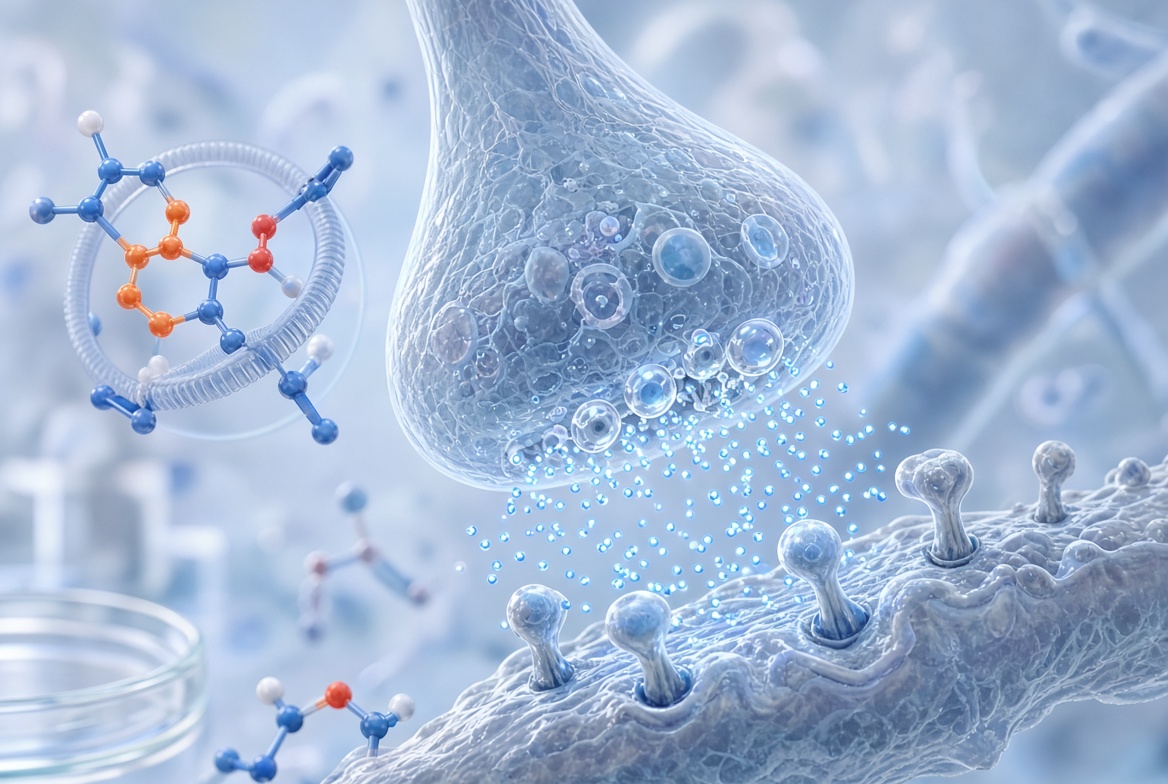
Citicoline is a link in the synthesis of phosphatidylcholine. After entering from the outside, its components undergo metabolic transformations; choline also participates in the synthesis of acetylcholine. However, acetylcholine and dopamine are different neurotransmitters, so the participation of citicoline in choline metabolism does not automatically increase dopamine signaling.
Grieb (2014), in a critical review of the pharmacology of citicoline, pointed out gaps in the explanation of its mechanisms of action. This is an important caveat for popular articles: a known biochemical pathway and a proven effect in humans are not the same strength of evidence.
Similarly, dopamine studies should not be confused with separate studies on attention or memory. Even if a person performs better on a particular cognitive task, without specific measurements, this does not prove that dopamine was the cause. The results of such studies should be analyzed independently, and not used as indirect evidence for a single mechanism.
What can be said based on the available data?
The scientifically cautious conclusion is that citicoline interacts with processes related to dopaminergic transmission and has altered dopamine levels in certain tissues in some animal experiments. However, these results do not establish that the dietary supplement predictably increases dopamine, motivation, or performance in humans.
Interpretation of studies should take into account the type of model, route of administration, doses, duration, method of measurement, and endpoints. For people with chronic medical conditions, during pregnancy or breastfeeding, and when taking medications, the use of supplements should be discussed with a doctor. Research doses do not constitute advice on use.
Frequently asked questions
Does citicoline increase dopamine?
Animal experiments have shown changes in dopamine levels in certain tissues. In healthy people, there is no sufficient clinical evidence for the alleged increase in dopamine after taking the supplement.
Is Citicoline a dopamine stimulant?
Calling it a direct dopamine receptor stimulator is incorrect. The experimental effects are more complex and did not always correspond to the expected behavioral changes.
Can citicoline increase motivation?
Existing studies of the mechanism do not provide evidence to suggest that it predictably alters motivation in healthy individuals.
Has the effect of citicoline on mood been proven?
A change in a lab test for dopamine is not evidence of a change in mood. Appropriate clinical trials are needed to make such a conclusion.
Why can't the results of studies on rats be transferred to humans?
They may differ in route of administration, dose, physiology, and the specific endpoints studied. This is only the initial level of evidence for the mechanism.
Does citicoline affect dopamine in the brain and retina the same way?
No. Research on rabbit retinas does not prove a similar change in the human brain: these are different tissues and experimental conditions.
Can doses from experiments be used as a dosing regimen?
No. Doses from laboratory models describe specific protocols and are not recommendations for dietary supplements.
Sources
- Shibuya M. and others. (1981). Effects of CDP-choline on striatal dopamine level and behavior in rats. Japanese Journal of Pharmacology. PubMed
- Petkov VD and others. (1990). Changes in brain biogenic monoamines induced by the nootropic drugs adafenoxate and meclofenoxate and by citicholine (experiments on rats). General Pharmacology. PubMed
- Rejdak R. and others. (2002). Citicoline treatment increases retinal dopamine content in rabbits. Ophthalmic Research. PubMed
- Grieb P. (2014). Neuroprotective properties of citicoline: facts, doubts and unresolved issues. CNS Drugs. PubMed
- Citicoline as Adjuvant Therapy in Parkinson's Disease: A Systematic Review (2021). Clinical Therapeutics. PubMed
Dietary supplement. Not a medicine. Consult a doctor before use.
Products related to this post
Related Posts
Comments
Information
Customer Service
Extras
My Account


Sports nutrition manufacturer in Ukraine StarkPharm © 2026


