Your shopping cart is empty!

NAC in sports: oxidative stress, fatigue and research results
Published: 05/11/2026
Times Read: 108
Comments : 0
N-acetylcysteine (NAC) is being studied in sports science because of its role in providing the body with cysteine, a precursor to glutathione. The idea is that the state of the antioxidant system may change during intense exercise. But a change in a laboratory marker does not equal increased endurance, and a short-term reduction in oxidative stress does not necessarily improve training adaptation.
Studies of NAC in athletes are heterogeneous: they vary by sport, training level, dosage, route of administration, and performance testing. This is why the scientific picture is more complex than the advertising promise of an “anti-fatigue antioxidant.”
What happens to oxidative stress during exercise?
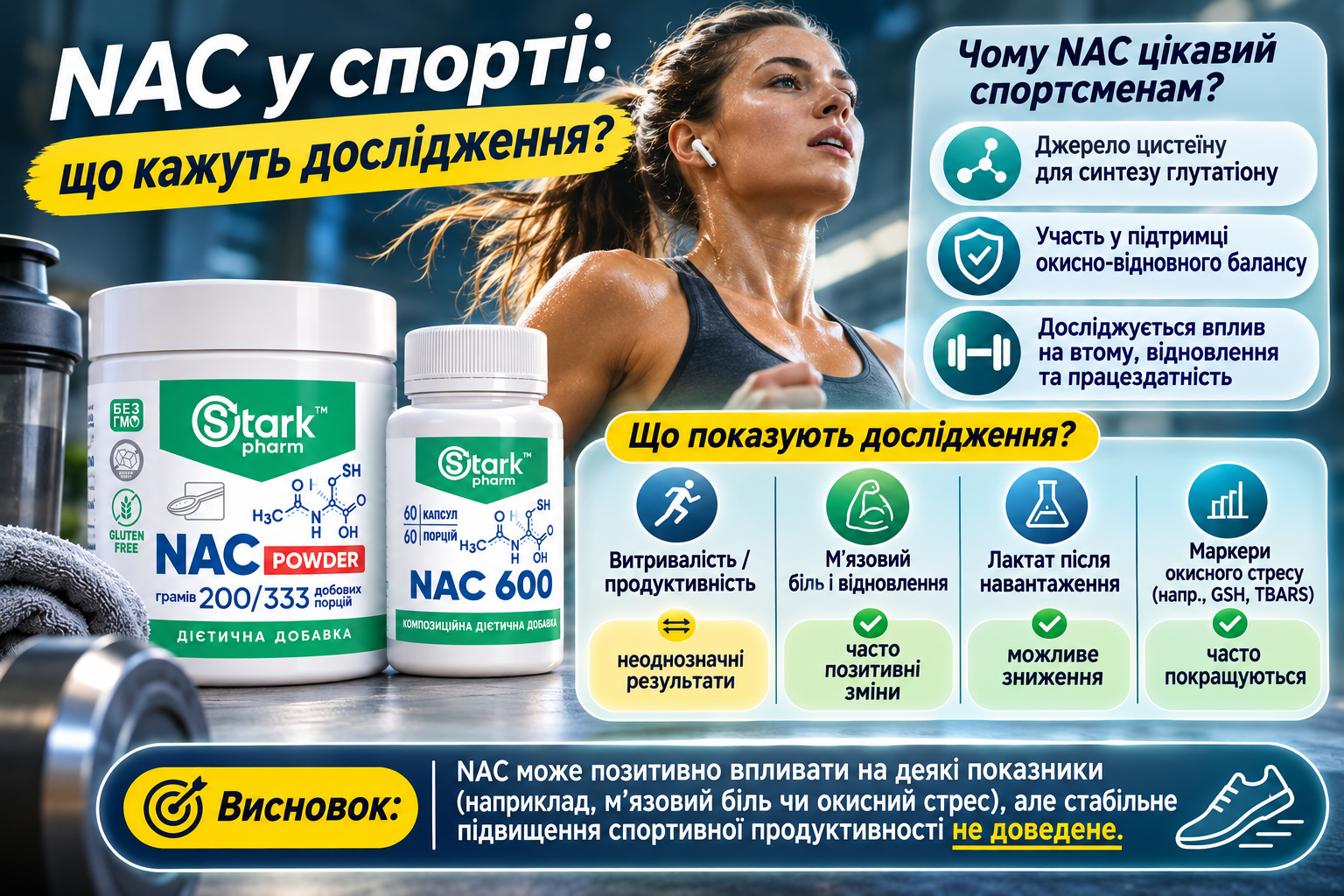
Physical work increases the muscles' need for oxygen and changes the formation of reactive oxygen species. Some of these molecules are used by the body as signals that trigger adaptive processes. Under high or unusual loads, the balance between their formation and antioxidant systems can change.
Glutathione is one of the intracellular participants in this balance. It exists in reduced and oxidized forms; the ratio between the two is sometimes used in research as an indicator of redox status. NAC can be a source of cysteine for glutathione synthesis, but the body's response depends on the initial state, nutrition, and stress characteristics.
It would be a mistake to consider all reactive oxygen species as exclusively harmful. Some of the signals that occur after exercise are necessary for normal muscle tissue remodeling. Therefore, the impact of antioxidant interventions is assessed not only by blood tests, but also by actual adaptation to training.
Fatigue, endurance, and recovery are different outcomes
| Indicator | What is being assessed? | Conclusion limitations |
|---|---|---|
| Glutathione | Redox state of cells | Not a direct test of endurance |
| Lactate | Metabolic response index | Not equal to speed over distance |
| Muscle pain | Subjective recovery | Does not prove strength growth |
| Power / time | Immediate sports result | Depends on the specific protocol |
In sports, "fatigue" can refer to a subjective feeling of exhaustion, a drop in power, or an inability to continue a given load. "Recovery" can be the return of strength, normalization of markers in the blood, or a decrease in muscle soreness. These indicators are not synonymous.
For example, lower lactate concentrations after exercise do not automatically prove that an athlete will be able to run a distance faster. Similarly, changes in IL-6 or TBARS describe a certain biological process, but are not independent evidence of better athletic performance.
When comparing NAC studies, the first thing to look at is what was the primary endpoint: distance running time, power output, time to exhaustion, muscle soreness, or laboratory values.
What did the studies with positive results show?
One small crossover trial in trained triathletes evaluated 1200 mg of NAC per day over nine days of intense training. The authors of the 2014 study reported that individual sprint times on a cycle ergometer improved, and some measures of oxidative stress and inflammation were altered in favor of NAC.
An important limitation: Only eight participants completed both phases of the study. With such a small sample size, it is difficult to separate consistent effects from individual variability. In addition, the study focused on a specific training protocol, not all sports.
A 2023 systematic review of 16 controlled trials in adult men reported positive results for some measures of physical performance and antioxidant status. However, the authors noted that the results for inflammatory markers and muscle function were inconclusive and further research is needed.
Why other trials have not confirmed the advantage
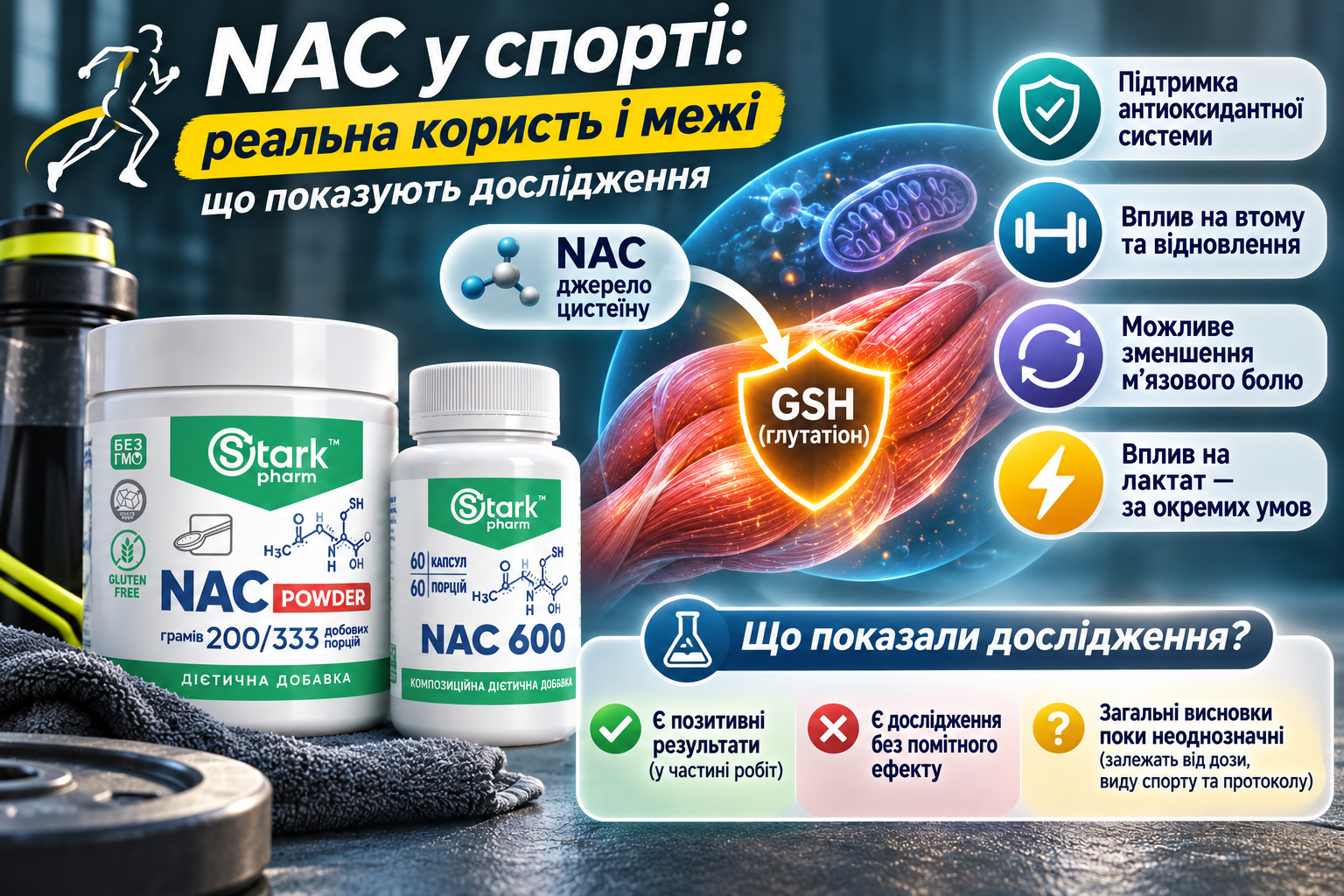
In a study of highly trained cyclists, participants were given 20 mg/kg of NAC before exercise. During two repeated high-intensity sessions, mean power output was not significantly different from placebo. The authors concluded that NAC did not demonstrate any benefit for this protocol.
A meta-analysis by Rhodes and Braakhuis (2017) pooled seven sports trials to assess performance. The pooled mean change was about 0.29%, and the confidence interval included both decreases and increases in performance. Therefore, this analysis did not provide conclusive evidence for a general ergogenic effect.
These results do not negate individual positive experiments. They mean that the effect is not stable across different types of exercise, and the methodology and composition of participants matter greatly.
A 2024 meta-analysis pooled 20 studies and found statistically significant mean changes in some measures, including muscle soreness and post-exercise lactate concentration. Differences were also reported for IL-6 and TBARS and increases in glutathione. However, there was no conclusive effect for creatine kinase, TNF-α, and oxidized glutathione.
Even if there is a statistical difference for a given biomarker, the practical magnitude of the difference may be small. Meta-analyses combine different protocols: training intensity, observation period, and method of administration differ. Therefore, it is not advisable to translate the combined results into a simple formula: “NAC accelerates recovery in every athlete.”
A more complete evaluation requires data on repeated exercise performance, long-term adaptation, tolerability, and differences between trained and untrained individuals.
Antioxidants and adaptation to stress: the flip side
Petersen et al. (2012) investigated the effects of intravenous NAC on skeletal muscle signaling after cycling. They found attenuation of some early cellular responses associated with adaptation. This work does not imply that any oral NAC will impair exercise performance; a different route of administration and specific molecular mechanisms were investigated.
However, this result explains why the simplistic strategy of “the more oxidative stress is suppressed, the better” does not work. Training adaptation requires a complex system of signals; their excessive modification could theoretically have more than just the desired consequences.
The practical conclusion from the body of evidence is that NAC in sports should be evaluated with caution. The evidence base does not support the promise of uniform improvements in endurance, strength, speed, or recovery.
What to consider before any application
Studies have used different amounts of NAC and different routes of administration, sometimes under medical supervision. These amounts describe research protocols, not recommended training regimens. They should not be replicated on your own.
Adverse reactions, including nausea and abdominal discomfort, may affect your well-being during exercise. In case of chronic diseases, taking medications, pregnancy or lactation, the issue of additional use of the substance requires consultation with a doctor.
The foundation of athletic recovery remains adequate sleep, nutrition, recovery days, and consistent workload planning. The separate biochemical mechanism of NAC does not replace these factors.
Why do sports results vary so much?
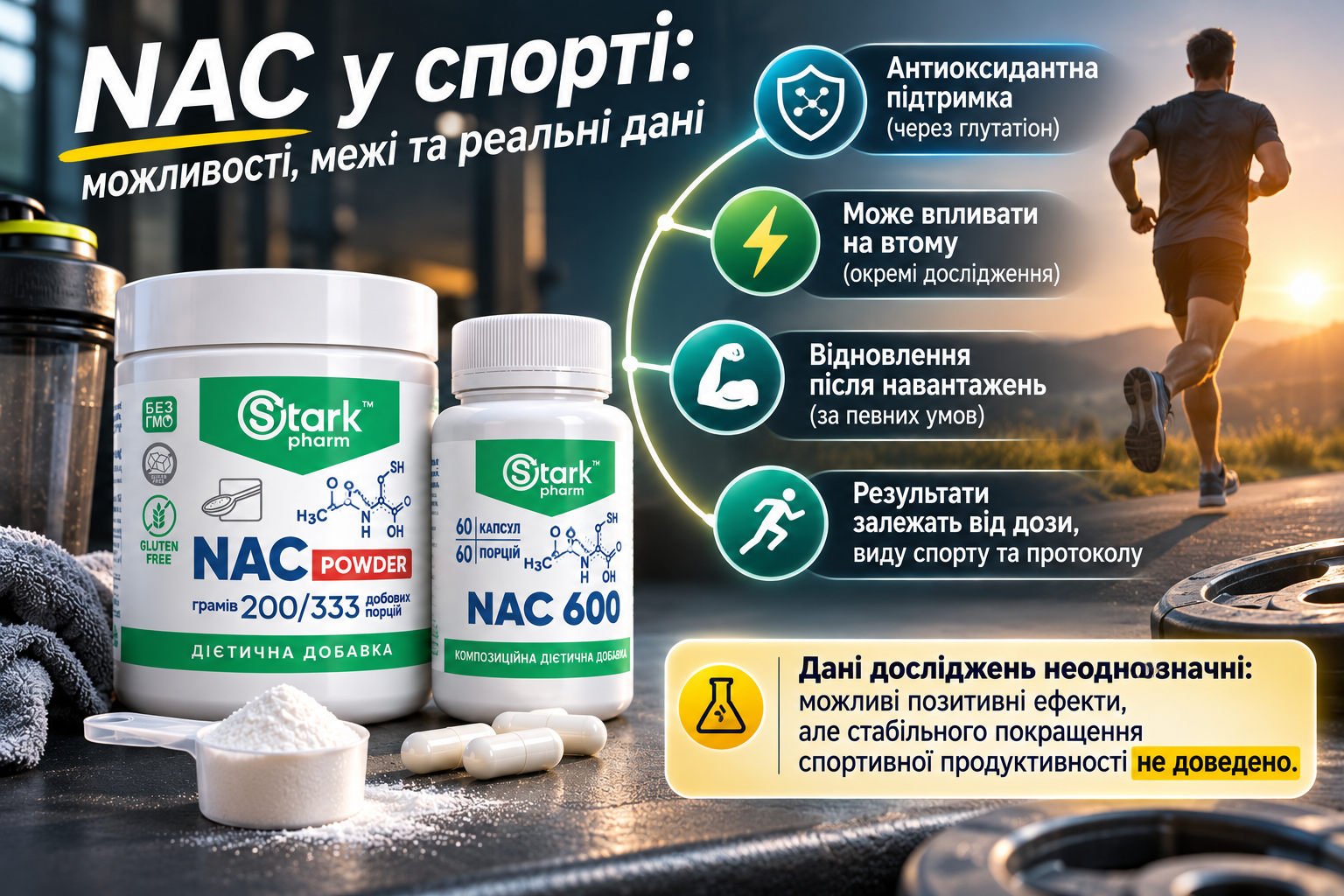
One of the main reasons for the discrepancy is the differences between the types of exercise. A four-minute high-intensity race, a multi-hour endurance workout, and a series of sprints all create different physiological demands. Even if NAC alters redox parameters, the translation of this effect to competitive performance depends on which systems are limiting performance in a particular discipline.
Training status is equally important. Well-trained athletes may have their own recovery mechanisms adapted to regular high loads. People with a lower level of training may respond differently, but this does not mean that NAC necessarily helps beginners. Studies with different participants should not be mechanically combined into one practical recommendation.
Another reason is the small sample size. If a study only involves a few athletes, one or two individual responses can significantly affect the average. A crossover design partially mitigates this risk because each person undergoes both versions of the protocol, but it does not eliminate differences in sleep, nutrition, pre-load, and motivation.
Therefore, it is not enough to evaluate NAC by one “successful” indicator. What is important is whether the result is repeated in independent groups, whether it is practically significant for the athlete, and whether the intervention is not accompanied by undesirable reactions or changes in normal adaptation. It is this approach that allows us to separate a promising hypothesis from a firmly established effect.
Frequently asked questions
Is NAC proven to increase endurance?
No, the results of the studies are ambiguous: along with positive trials, there are studies without a significant advantage over placebo.
What is oxidative stress after exercise?
This is a change in the balance between the formation of reactive oxygen species and their regulatory systems during physical work and recovery.
Does NAC affect glutathione?
It supplies cysteine, which is necessary for glutathione synthesis, but the magnitude of the effect depends on the study conditions.
Does lower lactate mean better athletic performance?
No. Lactate is just one indicator, and actual performance needs to be evaluated separately.
Has NAC been studied in professional athletes?
Yes, but the samples of individual jobs were small, and the types of workload were very different.
Can antioxidant effects alter training adaptation?
Some experimental results indicate changes in signaling processes; their practical significance needs to be clarified.
Is there a universal NAC dosage for athletes?
No. The studies used different protocols that cannot be used as a ready-made recommendation.
Can NAC replace sleep and recovery?
No. Full recovery depends on sleep, diet, exercise, and overall health.
Sources
- Rhodes K., Braakhuis AJ (2017). Performance and Side Effects of Supplementation with N-Acetylcysteine: A Systematic Review and Meta-Analysis. Sports Medicine, 47, 1619–1636. PubMed
- Fernández-Lázaro D. et al. (2023). Influence of N-Acetylcysteine Supplementation on Physical Performance and Laboratory Biomarkers in Adult Males: A Systematic Review of Controlled Trials. Nutrients, 15(11), 2463. PubMed
- N-Acetyl cysteine does not improve repeated intense endurance cycling performance of well-trained cyclists. (2019). European Journal of Applied Physiology. PubMed
- Effect of N-acetylcysteine on cycling performance after intensified training. (2014). Medicine & Science in Sports & Exercise. PubMed
- Petersen AC et al. (2012). Infusion with the antioxidant N-acetylcysteine attenuates early adaptive responses to exercise in human skeletal muscle. Acta Physiologica, 204(3), 382–392. PubMed
- The impact of N-acetylcysteine on lactate, biomarkers of oxidative stress, immune response, and muscle damage: A systematic review and meta-analysis. (2024). Journal of Cellular and Molecular Medicine. PubMed
Dietary supplement. Not a medicine. Consult a doctor before use.
Products related to this post
Related Posts
Comments
Information
Customer Service
Extras
My Account


Sports nutrition manufacturer in Ukraine StarkPharm © 2026


