Your shopping cart is empty!

NAC for the liver: what the research shows and where the evidence lies
Published: 04/11/2026
Times Read: 114
Comments : 0
N-acetylcysteine (NAC) is often mentioned in the context of the liver because of its connection to cysteine and glutathione. The liver actively uses glutathione in its own biochemical processes, so researchers are studying whether NAC can affect redox balance and laboratory markers of its condition. However, the word "support" in the name of a supplement and proven effectiveness in disease are two very different things.
It is important to distinguish between the two situations. In clinical toxicology, acetylcysteine is a drug that is used according to special protocols for paracetamol poisoning. The conventional dietary supplement NAC is not intended for this use and is not a substitute for it. However, the data on the oral use of NAC in chronic liver disorders remain ambiguous.
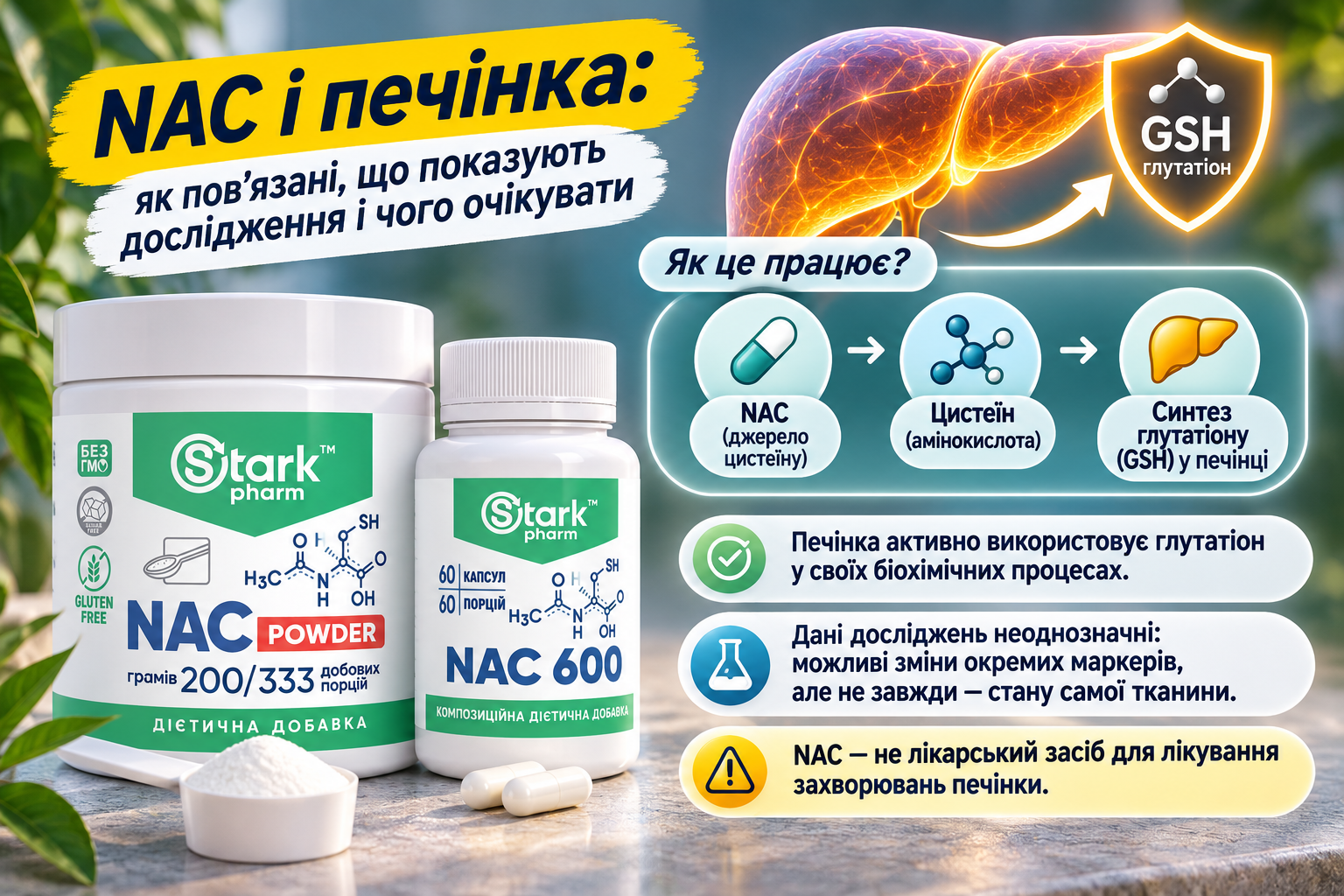
Why is NAC associated with the liver?
The liver is involved in nutrient metabolism, protein synthesis, drug metabolism, and the neutralization of various compounds. Glutathione, a molecule containing glutamate, cysteine, and glycine, is important in these processes. It works in the redox system and, with the participation of special enzymes, helps process certain reactive metabolic products.
Glutathione formation is not only dependent on the amount of cysteine. It is influenced by enzymatic regulation, cellular status, other amino acids, nutrition, and stress on the system. NAC can act as a source of cysteine, but its intake does not mean that the liver will automatically receive “more protection” in a measurable clinical sense.
The concept of “liver detox” often creates the false impression that the organ accumulates unspecified “wastes” that can be removed with a single supplement. In reality, it is a complex network of enzymatic and transport processes. Specific markers, tissue imaging, and clinical outcomes are important to assess the benefit of the intervention.
How NAC is linked to glutathione synthesis
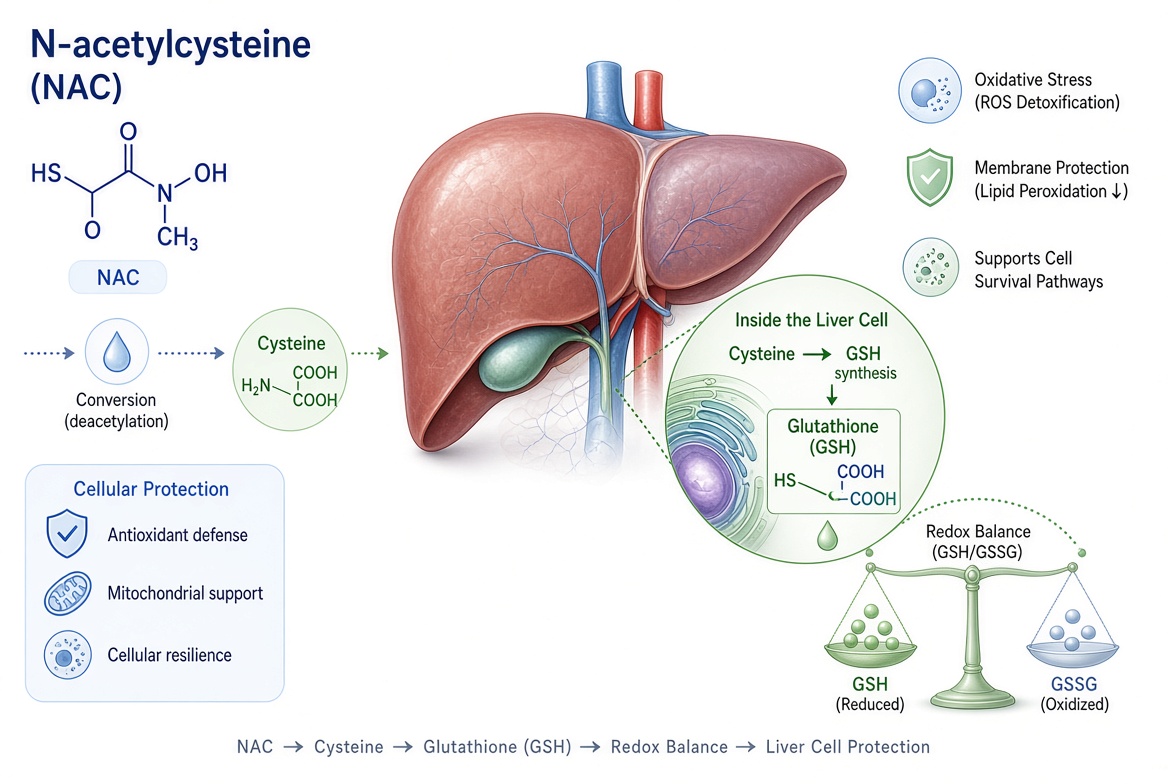
NAC is an acetylated form of cysteine. After metabolic transformations, it can provide the body with cysteine, which is needed for the synthesis of GSH. In cells, this molecule functions in reduced and oxidized forms, and its state depends on the work of several enzyme systems.
The liver is one of the important centers of glutathione metabolism, but the mechanism cannot be simplified to a direct relationship of “more NAC = healthier liver.” Sufficiency of the precursor is only one condition; it does not eliminate the influence of excess body weight, metabolic factors, alcohol, viral infections, or side effects of drugs.
Furthermore, laboratory GSH is an intermediate indicator. Even if its level is increased, the effect on hepatocyte damage, inflammation, fibrosis, or well-being needs to be proven separately. It is for such conclusions that controlled studies in humans are needed.
What to measure in liver tests
Many people focus only on liver enzymes - ALT and AST. Their changes can be important, but they are not an independent indicator of the degree of fat deposits, fibrosis or the general condition of the organ. The indicators depend on the cause of the disorder, the time of sampling and associated factors.
In metabolic-associated steatosis liver disease (MASLD), studies use other methods: steatosis scores, instrumental measurements such as FibroScan, fibrosis indices, and metabolic parameters. Improvement in one assay does not necessarily mean improvement in all others.
| What is measured? | What does it show? | What it does not prove by itself |
|---|---|---|
| ALT and AST | The activity of certain enzymes in the blood | Reduced steatosis or fibrosis |
| Glutathione indicators | The state of individual components of redox metabolism | Clinical liver tissue recovery |
| Oxidative stress markers | Changes in specific oxidation products | Disappearance of the cause of the disease |
| Ultrasound / FibroScan | Certain characteristics of structure or fat changes | Full explanation of all symptoms without a doctor's evaluation |
| Insulin resistance | Metabolic changes | Direct effectiveness of NAC specifically for liver tissue |
Clinical evidence in fatty liver disease: mixed results
A representative randomized, double-blind study by Sinaeinejad et al. (2025) compared NAC with placebo in 69 participants with MASLD for eight weeks. The NAC group received 600 mg three times daily—a study regimen, not a recommendation for readers.
In an open-label, randomized trial by Ramadan et al. (2026) in 60 nondiabetic adults with MASLD, one group received NAC at the study dose of 2400 mg/day in combination with lifestyle changes or the other group received lifestyle interventions alone for 12 weeks. No significant differences were found between groups in the main marker of oxidative stress, insulin resistance, steatosis, or fibrosis using the methods used.
These two studies do not provide a basis for describing NAC as a proven way to improve liver function in MASLD. Instead, they demonstrate why larger, better-quality trials are needed that assess not only laboratory markers but also long-term clinical outcomes.
Why the medical use of NAC in poisoning is not an argument for supplements
In hospital practice, acetylcysteine has long been used as an antidote for paracetamol overdose. The reason is clearly outlined: the toxic metabolite of paracetamol can deplete hepatic glutathione, and specially administered NAC helps restore its availability and reduce the risk of severe damage with timely assistance.
This fact cannot be transferred to the usual daily intake of a dietary supplement. In poisoning, there is a specific toxin, an emergency condition, a medical examination and protocols for administering the dosage form. The presence of a common active molecule in the name does not make a food product equivalent to a medical antidote.
If you suspect an overdose of paracetamol or any other drug, seek immediate medical attention, even if you initially feel fine. Do not wait for symptoms to appear or try to self-correct with NAC capsules.
Is NAC a universal “liver cleanse”?
No. In scientific studies, “cleansing” is not a single standardized clinical outcome. To assess the effect of a substance, a specific goal must be identified: laboratory markers, indicators of steatosis, fibrosis, or risk of events. The phrase “cleanses toxins” without specifying the substances and the method of measurement has no verifiable meaning.
The liver does not require universal “cleansing courses” as a replacement for established diagnostic approaches. If changes in liver tests are already detected, the cause is determined by a combination of history, tests, possible medications, alcohol, metabolic factors, and imaging data.
It is important not to create a false sense of security: no supplement can eliminate the potential risks of excessive alcohol or toxic doses of medications. Reducing risk factors and controlling underlying diseases remain essential.
Why even qualitative test results can vary
Different NAC studies recruit participants with different metabolic states, use different durations and doses, and differ in control conditions. In open-label trials, participants are aware of the intervention they are receiving, which creates an additional risk of bias, especially for subjective assessments.
Statistical significance on one of many measures does not imply universal utility. For example, changes in insulin or CRP may be of interest, but without improvement in hepatic endpoints, the conclusion about the effect on the organ itself remains limited.
It is also important to remember that both of the trials described were relatively short. Longer studies and other endpoints are often needed to assess fibrosis or long-term risk of complications. The lack of a convincing effect at this time does not mean that there is absolutely no effect under any circumstances.
When to see a doctor and what to consider for safety
Elevated liver function tests, pain in the right upper quadrant, jaundice, dark urine, severe weakness, or other unusual symptoms are a reason for medical evaluation, not self-selection of supplements. Some liver changes are asymptomatic for a long time, so a doctor may need to assess the risks even in the absence of complaints.
NAC may cause nausea, abdominal discomfort, and other adverse reactions in some people. If you are taking regular medications, have a chronic condition, are pregnant, or are breastfeeding, the decision to use the supplement should be discussed with a specialist.
Scientific publications may describe the amount and duration of use that researchers needed to test hypotheses. They are not individual recommendations and should not be copied without medical context.
What can be summed up without exaggeration?
NAC has a well-studied biochemical relationship with cysteine and glutathione. There is a separate, specific evidence base and specific clinical protocols for medical use in acetaminophen poisoning. However, this does not prove the daily benefit of a dietary supplement for all people.
Clinical trials in MASLD have yielded mixed results: some laboratory markers changed, but no convincing improvement in liver structure was demonstrated in the trials reviewed. Therefore, it is more correct to speak of a subject of scientific study, rather than a proven ability of NAC to repair the liver.
Frequently asked questions
Why is NAC associated with the liver?
It can provide cysteine, a component of glutathione synthesis, which is important for cellular metabolism, particularly in the liver.
Is NAC proven to reduce liver fat?
The randomized trials reviewed did not show a convincing reduction in steatosis compared to controls.
Does a decrease in ALT mean that the liver has recovered?
No. ALT is just one of the laboratory indicators that is evaluated together with other data.
Can NAC be considered a detox agent?
The term “detox” is too vague. It is correct to evaluate specific biochemical or clinical results, not general promises of cleansing.
Why is acetylcysteine used in hospitals for paracetamol poisoning?
In such a situation, it has a specific antidote function and is used according to a specific medical protocol. This is not a scenario for self-administration of the supplement.
Can NAC be combined with medication?
The possibility of combining depends on the drugs and health condition. You should consult a doctor before use.
Is one AST or ALT test enough to evaluate the liver?
No. The doctor evaluates the history, other tests, and instrumental examination results as needed.
Should NAC doses from clinical trials be repeated?
No. The research regimens provided describe experiments and are not recommendations for individual use.
Sources
- Lu SC (2013). Glutathione synthesis. Biochimica et Biophysica Acta, 1830(5), 3143–3153. PubMed.
- Pedre B. et al. (2021). The mechanism of action of N-acetylcysteine (NAC): The emerging role of H2S and sulfane sulfur species. Pharmacology & Therapeutics, 228, 107916. PubMed.
- Sinaeinejad M. et al. (2025). Efficacy of N-Acetylcysteine on Liver Function and Metabolic Profiles in Patients with Metabolic Dysfunction-Associated Steatotic Liver Disease (MASLD): A Double-Blind, Randomized Controlled Trial. Addiction & Health, 17, 1667. PubMed.
- Ramadan AM et al. (2026). Effect of high-dose N-acetyl cysteine supplementation on markers of oxidative stress and insulin resistance in non-diabetic patients with metabolic dysfunction associated with steatotic liver disease: a randomized controlled trial. BMC Gastroenterology, 26, article 500. PubMed.
- Bateman DN et al. (2023). Fifty years of paracetamol (acetaminophen) poisoning: the development of risk assessment and treatment 1973-2023 with particular focus on contributions published from Edinburgh and Denver. Clinical Toxicology, 61(12), 1020–1031. PubMed.
- Chiew AL, Isbister GK (2023). Advances in the understanding of acetaminophen toxicity mechanisms: a clinical toxicology perspective. Expert Opinion on Drug Metabolism & Toxicology, 19(9), 601–616. PubMed.
Dietary supplement. Not a medicine. Consult a doctor before use.
Products related to this post
Related Posts
Comments
Information
Customer Service
Extras
My Account


Sports nutrition manufacturer in Ukraine StarkPharm © 2026


