Your shopping cart is empty!

Forms of Magnesium: How to Choose — Citrate, Malate, Bisglycinate, Oxide and L-Threonate
Published: 25/06/2026
Times Read: 4258
Comments : 0
Citrate, malate, bisglycinate, oxide, L-threonate, taurate — there are dozens of "magnesiums" on the shelf, and the difference between them is not in the mineral itself but in the form of the compound. The form determines how soluble the magnesium is, how it is absorbed and how comfortable it feels on your stomach. So "which magnesium is best" is not a question of quality, but of the goal you are taking it for.
Below is a comparison of every form of magnesium in the Stark Pharm range by bioavailability, tolerability and typical use cases. Then we explain why the forms are absorbed differently, take a closer look at malate, and give a quick tip on which form to choose for your goal.
The forms of magnesium at a glance
| Form | Class and absorption route | Bioavailability and tolerability | Usually chosen for | When to take |
|---|---|---|---|---|
| Citrate | Organic salt of citric acid; ionic absorption, good solubility (the hydrated citrate is poorer) | Good bioavailability; large servings may have a mild laxative effect | A universal "starter" magnesium for general support | Any time, often split into 2 doses |
| Malate | Organic salt of malic acid; ionic absorption, good solubility | Good bioavailability; very gentle on the gut, practically neutral taste | Everyday support, energy and reduced fatigue | Usually during the day |
| Bisglycinate | Amino-acid chelate with glycine; stable in the stomach, part via peptide channels | High bioavailability; gentle on the stomach | Relaxation and sleep (glycine), evening use | Often in the evening |
| Taurate | Amino-acid chelate with taurine; stable in the stomach, magnesium mainly via the ionic route | Good bioavailability; gentle on the stomach | Cardiovascular and nervous system support | Day or evening |
| Oxide | Inorganic salt; ionic absorption, low solubility | Lower bioavailability; a more noticeable effect on the gut; a lot of elemental magnesium per gram | Budget option; for normal or high stomach acidity | After meals |
| L-threonate | Salt of threonic acid; magnesium is absorbed via the ionic route, like other soluble salts. More on threonate absorption | Well absorbed; gentle | Cognitive function, memory, sleep | Often in the evening |
Why the forms of magnesium are absorbed differently
All forms ultimately deliver the same magnesium ion, but it reaches the bloodstream by different routes — and that is what explains the difference in bioavailability and tolerability. It is convenient to split the forms into four groups by how the magnesium enters the body and where it acts.
Inorganic salts (oxide). To be absorbed, such a salt first has to dissolve and release the magnesium ion, which is then taken up by the ionic (cation) route. Oxide dissolves poorly, so a smaller share reaches the blood while the rest stays in the gut and can cause a laxative effect. On the other hand, oxide contains a lot of elemental magnesium per gram and is cheaper.
Organic salts (citrate and malate). Citric and malic acids make the salt more soluble than an inorganic one, so the same ionic route works more efficiently and bioavailability is higher. (One exception in terms of solubility is hydrated citrate: it forms a stable crystalline lattice with water molecules and is in fact poorly soluble in water, unlike the anhydrous form; this has almost no effect on bioavailability, which stays comparable.) An added detail: both citrate and malate are themselves involved in energy metabolism (the Krebs cycle), which is why these forms are often chosen for everyday support.
Amino-acid chelates (bisglycinate and taurate). Here the magnesium is bound to an amino acid — glycine or taurine. This makes the compound more stable in the stomach and releases fewer free magnesium ions into the gut, so it is tolerated more gently. On absorption the chelate mostly dissociates: the magnesium goes via the usual ionic route and the amino acid via its own, amino-acid route. According to some studies (mainly for bisglycinate), a further part may be absorbed intact through peptide channels, but this is only part of the process, not the main route. An added nuance: the amino acid itself has its own profile (glycine is associated with relaxation, taurine with cardiovascular and nervous system support).
L-threonate. In the gut this form is absorbed just like other soluble salts: it dissociates, and the magnesium passes through the usual ionic route — passively between cells and actively through cation channels. The distinctive feature of L-threonate is not in intestinal absorption but further on: threonate itself, according to research, helps raise magnesium levels inside brain cells (via glucose transporters), which other forms do not. That is why it is singled out for cognitive function, memory and sleep. Read more about how magnesium threonate is absorbed.
Magnesium malate: why it is a convenient everyday option
Magnesium malate is magnesium combined with malic acid. It has three practical advantages that make it convenient for daily use. First, it is very gentle on the gastrointestinal tract: unlike oxide or high doses of citrate, malate rarely causes a laxative effect. Second, in powder form it is practically neutral in taste, so it mixes easily into water without a specific aftertaste. Third, it has good bioavailability thanks to its good solubility.
A separate detail: malic acid itself takes part in the Krebs cycle, the key process of cellular energy production. That is why this form is often chosen by those who need magnesium primarily to support energy and reduce fatigue in an active routine. At Stark Pharm, malate is available both as a powder and as tablets with vitamin B6.
Which magnesium for which goal
- General support, a universal start — citrate.
- Everyday use, energy and reduced fatigue — malate.
- Relaxation and sleep — bisglycinate.
- Heart and nervous system support — taurate.
- Cognitive function, memory, sleep — L-threonate.
- A budget option for normal or high stomach acidity — oxide.
- A sensitive stomach — any of the gentle forms will suit: malate, bisglycinate or taurate.
How to take magnesium
Follow the dosage stated on the label of the specific product. It is often convenient to split the daily serving into two doses — this way magnesium is absorbed more evenly and the chance of stomach discomfort is lower. If you feel discomfort, try taking the supplement after meals or switch to a gentler form (bisglycinate or malate).
Magnesium can reduce the absorption of some medications — in particular certain antibiotics and thyroid medicines — so space their intake apart in time. If you have kidney disease, are pregnant or breastfeeding, or are taking prescription medicines, consult a doctor first. Magnesium is a complement to a balanced diet, not a substitute for it.
Frequently Asked Questions
Which form of magnesium is absorbed best?
Among the well-studied forms, citrate, malate, bisglycinate and L-threonate have high bioavailability. Oxide is absorbed less well because of its low solubility. The actual result is always individual.
Which magnesium is gentlest on the stomach?
Malate and the amino-acid chelates (bisglycinate, taurate) are usually considered gentle on the gut. Oxide and high doses of citrate are more likely to cause a laxative effect.
How does citrate differ from malate?
Both are well-soluble organic salts with good bioavailability. Malate is gentler on the stomach and is often associated with energy and reduced fatigue, while citrate is a universal option for general support.
What is bisglycinate and why is it considered gentle?
It is magnesium bound to two molecules of glycine. The compound is stable in the stomach and releases fewer free magnesium ions, so it is usually well tolerated; part of it may also be absorbed through peptide channels.
What is L-threonate for?
It is a form that research links to the ability to raise magnesium levels in brain tissue. It is often chosen to support cognitive function, memory and sleep.
Which magnesium should I choose for sleep and relaxation?
For evening use, bisglycinate or L-threonate are common choices. This is a matter of individual response, so go by your own tolerability.
Can different forms of magnesium be combined?
Yes, forms are sometimes combined to balance tolerability and purpose. The main thing is not to exceed the total serving stated on the labels.
When is it best to take magnesium?
It depends on the goal: "daytime" forms (citrate, malate) are convenient during the day, while bisglycinate and L-threonate are more often taken closer to the evening. If your stomach feels uncomfortable, take it after meals.
Choose a product
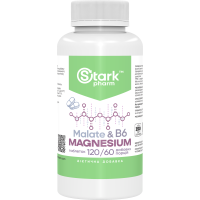
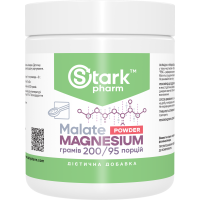
Stark Magnesium Malate & B6 — malate in tablets with vitamin B6: gentle on the stomach, neutral taste, for everyday energy support. Also available as a powder — Stark Magnesium Malate Powder.
Stark Magnesium Citrate — powdered citrate for general support; also in the formats Citrate Soluble Powder and Citrate & B6.
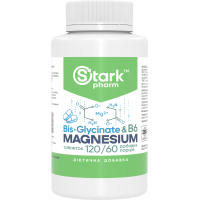
Stark Magnesium Bis-Glycinate — bisglycinate in tablets, a gentle form for relaxation; there is also a powder, Bis-Glycinate Powder.
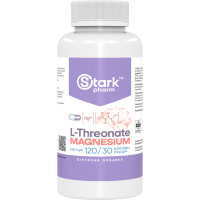
Stark Magnesium L-Threonate — L-threonate for cognitive support and sleep; as a flavored powder — L-Threonate Delicious.
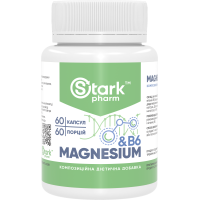
Stark Magnesium & B6 — magnesium oxide with vitamin B6, a budget option for the daily diet.
Stark Magnesium Taurate — magnesium taurate for cardiovascular and nervous system support. Coming soon.
Dietary supplement. Not a medicinal product. Consult a healthcare professional before use.
Products related to this post

Comments
Information
Customer Service
Extras
My Account


Sports nutrition manufacturer in Ukraine StarkPharm © 2026