Your shopping cart is empty!

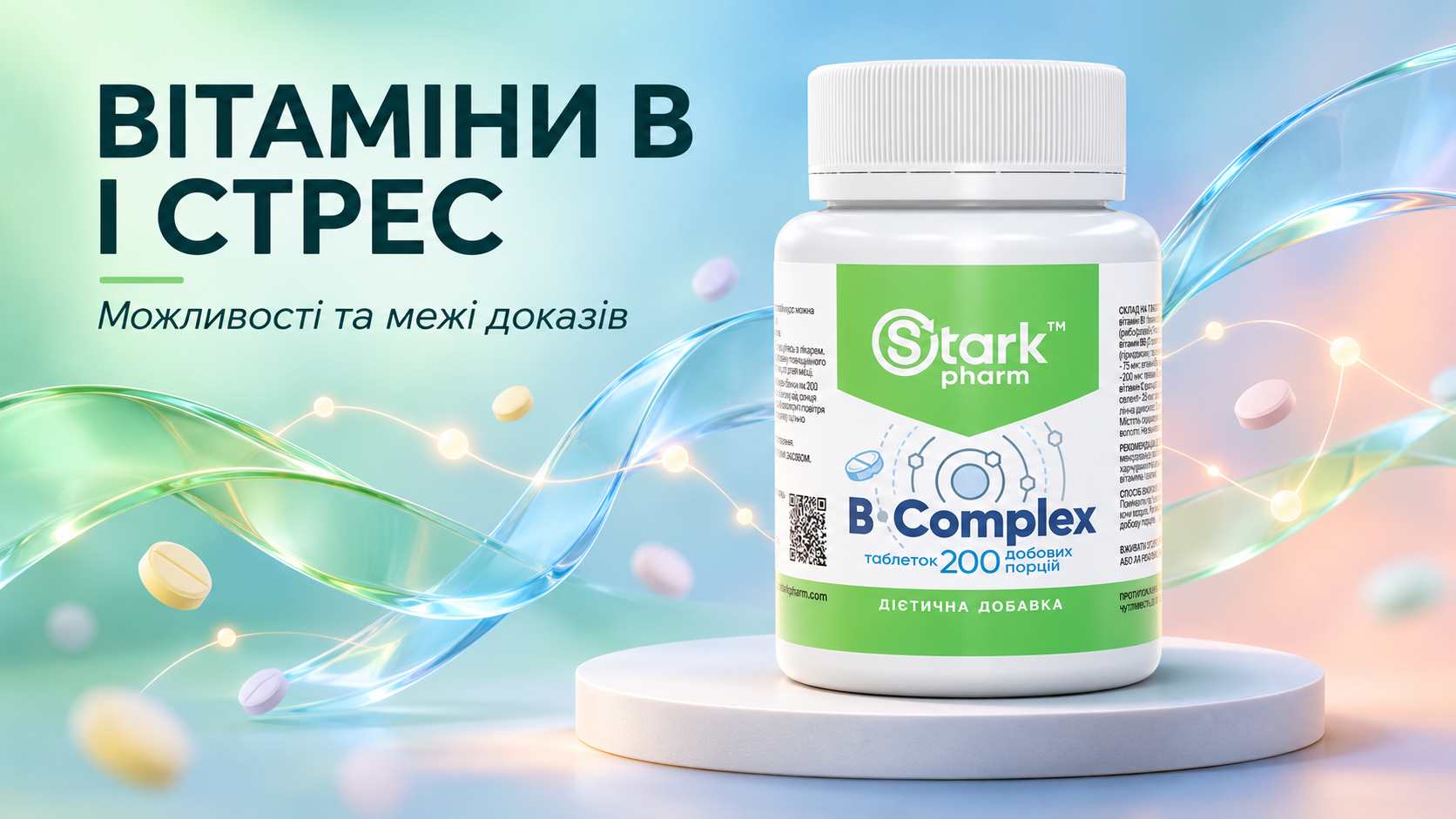
B vitamins for stress: do they help reduce tension and anxiety?
Published: 20/11/2026
Times Read: 22
Comments : 0
B vitamins are involved in the processes by which cells obtain energy from food, form important compounds and support the normal functioning of the nervous system. This is why B-complexes are often associated with stress and fatigue. However, the nutrient's involvement in nerve cell function does not yet prove that additional amounts of it will reduce anxiety in a person who gets enough vitamins from their diet.
The most interesting feature of the studies is the distinction between subjective stress and anxiety. For the former, some clinical trials of B-complexes have found small beneficial changes. For the latter, no convincing overall effect has been found in meta-analysis. This distinction is more important than the advertising generalization of “vitamins for nerves.”

Why does the nervous system need B vitamins?
B vitamins are not a single substance, but a group of water-soluble compounds with different functions. Some of them are part of coenzymes necessary for the metabolism of carbohydrates, fats and amino acids. Others are involved in DNA synthesis, hematopoiesis or the normal functioning of nerve fibers. Therefore, insufficient intake of individual representatives of the group can affect well-being, but the consequences depend on the specific deficiency.
| Vitamin | Main biological role | Why this doesn't mean instant gratification |
|---|---|---|
| B1 (thiamine) | Coenzyme in carbohydrate metabolism | Participation in energy production does not equal direct impact on stress |
| B2 (riboflavin) | Formation of coenzymes FAD and FMN | Normal energy metabolism does not indicate a sedative effect of the supplement |
| B3 (niacin) | NAD and NADP component | Biochemical necessity does not prove mood improvement from additional doses |
| B5 (pantothenic acid) | A component of coenzyme A | It is important for metabolism, but does not act as a quick remedy for stress. |
| B6 | Amino acid metabolism and synthesis of a number of signaling compounds | Increasing the amount beyond what is needed does not guarantee less anxiety |
| B7 (biotin) | The work of carboxylases | There is no reason to conclude about a separate effect against stress |
| B9 (folate) | One-carbon metabolism, cell formation | Status is important, not a universal high portion for everyone |
| B12 (cobalamin) | Hematopoiesis, metabolism and nervous system support | Improvement in shortage does not prove action in normal status |
The term "energy metabolism" is sometimes interpreted as a promise of extra energy. In reality, these nutrients help enzymes do their normal work. If the body is already supplied with the right amount, increasing the intake will not necessarily change the rate of energy production or the feeling of fatigue.
Stress, anxiety and fatigue: why it's important to distinguish between them
Stress is often called a reaction to stress: a difficult work schedule, conflicts, lack of time, irregular sleep. In research, it can be measured using questionnaires that show how much a person feels tense or out of control over a situation.
Anxiety is another indicator. It can include worry, anticipation of danger, physical sensations, and difficulty concentrating. Temporary anxiety before an important event is not the same as a persistent disorder that requires professional evaluation. Similarly, fatigue can be caused by lack of sleep, poor diet, stress, or a medical condition.
Therefore, the study should answer a clear question. If people reported less subjective stress after a few weeks of taking the complex, this does not mean that they improved all measures of anxiety, sleep, and mood. It is the separation of measures that helps not to exaggerate the results.
B-complexes and stress: results of a 2019 meta-analysis
In a systematic review by Young et al. (2019), researchers analyzed 18 publications representing 16 randomized trials with a total of 2015 participants. 12 studies were eligible for meta-analysis. The included studies used daily supplementation with at least three B vitamins for four or more weeks.
For stress, the pooled results indicated a small statistically significant effect: there were 958 participants in the corresponding analysis, the standardized effect size was 0.23, and the confidence interval was 0.02 to 0.45. This is not a large or universal result. It describes the average change in specific groups and by specific measures of stress.
It is particularly telling that the authors did not find a statistically significant overall effect for anxiety. Thus, the data do not support a direct claim that B-complexes are agents for reducing anxiety. For depressive symptoms, the overall effect also did not reach statistical significance.
In some studies, participants had poor nutritional status or reported poor mood prior to the intervention. This may influence the results: people with different baseline characteristics do not necessarily respond in the same way. In addition, the studies used different formulations of complexes, so it is not possible to attribute the entire effect to vitamin B6 or B12 alone.
In a randomized, double-blind study by Stough et al. (2011), 60 participants completed a three-month follow-up. The researchers compared two forms of high-dose B-complex with placebo and assessed workload, psychological distress, mood, and anxiety.
After 12 weeks, the B-complex groups reported lower levels of individual measures of personal stress, confusion, and depressed mood. However, no significant changes were found in other measures of mood and anxiety. This result is consistent with the cautious conclusion of the meta-analysis: possible changes in subjective stress cannot automatically be attributed to a decrease in anxiety.
The study had a relatively small sample size. Its participants also did not represent all people with chronic stress, different nutritional statuses, or co-morbid conditions. So one positive result does not translate into proof that B-complex is good for everyone going through a stressful time.
| Indicator | Young et al., 2019 | Stough et al., 2011 |
|---|---|---|
| Design | Systematic review and meta-analysis of RCTs | A separate placebo-controlled RCT |
| Participants | 2015 in 16 tests in total | 60 completed the study |
| Duration | At least 4 weeks in included jobs | 90 days |
| Subjective stress | Small to medium beneficial effect | Reduction of individual stress indicators |
| Anxiety | No overall significant effect was found. | No significant changes were detected. |
The doses and formulations of high-dose complexes in such studies are part of the study protocols, not a recommendation for replication. Current data on the safety of individual vitamins, primarily B6, must be considered separately from the results on mood.

Insufficient vitamin status and normal stress are two different situations.
When a person is deficient in a particular nutrient, their well-being may change for reasons not directly related to psychological stress. Insufficient intake or absorption of B12, folate, or other vitamins can affect blood formation, the nervous system, and overall performance. In such a situation, it is important to identify the cause and assess the corresponding status.
But the presence of stress in itself does not prove a lack of B vitamins. Similarly, feeling tired is not a specific symptom of a deficiency of one nutrient. A person can have sufficient nutrition and at the same time be overloaded at work, have problems with sleep or have long-term experiences. Additional amounts of vitamins do not eliminate the source of such stress.
When determining the need for tests, the doctor takes into account nutrition, medical history, existing symptoms, concomitant medications, and other data. The conclusion should not be based solely on popular lists of “signs of B-complex deficiency,” as many symptoms are nonspecific.
Vitamin B12: who should pay attention to its absorption
Vitamin B12 is necessary for the normal formation of blood cells and the functioning of the nervous system. Its main food sources are animal products, and absorption depends on the functioning of the stomach and intestines. Therefore, it is not only the amount of B12 in the diet that is important, but also the body's ability to absorb it.
According to the NIH Office of Dietary Supplements, people with animal-based diets, certain gastrointestinal conditions, and malabsorption may need to pay attention to their B12 status. Certain medications, including metformin and antacids, can also affect the availability of this vitamin. This does not mean that all users of such medications need the same supplement; the issue is assessed individually.
B12 deficiency is sometimes associated with numbness, tingling, loss of sensation, weakness, and other symptoms. These symptoms should be evaluated by a doctor because they can have a variety of causes. Self-administering large amounts of B12 without determining the cause is not a reliable substitute for examination.
A separate difficulty is that some symptoms of B12 deficiency can resemble the effects of fatigue or psychological stress. At the same time, the presence of anxiety without other data does not give reason to assume a B12 deficiency.
Vitamin B6: Why Too Much Can Damage Your Nerves
B6 is especially common in complexes for the nervous system. It is necessary for the metabolism of amino acids and the formation of a number of signaling compounds. However, belonging to the water-soluble vitamins does not make unlimited additional intake safe.
A 2023 EFSA scientific opinion examined the link between excess B6 and peripheral neuropathy, a disorder of the peripheral nerves. Individual reports and studies have described symptoms, including tingling, numbness, and sensory disturbances, in people taking high amounts of B6 from supplements. The risk needs to be considered, even if the product is advertised as “nerve support.”
The problem can arise not only when a person deliberately chooses a large individual B6 product. The vitamin can be found in a multivitamin, a B-complex, or another mixture. This makes it harder to notice repeated intake from multiple sources. If you experience unusual tingling, numbness, or changes in sensitivity, you should stop experimenting with supplements and consult a doctor.
| Situation | What is important to remember | What not to assume |
|---|---|---|
| B-complex under stress | Mainly subjective indicators were investigated | That any complex acts as a quick sedative |
| Insufficient B12 status | The reason may be in nutrition or digestion. | That all symptoms are related to psychological stress |
| High amounts of B6 | Possible adverse neurological manifestations | That water-soluble vitamins are always safe in any quantities |
| Multiple complexes at the same time | One substance may be repeated in the composition | What the different names of the forms mean independent nutrients |
When stress doesn't go away: what to assess first
When you are under prolonged stress, it is important to pay attention to the source of stress and its effects on your daily life. Regular lack of sleep, excessive workloads, an irregular diet, and lack of rest can all contribute to feelings of exhaustion. In such cases, choosing a supplement on your own will not solve the underlying problem.
It is worth observing whether there are changes in sleep, appetite, concentration, motivation and ability to carry out usual activities. If persistent anxiety, panic episodes, severe loss of interest, feelings of helplessness or symptoms that interfere with work and communication appear, specialist consultation is necessary. Medical evaluation is also important for a combination of tension with numbness, impaired sensation or unusual weakness.
The overall conclusion is cautious: B vitamins are essential for normal body function; some studies of B-complexes have found small improvements in subjective stress scores, but no reliable overall effect on anxiety has been shown. The need for supplemental intake and safety issues depend on the specific substance, diet, and individual condition.
Frequently asked questions
Do B vitamins really help with stress?
In some trials, B-complexes have been linked to small improvements in subjective stress scores. This doesn't mean the same results apply to everyone.
Do B-complexes reduce anxiety?
A 2019 meta-analysis found no convincing overall effect on anxiety. Stress and anxiety were assessed separately.
Is B-complex a sedative?
No. B vitamins are essential nutrients, not quick fixes for psychological stress.
After what time did the results in the studies be evaluated?
The meta-analysis included jobs lasting at least four weeks, and a separate work stress trial lasted 90 days. This is not a treatment regimen for the reader.
Why is it important to distinguish stress from vitamin deficiency?
The same complaints, such as fatigue, can have different causes. The lack of a specific nutrient is assessed separately from psychological stress.
Who should pay attention to their vitamin B12 status?
People with restrictions on animal products, certain digestive disorders, or long-term use of certain medications should discuss this with their doctor.
Can B12 deficiency affect the nervous system?
Yes, prolonged B12 deficiency can be accompanied by neurological manifestations. It is important to establish their cause and not rely on self-diagnosis.
Are high amounts of vitamin B6 safe?
Excessive intake of B6 from supplements may be associated with peripheral neuropathy. Safety is not determined solely by the fact that the vitamin is water-soluble.
Can I use B-complex and separate B6 at the same time?
This combination may duplicate the same nutrient. The total amount and appropriateness should be evaluated with a specialist before use.
When should you seek help for stress?
If tension, anxiety, sleep disturbances, or exhaustion become persistent and interfere with daily life, professional consultation is needed.
Sources
- Young L. M. and others. (2019). A Systematic Review and Meta-Analysis of B Vitamin Supplementation on Depressive Symptoms, Anxiety, and Stress: Effects on Healthy and 'At-Risk' Individuals. Nutrients. PubMed
- Stough C. and others. (2011). The effect of 90-day administration of a high-dose vitamin B-complex on work stress. Human Psychopharmacology. PubMed
- Potential mental and physical benefits of supplementation with a high-dose, B-complex multivitamin/mineral supplement: What is the evidence? (2021). PubMed
- EFSA NDA Panel (2023). Scientific opinion on the tolerable upper intake level for vitamin B6. EFSA Journal. PubMed
- National Institutes of Health, Office of Dietary Supplements. Vitamin B6 - Health Professional Fact Sheet. NIH ODS
- National Institutes of Health, Office of Dietary Supplements. Vitamin B12 - Health Professional Fact Sheet. NIH ODS
Dietary supplement. Not a medicine. Consult a doctor before use.
Products related to this post

Related Posts
Comments
Information
Customer Service
Extras
My Account


Sports nutrition manufacturer in Ukraine StarkPharm © 2026


