Your shopping cart is empty!

Citicoline Dosage: 250 and 500 mg in Studies and What's on the Label
Published: 24/10/2026
Times Read: 57
Comments : 0
Citicoline dosages of 250 and 500 mg are often discussed alongside data from memory and attention studies. However, the number in milligrams does not exist separately from the experimental conditions: the age of the participants, the duration of the observation, the cognitive tests used, and the presence of a placebo group are important. Both doses are found in scientific works, but they cannot be converted into universal recommendations just because a certain test gave a positive result.
Citicoline (CDP-choline) is a compound involved in choline metabolism and phosphatidylcholine synthesis. After oral administration, it is metabolized and its components are involved in normal cellular processes. The mechanism itself does not determine what amount will provide a measurable change in attention or memory in a particular individual. Therefore, it is advisable to consider test protocols rather than a generalized dose rating.

250 and 500 mg of citicoline: what exactly did the researchers compare?
The difference between doses is most clearly shown in studies that evaluated it along with specific results. The table shows the amounts and times as characteristics of scientific protocols, not as a dosing schedule.
| Research | Participants | Doses and duration | What was observed? |
|---|---|---|---|
| McGlade et al., 2012 | 60 healthy women, 40–60 years old | 250 or 500 mg/day; 28 days | Some attention test scores are better than placebo; small sample |
| McGlade et al., 2015 (published 2019) | 75 healthy adolescent boys | 250 or 500 mg/day; 28 days | Changes in some indicators of attention and psychomotor speed; does not automatically transfer to adults |
| Al-Kuraishy and Al-Gareeb, 2020 | 40 healthy volunteers | 500 mg/day; 2 weeks | Changes in vigilance and visual working memory tests; limited study power |
| Nakazaki et al., 2021 | 100 people, 50–85 years old, with age-related memory complaints | 500 mg/day; 12 weeks | Positive difference in some secondary measures of episodic memory, not in all tests |
The table shows different populations and endpoints. Even if two experiments say 500 mg, this does not mean they tested the same effect. And the results at 28 days cannot be equated to the results at 12 weeks.
What is known about 250 mg in attention studies
In McGlade et al. (2012), 60 healthy women aged 40–60 years were divided into three groups: placebo, 250 mg, and 500 mg of citicoline per day. After 28 days, participants completed a computer-based test of sustained attention, the CPT-II. The researchers reported fewer errors on certain measures in the citicoline groups compared to the placebo. However, each group was small, and test scores are not a direct measure of performance at work, school, or in everyday life.
This study does not establish that 250 mg is optimal for everyone. It only shows that this amount was studied under well-defined conditions and yielded some statistical differences. The lack of a significant difference between the two study groups also does not imply complete equivalence of doses: such a conclusion would require an experiment with an appropriate statistical purpose.
What the 500 mg studies showed
The 500 mg dose has been reported in studies with a variety of tasks. Al-Kuraishy and Al-Gareeb (2020) evaluated 40 healthy volunteers over a two-week period. They reported changes in psychomotor alertness and visual working memory scores compared to placebo. The small group size and short duration do not allow for far-reaching conclusions about long-term use.
In an experiment by Nakazaki et al. (2021), 100 men and women aged 50–85 years with age-related memory complaints were divided into two groups: 500 mg of citicoline per day or placebo for 12 weeks. A positive difference was observed for the episodic memory test and the composite memory score, but not for all primary characteristics. The study had a financial and professional relationship with the manufacturer of the study ingredient, which is important to consider when assessing the independence of the evidence.
These data do not prove that increasing the amount of a substance automatically enhances the result. There is no reason to assume a linear relationship of "more milligrams = better concentration or memory."
Why even positive results don't define a universal dosage
Reproducibility is of great importance. If one group of researchers obtains a positive result, it is important to check whether it is repeated in independent studies with similar participants and methods. The assessment of the European Food Safety Authority EFSA (2024) showed how fundamental this is for citicoline.
EFSA experts took into account a study with 500 mg per day for 12 weeks, which showed a positive effect on episodic memory. However, another study with 1 g per day for three months did not confirm a similar effect, and other available data did not resolve the uncertainty. In conclusion, EFSA did not establish a cause and effect relationship between citicoline consumption and the maintenance or improvement of memory in the evaluated group of adults.
The 1 g dose is provided here solely as a protocol fact necessary to explain the scientific evaluation, and not as a recommendation for use. A higher amount in a study does not constitute evidence of greater benefit.
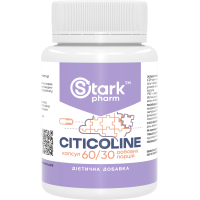
The inscription "250 mg" may refer to the content of the substance in one capsule or other unit of the product. The designation "500 mg" sometimes indicates a daily serving, but this can only be determined by the full table of ingredients and the instructions on the specific label. The amount in one capsule and the amount in the full recommended daily serving are different indicators; they should not be confused.
When reading the label, it is worth checking:
- what exactly the number refers to - a capsule, a serving or the recommended daily amount;
- whether it says “citicoline”, “CDP-choline” or another form of the substance, and what auxiliary components are included in the composition;
- Does the formula contain other active ingredients for which there are separate warnings?
The amount of citicoline should not be equated with the same mass of pure choline: these are different chemical quantities. Furthermore, the presence of a number that has been encountered in clinical work does not mean that a particular finished product has passed that particular test.

How to understand duration: two weeks, 28 days and 12 weeks
The duration of a study defines the period during which researchers observed participants and measured specific measures. Two weeks in Al-Kuraishy and Al-Gareeb's work, 28 days in the attention trials, and 12 weeks in Nakazaki's study describe the design of the respective experiments. They do not constitute a "one-size-fits-all" course or specify when to begin or end the intake.
Longer follow-up may provide more information about certain outcomes, but does not guarantee that the effect will accumulate over time. Comparisons between different studies without considering population, endpoints, and methodology are not possible. For any finished product, the instructions on its packaging are used; individual questions are discussed with a specialist.
Portability and limits of available data
Short-term studies of citicoline often report generally satisfactory tolerability, but this does not mean that there are no adverse reactions or long-term risks. For example, in the Nakazaki study, one participant discontinued due to headache, which the authors considered possibly related to the study substance. Larger data are needed to assess rare events and long-term use.
During pregnancy, breastfeeding, chronic conditions, or ongoing medication, decisions about supplements should be discussed with a doctor. Children should not be given doses from adult trials, and results from studies involving adolescents do not provide a general recommendation for this age group.
Frequently asked questions
What dosage of citicoline was studied — 250 or 500 mg?
Both numbers are found in clinical studies. The conditions, participants, and results of these studies varied, so the numbers alone are not a recommendation.
Is 500 mg proven to be more effective than 250 mg?
No, the available research does not allow for a universal conclusion about the benefit of 500 mg for all people or for every cognitive indicator.
Does 250 mg on the package mean a daily serving?
Not necessarily. This could be the contents of one capsule. You should check the recommended daily intake separately.
Can 1 g of citicoline be used if that was the case in the study?
Mention of the amount in a scientific publication is not an instruction for self-administration. The research protocol does not replace the recommendations on the label and the consultation of a doctor.
Why have studies studied citicoline for different lengths of time?
The studies had different tasks: measuring attention, alertness, or memory in different groups of participants. The duration depended on the design of each study.
Has memory improvement been proven when taking citicoline?
Some studies reported positive changes in individual tests, but EFSA in 2024 did not consider a general causal relationship proven for the population evaluated.
How to correctly compare the composition of two supplements with citicoline?
Compare the amount of active ingredient per full daily serving, the ingredient form, other ingredients, and warnings. Don't judge a product based on milligram count alone.
Sources
- McGlade E. and others. (2012). Improved Attentional Performance Following Citicoline Administration in Healthy Adult Women. Food and Nutrition Sciences. Article.
- McGlade E. and others. (2019; online 2015). The Effect of Citicoline Supplementation on Motor Speed and Attention in Adolescent Males. Journal of Attention Disorders. PubMed.
- Al-Kuraishy HM, Al-Gareeb AI (2020). Citicoline Improves Human Vigilance and Visual Working Memory: The Role of Neuronal Activation and Oxidative Stress. Basic and Clinical Neuroscience. PubMed.
- Nakazaki E. and others. (2021). Citicoline and Memory Function in Healthy Older Adults: A Randomized, Double-Blind, Placebo-Controlled Clinical Trial. The Journal of Nutrition. PubMed.
- EFSA NDA Panel (2024). 'Citicoline' and support of the memory function: Evaluation of a health claim pursuant to Article 13(5) of Regulation (EC) No 1924/2006. EFSA Journal. PubMed.
Dietary supplement. Not a medicine. Consult a doctor before use.
Products related to this post
Related Posts
Comments
Information
Customer Service
Extras
My Account


Sports nutrition manufacturer in Ukraine StarkPharm © 2026


