Your shopping cart is empty!

Undenatured Type II Collagen vs. Hydrolysate: Why the Dosage Is 250-Fold Different
Published: 08/09/2026
Times Read: 301
Comments : 0
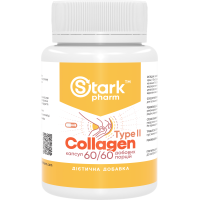
Two jars labeled “type II collagen” can differ in daily dosage by two hundred and fifty times: one contains grams of powder, the other contains forty milligrams in a capsule. For a dietary supplement, such a difference seems absurd—if the substance is the same, one of the manufacturers is wrong. In fact, no one is wrong: these are two different ways of using the same protein, and in one of them the amount means completely different things than in the other. Let’s take a look at how exactly the undenatured form works, why its structure is critical, and where the limits of what is known about it lie.

One number, two different additions
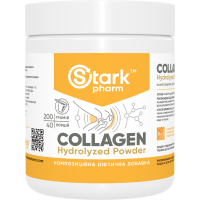
Both substances come from cartilage tissue and both are type II collagen - that's where the similarities end. The hydrolysate is obtained by heating and enzymatic cleavage: the triple helix is unraveled, the chains are cut into short fragments. The undenatured form, on the other hand, is produced at low temperatures precisely so that the helix remains intact.
The difference is not in purity or processing quality, but in what the protein is intended for. The general classification of collagen types and how the type is related to the raw material are discussed separately in the material on collagen types I, II and III. Further - only about the mechanism.
What is oral tolerance?
The hypothesis underlying the undenatured form comes not from nutrition, but from immunology. Oral tolerance is the ability of the immune system not to attack what comes through the digestive tract. The mechanism makes obvious sense: the intestine encounters tons of foreign protein with food every day, and if a full-fledged immune response were to develop for each of them, life would be impossible. Therefore, the lymphoid tissue of the intestine is by default set to suppress the reaction, not to launch it.
Technically, it looks like this. In the wall of the small intestine are located Peyer's patches - accumulations of lymphoid tissue with specialized cells that capture antigens from the intestinal lumen and present them to immune cells. Recognition of the antigen in this place and in small quantities leads not to an attack, but to the formation of regulatory T cells - a population whose task is to suppress the immune response to a specific molecule.
Then comes the mechanism that in the English-language literature is called bystander suppression. Regulatory cells trained on a specific antigen migrate to where this antigen is present in the tissue and suppress inflammatory activity locally — not only against the molecule itself, but also in its surroundings. Regarding type II collagen, the logic is as follows: if you train the immune system not to react to it through the intestine, the corresponding cells will work where this collagen is present, that is, in the cartilage.
The mechanism has been studied primarily in animal models of autoimmune arthritis, which is where the hypothesis came to nutrition, as described in the review by Park et al. (2009). It is important to understand the status: this is a consistent and experimentally supported hypothesis, but the full chain of events in humans from the capsule to the specific cell in the joint has not been traced.

How does a molecule reach the intestine intact?
Here arises the strongest objection, and it is worth examining it honestly. If any protein denatures in the acidic environment of the stomach and is cleaved by proteases, then where in the intestine will a whole helix with recognizable epitopes come from? Logically, undenatured collagen should denature in the first minutes after ingestion.
The answer is that the triple helix of collagen is an unusually stable structure. The three chains, twisted and held together by a dense network of hydrogen bonds, are less susceptible to both acid denaturation and protease attack than globular proteins: the enzyme has difficulty reaching the cleavage site within the tight helix. A review by Yuan et al. (2023) addresses this issue separately—the thermal stability, solubility, and behavior of undenatured type II collagen in the digestive tract.
The word “more resistant” here does not mean “indestructible.” Some of the molecules denature and break down, like any protein. The hypothesis does not require that the entire dose survive: to trigger tolerance, a small amount of antigen is needed that reaches Peyer’s patches in a recognizable form. That is why the dose is measured in tens of milligrams.
Why 40 mg and 10 g are not comparable by mass
This is the crux of the whole topic. The two supplements use protein in two different roles, and in each role the amount means something different.
| Parameter | Hydrolysate | Undenatured form |
|---|---|---|
| The role of protein | Substrate: material and source of peptides | Antigen: a molecule recognized by the immune system |
| What does dose mean? | How much material was received? | How much signal did the immune system receive? |
| Is more better? | Dose dependence shown in absorption studies | Not necessarily: tolerance is triggered by small amounts of antigen |
| What causes structural destruction? | It doesn't change anything - it's already ruined. | Loss of epitopes, the mechanism does not work |
| Typical daily amount | Grams | Tens of milligrams |
Hence the main practical conclusion: the question “which supplement provides more collagen” is inapplicable to this pair. The hydrolysate does indeed provide more protein, but it does not provide the undenatured form of protein as such — forty milligrams have no nutritional value in principle. It provides a recognizable antigen, and for an antigen, volume is not an advantage.
What human studies show
The evidence base for the undenatured form is small, but it has a feature that is important for this article: it includes not only people with diagnosed joint problems, but also healthy people. For a supplement, this is fundamentally important, because testing the mechanism in a healthy population is methodologically cleaner.
The most cited work is the multicenter study by Lugo et al. (2016), where 40 mg per day for six months was compared with a combination of glucosamine and chondroitin and placebo; its results and limitations are discussed in detail in the material on collagen for joints.
Two other studies are more interesting for understanding the mechanism. In 2013, the same group tested the substance on people without a diagnosis, measuring the amplitude of movements in the knee with a goniometer - the device gives an objective number, independent of the participant's self-assessment. In 2022, a multicenter randomized study by Lopez et al. was published: healthy people who experienced joint discomfort during physical activity received the same 40 mg per day, and the endpoints were knee joint flexibility and extensibility.
What does this mean in terms of mechanism? If the effect is also observed in people without inflammatory joint disease, then the explanation due to suppression of the pre-existing autoimmune process works worse, and other hypotheses are needed. This does not argue against oral tolerance, but shows that the mechanism is not fully described.
How much undenatured is actually in undenatured
But here's a question that almost no one asks, even though it directly relates to what the buyer pays for.
If the whole idea is based on the preserved structure, then the problem arises: how to measure how much of it is preserved. This is done by enzyme-linked immunosorbent assay with a monoclonal antibody that binds only to epitopes of the intact molecule. Denatured collagen is not seen by such a test - this is the point of the method.
The problem is that the result depends on the methodology. In 2019, a letter from the ingredient developers appeared, explaining that in 2014, the sample preparation in this analysis was changed to simplify the procedure for manufacturers, and because of this, the declared percentage of undenatured collagen changed. The raw material itself remained the same as in clinical studies.
The practical conclusion for the reader is modest but useful: the percentage of undenatured collagen on the label is not an absolute physical quantity, but the result of a specific analytical method. Comparing this figure between manufacturers who may have used different methods is incorrect.

What follows from this?
The undenatured form is not a “more concentrated” or “weaker” version of the hydrolysate. It’s a different logic of using the same protein, and comparing them by quantity is as pointless as comparing a medicine and a food product by mass.
What is known for sure: the mechanism of oral tolerance is real and well described in immunology, the triple helix is indeed more resistant to digestion than globular proteins, and controlled human studies have shown changes in joint function. What is not shown: the full chain of events in humans, structural changes in cartilage, and direct comparisons of the undenatured form with the hydrolysate in sufficient quantities to conclude that one is superior to the other.
Therefore, the correct choice between them should be made not according to the principle of “which is more effective”, but according to the task you are setting. A general picture of the evidence base for collagen, with a breakdown by levels of evidence, is in the material on whether collagen works.
Finally, about precautions, and they are specific for this form. The raw material is chicken breast cartilage - accordingly, an allergy to chicken excludes this supplement, and this does not apply to the usual hydrolysate from pork or fish raw materials. The second caveat follows directly from the mechanism: if the substance interacts with the immune system by design, then in autoimmune conditions or against the background of drugs that modulate the immune response, its expediency is a question for a doctor, not an independent decision. And the third: joint symptoms have different causes, so it is worth starting with diagnostics, not with the selection of a supplement.
Frequently asked questions
Why is undenatured collagen measured in milligrams, and hydrolysate in grams?
Because they work differently. The hydrolysate supplies the material, so the amount matters. The undenatured form works as an antigen to the immune system, and for an antigen, more is not better.
What is oral tolerance?
The property of the immune system not to attack proteins that enter the digestive tract. Recognition of an antigen in the lymphoid tissue of the intestine leads to the formation of cells that suppress the immune response to this molecule.
How does a molecule not break down in the stomach?
The triple helix of collagen is more resistant to acid and enzymes than globular proteins. Some molecules are still broken down, but only a small amount is enough to trigger the mechanism.
No, these are different tasks. The hydrolysate, by definition, has a broken helix, so it does not contain the epitopes on which the proposed mechanism rests.
What have human studies shown?
There are studies on both people with joint problems and healthy people. In the latter, flexibility and range of motion in the knee were measured with devices, and the daily dose was 40 mg.
Does this mean that the cartilage structure is being restored?
This has not been shown. The studies measured symptoms, function, and range of motion, not the condition of the cartilage.
What does the percentage of undenatured collagen on the label mean?
Result of enzyme immunoassay with antibody to intact epitopes. The value depends on the method, so comparing numbers from different manufacturers is incorrect.
Sources
- Park K.-S. etc. (2009). Type II collagen oral tolerance: mechanism and role in collagen-induced arthritis and rheumatoid arthritis. Modern Rheumatology. https://pubmed.ncbi.nlm.nih.gov/19697097/
- Lugo JP and others. (2013). Undenatured type II collagen (UC-II) for joint support: a randomized, double-blind, placebo-controlled study in healthy volunteers. Journal of the International Society of Sports Nutrition. https://pmc.ncbi.nlm.nih.gov/articles/PMC4015808/
- Lugo JP, Saiyed ZM, Lane NE (2016). Efficacy and tolerability of an undenatured type II collagen supplement in modulating knee osteoarthritis symptoms: a multicenter randomized, double-blind, placebo-controlled study. Nutrition Journal. https://pmc.ncbi.nlm.nih.gov/articles/PMC4731911/
- Lugo JP and others. (2019). Letter to the editor: UC-II undenatured type II collagen — update to analytical methods. https://pubmed.ncbi.nlm.nih.gov/31311550/
- Lopez HL and others. (2022). UC-II undenatured type II collagen for knee joint flexibility: a multicenter, randomized, double-blind, placebo-controlled clinical study. Journal of Integrative and Complementary Medicine. https://pubmed.ncbi.nlm.nih.gov/35377244/
- Yuan L. and others. (2023). Undenatured type II collagen and its role in improving osteoarthritis. International Journal of Biological Macromolecules. https://pubmed.ncbi.nlm.nih.gov/37774932/
- Liang C.-W. etc. (2024). Efficacy and safety of collagen derivatives for osteoarthritis: a trial sequential meta-analysis. Osteoarthritis and Cartilage. https://pubmed.ncbi.nlm.nih.gov/38218227/
Dietary supplement. Not a medicine. Consult a doctor before use.
Products related to this post
Related Posts
Comments
Information
Customer Service
Extras
My Account


Sports nutrition manufacturer in Ukraine StarkPharm © 2026