Your shopping cart is empty!

Liposomal Vitamin C: How It's Different From Regular Vitamin C and What the Research Says
Published: 14/11/2026
Times Read: 19
Comments : 0
Liposomal vitamin C is ascorbic acid that is incorporated into lipid carriers, specifically phospholipid-based structures. The goal of this technology is to alter the delivery of the substance through the digestive tract and its appearance in the blood. In some direct studies, the liposomal form did indeed provide higher concentrations of vitamin C than regular ascorbic acid. However, the magnitude of the difference depended significantly on the specific formula, dose, and experimental conditions.
Therefore, the question “which is better, liposomal or regular vitamin C?” has two separate answers. Some formulas have been shown to have an advantage in pharmacokinetics—that is, in terms of concentration and time in the blood. But there is currently insufficient evidence to suggest that this provides better long-term results in healthy people.
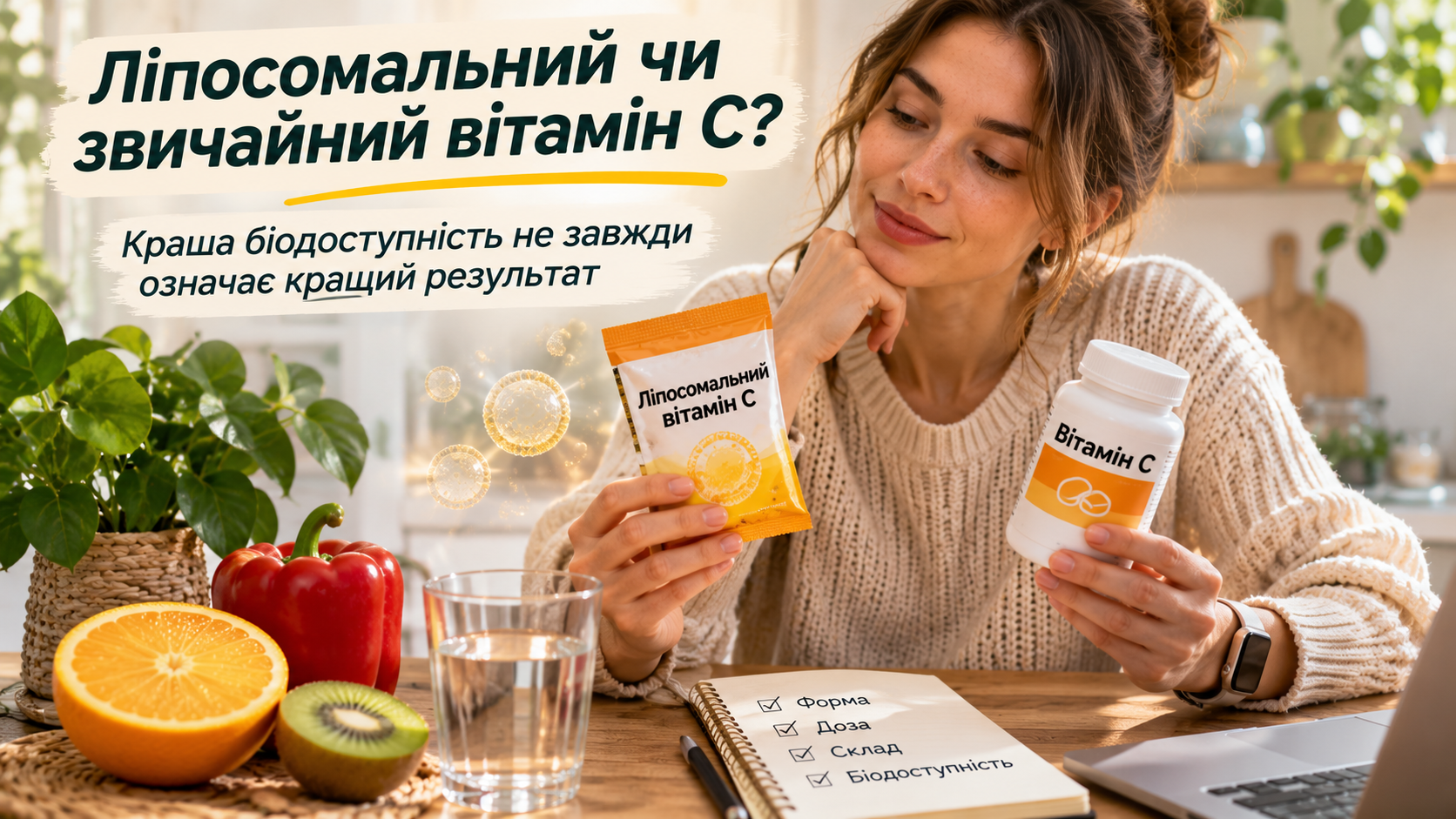
What is liposomal vitamin C and how does the shell work?
Liposomes are small particles made of lipids, often phospholipids. They can form a shell around an aqueous medium containing ascorbic acid. The particle size, degree of encapsulation, shell composition, and shelf life are determined by the manufacturing process. This is why two supplements labeled “liposomal vitamin C” do not necessarily have the same properties.
It is assumed that lipid carriers may affect the stability and transport of ascorbate under digestive conditions. However, the way in which a particular liposome interacts with intestinal cells depends on its structure. It cannot be claimed that any phospholipid capsule completely protects all vitamin C from digestive processes or guarantees its entry into cells in an unchanged shell.
Scientific evaluation of a liposomal formulation begins with testing the product itself: particle size, stability, and percentage of encapsulation are measured. Next, a comparison with the same amount of regular ascorbic acid in humans is required — and only then can we talk about its bioavailability.
Liposomal and regular vitamin C: the main differences
| Parameter | Normal form | Liposomal form |
|---|---|---|
| Active ingredient | Ascorbic acid or its salts | Ascorbate as part of a lipid delivery system |
| Additional components | Depends on the form of release | Typically, phospholipids and technological components of the carrier |
| Blood parameters | Dose-dependent saturation | In many, but not all, studies, higher Cmax and AUC |
| Homogeneity between manufacturers | Depends on the composition, but the substance itself is well known | May vary significantly due to particle technology |
| Proven clinical benefit | Established physiological functions of vitamin C | The additional advantage of the technology itself is not proven for most practical results |
Cmax is the highest measured concentration of a substance in the blood after administration. AUC is the area under the concentration-time curve, which reflects the total exposure over the observation period. A higher Cmax or AUC may indicate a difference in delivery, but does not in itself mean that a person will be less fatigued or have a better physiological outcome.
2024 study: 500 mg in 27 volunteers
In a 2024 randomized, double-blind, crossover study, 27 adult participants were given either placebo, 500 mg of standard vitamin C, or 500 mg of a specific liposomal formula at different times. The researchers measured plasma and leukocyte ascorbate concentrations for 24 hours after each dose.
Compared to the conventional formulation, the liposomal vitamin C group showed higher values: the maximum plasma concentration was 27% higher and the AUC at 24 hours was 21% higher. For leukocytes, the corresponding differences were approximately 20% and 8%. This suggests better pharmacokinetics of the studied formulation, but the study did not establish its long-term superiority in terms of well-being or other clinical outcomes.
It is important to note that the specific encapsulation technology was studied, not the entire category of liposomal products. It is incorrect to extrapolate these percentages to any product with a similar label on the packaging.
What other direct comparisons showed
In a 2021 study published in the Journal of Liposome Research, Gopi and Balakrishnan used a single-dose cross-over comparison of liposomal and regular ascorbic acid in healthy adults in the fasted state. For the liposomal formulation tested, the authors reported a bioavailability of approximately 1.77 times higher. The researchers also measured the physical parameters of the particles and the encapsulation efficiency; such controls are important for understanding what they were comparing.
Davis et al. (2016) compared single doses of 4 g of liposomal and conventional oral vitamin C, as well as intravenous administration. The liposomal formulation provided higher blood concentrations than conventional oral administration, but lower than intravenous administration. This study also examined short-term measures of oxidative stress; the results do not support an overall advantage of liposomes for all physiological outcomes.
The doses of 4 g and 1000 mg are given here only as characteristics of published experiments. They are not advice on the amount of vitamin C to take daily.
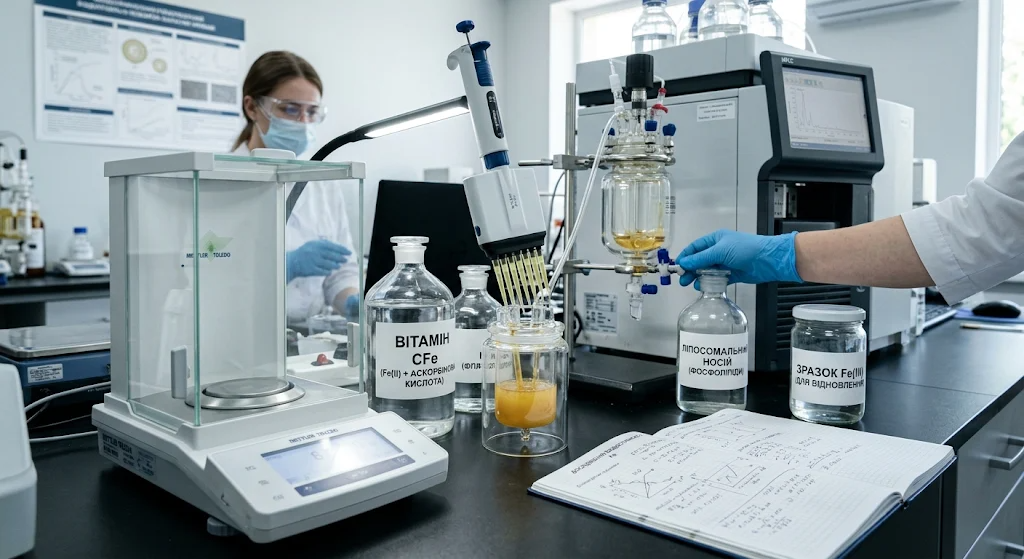
What the 2025 systematic review results mean
A scoping review published in Basic & Clinical Pharmacology & Toxicology in 2025 included 10 studies of liposomal and non-liposomal ascorbate. Nine studies reported higher bioavailability of liposomal forms. However, there was considerable variation between studies, with doses ranging from 150 mg to 10 g and follow-up times ranging from 4 to 24 hours.
The review authors noted a range of approximately 1.2- to 5.4-fold increases in Cmax and 1.3- to 7.2-fold increases in AUC. These ranges are the result of different preparations and study designs, not a prediction for a specific package. A significant limitation is that none of the ten studies fully investigated ascorbate excretion, only two assessed its uptake into cells in vivo, and only two assessed possible biological effects.
Another systematic review, published in Nutrients in 2025, compared different alternative forms of vitamin C and looked at available data on tolerability and immune parameters. It also found no reason to believe that better laboratory results automatically mean a convincing health benefit.
Why results vary between studies
There are at least five reasons why one liposomal formulation may show a modest difference while another shows a significantly higher difference. For example, Joseph et al. (2021) evaluated a separate system based on calcium ascorbate and lipid particles with fenugreek galactomannan. Their results cannot be automatically transferred to other technologies:
- Carrier structure: phospholipid composition, particle size, and actual fraction of encapsulated ascorbate.
- Initial availability: the concentration of vitamin C before the study affects the subsequent curve in the blood.
- Dose: Regular vitamin C has nonlinear pharmacokinetics; its relative absorption may decrease with large doses.
- Measurement time: 4- and 24-hour studies do not yield fully comparable AUC values.
- Design and funding: Small samples, open studies, and commercial interest require particularly careful interpretation.
The 2025 review specifically notes that studies in this category were associated with industry funding or authors working for companies. This does not automatically make the results false, but it does reinforce the importance of independent replication of experiments.
Does higher bioavailability mean greater benefit?
Vitamin C is required for collagen synthesis, normal functioning of enzyme systems and antioxidant reactions. These functions belong to the substance itself, not to a separate technology of its delivery. For a healthy person with an adequate intake of ascorbic acid, an additional short-term increase in plasma levels does not necessarily mean a noticeable physiological result.
Long-term studies with endpoints relevant to humans, not just Cmax and AUC, are needed for practical evaluation. Conclusions regarding immune responses, endurance, or tolerability cannot be drawn from blood ascorbate concentrations alone.
Small studies measuring individual markers of oxidative stress do not suggest a clinical advantage of liposomal formulations. The best evidence to date is that some liposomal formulations may provide higher exposure to vitamin C, but the significance of this for long-term health remains to be determined.
Is liposomal vitamin C better tolerated?
High single doses of conventional ascorbic acid sometimes cause abdominal discomfort and loose stools. Liposomal technology is sometimes touted as being gentler on digestion, but there is insufficient comparative data to guarantee better tolerability of all liposomal products.
In addition to ascorbate, the formula may contain phospholipids, stabilizers, and other ingredients. Individual sensitivity should also be taken into account. Pregnant women, breastfeeding women, people with kidney disease or a tendency to stones, iron metabolism disorders, and those who are constantly taking medications should discuss the use of the supplement with a specialist.
What to look for when evaluating a liposomal formulation
The most compelling data are direct comparisons of the same amounts of ascorbate in humans, with pre- and post-dose measurements, sufficient observation time, and a transparent description of the technology studied. Without this, a claim like “absorbed several times better” cannot be extended to all products in the category.
Bottom line: Liposomal vitamin C is not a different active ingredient, but a delivery method. Certain formulas have been shown to deliver higher concentrations of ascorbate after ingestion, but the standard form also provides vitamin C, and the long-term benefits of liposomal technology remain poorly understood.

Frequently asked questions
How is liposomal vitamin C different from regular vitamin C?
The active ingredient remains vitamin C, but the liposomal form uses a lipid carrier. This may alter the concentration of ascorbate in the blood after administration.
Is liposomal vitamin C really better absorbed?
In most small direct studies, bioavailability rates have been higher. However, the magnitude of the difference depends on the formulation, dose, and comparison conditions.
Does better bioavailability mean better effects on the body?
No, these are different metrics. Higher post-dose concentration does not in itself prove better long-term results.
What are Cmax and AUC in vitamin C studies?
Cmax is the maximum concentration in the blood, and AUC is the total exposure over the observation period. They help to compare the delivery of a substance, but are not a substitute for the assessment of clinical outcomes.
Are all liposomal vitamin C supplements the same?
No. Lipid composition, particle size, stability, and encapsulation efficiency may vary between manufacturers.
Is it possible to transfer the results of one formula study to another?
Not automatically. Such a conclusion requires matching the formula characteristics or a separate direct comparison.
Is liposomal vitamin C better tolerated by the stomach?
The tolerability advantage for the entire category is not sufficiently proven. The response depends on both the dose and the excipients.
Does liposomal vitamin C replace vegetables and fruits?
No. A complete diet provides not only ascorbic acid, but also fiber and other nutrients.
Sources
- Gopi S, Balakrishnan P. (2021). Evaluation and clinical comparison studies on liposomal and non-liposomal ascorbic acid (vitamin C) and their enhanced bioavailability. Journal of Liposome Research. PubMed.
- Liposomal delivery enhances absorption of vitamin C into plasma and leukocytes: a double-blind, placebo-controlled, randomized trial. (2024). European Journal of Nutrition. PubMed.
- Carr AC et al. (2025). Do Liposomal Vitamin C Formulations Have Improved Bioavailability? A Scoping Review Identifying Future Research Directions. Basic & Clinical Pharmacology & Toxicology. PubMed.
- Zmuda P et al. (2024). Bioavailability of Liposomal Vitamin C in Powder Form: A Randomized, Double-Blind, Cross-Over Trial. Applied Sciences. DOI.
- Joseph A et al. (2021). Surface-engineered liposomal particles of calcium ascorbate with fenugreek galactomannan enhanced the oral bioavailability of ascorbic acid: a randomized, double-blinded, 3-sequence, crossover study. RSC Advances. PubMed.
- Davis JL et al. (2016). Liposomal-encapsulated Ascorbic Acid: Influence on Vitamin C Bioavailability and Capacity to Protect Against Ischemia-Reperfusion Injury. Nutrition and Metabolic Insights. PubMed.
- Enhanced Vitamin C Delivery: A Systematic Literature Review Assessing the Efficacy and Safety of Alternative Supplement Forms in Healthy Adults. (2025). Nutrients. PubMed.
- Levine M et al. (1996). Vitamin C pharmacokinetics in healthy volunteers: evidence for a recommended dietary allowance. Proceedings of the National Academy of Sciences. PubMed.
- Lykkesfeldt J, Tveden-Nyborg P. (2019). The Pharmacokinetics of Vitamin C. Nutrients. PubMed.
- National Institutes of Health, Office of Dietary Supplements. Vitamin C: Fact Sheet for Health Professionals. NIH ODS.
Dietary supplement. Not a medicine. Consult a doctor before use.
Products related to this post


Related Posts
Comments
Information
Customer Service
Extras
My Account


Sports nutrition manufacturer in Ukraine StarkPharm © 2026


