Your shopping cart is empty!

Collagen and vitamin C: is it necessary to take them together?
Published: 09/09/2026
Times Read: 427
Comments : 0
The statement “collagen should be taken with vitamin C” is repeated so unanimously that it is already perceived as a physiological necessity. There is indeed a real mechanism behind it: without ascorbic acid, full-fledged collagen cannot be formed in the body, and this is not marketing, but basic biochemistry. The problem is another - this mechanism does not imply that both substances should enter the body at the same time. The difference between “vitamin C is needed for collagen synthesis” and “vitamin C should be taken with a portion of peptides” is greater than it seems, and it is in it that the answer to the question in the title is hidden.

What does vitamin C do in collagen synthesis?
Collagen is synthesized inside the cell as a precursor, in which the amino acid sequence is already correct, but the structure is not yet. In order for the three chains to assemble into a stable triple helix, some of the proline residues must be chemically modified - a hydroxyl group is attached to them. This forms hydroxyproline, an amino acid that is not found in any other significant dietary protein and that keeps the helix twisted due to additional hydrogen bonds.
The reaction is carried out by the enzyme proline-4-hydroxylase. To work, it needs molecular oxygen, alpha-ketoglutarate, and a ferric ion in the divalent form in the active center. Ascorbate does not have a separate line position in this list - and this is where the most interesting thing begins.
Ascorbate is not consumed — it reactivates the enzyme
The wording in the scientific literature is more precise than in everyday usage. A review by Gorres and Raines (2010) states that enzymes in this family utilize oxygen, alpha-ketoglutarate, and iron(II), and most of them show increased activity in the presence of ascorbate. They do not “require ascorbate as a raw material,” but “work more actively in its presence.”
Mechanistically, it looks like this. The enzyme is able to hydroxylate proline without vitamin C — the initial reaction rate is high. But during catalysis, the iron in the active site is gradually oxidized from the divalent form to the trivalent form, and the enzyme loses activity. Ascorbate restores the iron back to its working form, returning the enzyme to normal.
Therefore, vitamin C is not a consumable that is consumed in proportion to the amount of collagen synthesized, but a reducing agent that maintains the enzyme pool in working order. For such a role, the overall supply of the body is important, and not the coincidence in time with the intake of any particular protein.
Scurvy: What happens when hydroxylation stops?
The most obvious illustration of this mechanism is the classic physiology of vitamin C deficiency, described long before the advent of supplements.
When ascorbate is critically lacking, the enzyme is inactivated and not restored. The cell continues to synthesize the collagen precursor, but there is not enough hydroxyproline in it, the helix becomes unstable and breaks down, never becoming a full-fledged fiber. Since collagen is the structural basis of the vascular wall, skin, gums and connective tissue in general, the consequences are manifested precisely where the tissue is constantly renewed.
This is a story of physiology, not an argument for supplements. It shows how tightly collagen synthesis is tied to vitamin C availability, and at the same time, that it is a question of deficiency, not whether to take a capsule at the same time as the powder.

Why "simultaneously" does not follow from the mechanism
Now compare the mechanism with the recommendation, and the discrepancy will become obvious. Collagen synthesis is a continuous process. Skin fibroblasts, tendinocytes, osteoblasts build the matrix constantly, not in fits and starts after taking the supplement. The enzyme pool works around the clock, and it needs ascorbate around the clock to regenerate iron in those enzyme molecules that have managed to oxidize.
Vitamin C in tissues also does not transit in an hour. It accumulates in cells, and in some types of tissues the concentration significantly exceeds the plasma level, and the body maintains this reserve. In a person with normal supply, enzymes receive ascorbate regardless of when exactly he ate a tomato or took a supplement.
The root of the misunderstanding is that two different processes are perceived as one. It is worth clearly distinguishing them.
| Parameter | Digestion of collagen supplement | Synthesis of your own collagen |
|---|---|---|
| Where is it happening? | The lumen of the intestine and the cells of its wall | Inside a fibroblast or other connective tissue cell |
| When | Within a few hours after taking | Continuously, regardless of meals |
| What exactly is happening? | Protein breakdown into amino acids and short peptides | Proline hydroxylation and triple helix assembly |
| Is ascorbate needed? | No | Yes, to reactivate the enzyme |
The table shows why the logic of “peptides have arrived, we need vitamin C to incorporate them” does not work. Peptides from the supplement are not incorporated into collagen in a ready-made form, and hydroxylation occurs not at the time of digestion, but inside the cell during the synthesis of a new molecule. These processes are separated both in time and space, so there is no reason to combine them in one dose.
The question is legitimate: if the combination is not mandatory, why was collagen given with vitamin C in scientific studies?
The reason is methodological. When designing an experiment on collagen synthesis, researchers remove anything that could become an uncontrolled variable. Vitamin C supply is just such a variable: if one participant has high levels and another has low levels, enzyme activity will differ regardless of the intervention being tested. Adding ascorbate to all participants levels the playing field.
It is important to understand what these studies did not do. In the works of Shaw et al. (2017) and Lis and Baar (2019), there was no group that received collagen without vitamin C, so they could not compare the combination with pure collagen. Standardization of conditions and proven synergy are different things, and they should not be confused. For more information on the protocols of these studies themselves, their endpoints and the limits of the conclusions, see the material on collagen for tendons before training.
Is the risk of shortage real?
The practical question remains: how likely is it that enzymes lack ascorbate? For a person with a normal diet, it is unlikely. The need for vitamin C is covered by a fairly modest amount of fresh vegetables and fruits, and the reserve in the tissues smoothes out fluctuations in intake. Scurvy in countries with a varied diet is rare precisely because the threshold for deficiency is low.
The groups at higher risk can be honestly named: people with a very monotonous diet without fresh vegetables and fruits, smokers who have an increased need, as well as those who live on a limited set of foods for a long time due to illness or circumstances. But this is a dietary problem that is solved by diet, not by a mandatory combination of supplements.

What follows from this?
The mechanism is real, and the conclusion from it is different from what the advertising suggests. Vitamin C is indeed necessary for the formation of full-fledged collagen, and without it, tissue is built incorrectly. But its role is to maintain enzymes in working order, and not to meet with collagen hydrolysate molecules in the digestive tract. Therefore, an additional dose of ascorbate, taken with the powder, has no mechanistic justification, and its advantage over the usual sufficient supply has not been tested in studies.
In practice, this means that a ready-made combination in one jar is a matter of convenience, not necessity. If the diet contains enough fresh vegetables and fruits, no special effort is required here at all. For a broader context of what is generally known about the effects of collagen supplements, see the article on whether collagen works.
Regarding precautions, it is worth remembering that vitamin C has an upper limit of consumption, and high doses are not harmless: an excess can cause gastrointestinal discomfort, and people with a tendency to kidney stones or iron metabolism disorders should coordinate additional intake with a doctor. For the collagen part, the precautions are usual for food protein: the origin of the raw material in the presence of allergies and medical supervision for kidney pathology, during pregnancy, lactation and against the background of constant drug therapy.
Frequently asked questions
Is it necessary to take collagen with vitamin C?
No. Vitamin C is needed for the enzymes that build collagen inside the cell, not for the absorption of peptides from a supplement. It is the overall availability that matters, not the timing.
What role does vitamin C play?
It reduces the iron in the active site of the enzyme that hydroxylates proline. Without it, the enzyme gradually becomes inactivated because the iron is oxidized during operation.
Is vitamin C consumed during collagen synthesis?
Not as a substrate. The enzyme can work without it, but it quickly loses activity; ascorbate restores it to working condition.
Why then was collagen given with vitamin C in the studies?
To level the playing field between participants. There was no group that received collagen without vitamin C in these studies, so they could not compare the combination with pure collagen.
What happens with a vitamin C deficiency?
Proline hydroxylation is disrupted, the collagen helix becomes unstable and breaks down. It is on this mechanism that the classic picture of scurvy is based.
How likely is a deficiency with a normal diet?
Unlikely. The need is covered by a modest amount of fresh vegetables and fruits, and fabrics hold a reserve that smooths out fluctuations in income.
Is there any point in ready-made combination products?
This is a matter of convenience, not mechanistic necessity. The benefits of this combination over adequate dietary intake have not been tested in studies.
Sources
- Gorres KL, Raines RT (2010). Prolyl 4-hydroxylase. Critical Reviews in Biochemistry and Molecular Biology. https://pmc.ncbi.nlm.nih.gov/articles/PMC2841224/
- Kuiper C., Vissers MCM (2014). Ascorbate as a co-factor for Fe- and 2-oxoglutarate dependent dioxygenases: physiological activity in tumor growth and progression. Frontiers in Oncology. https://pmc.ncbi.nlm.nih.gov/articles/PMC4261134/
- Shaw G. and others. (2017). Vitamin C-enriched gelatin supplementation before intermittent activity augments collagen synthesis. The American Journal of Clinical Nutrition. https://doi.org/10.3945/ajcn.116.138594
- Lis DM, Baar K. (2019). Effects of different vitamin C-enriched collagen derivatives on collagen synthesis. International Journal of Sport Nutrition and Exercise Metabolism. https://pubmed.ncbi.nlm.nih.gov/30859848/
Products related to this post
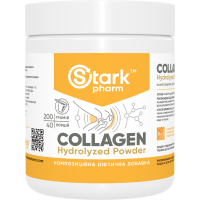
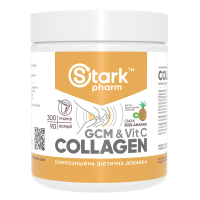
516.00грн
Add to Cart


Related Posts
Comments
Information
Customer Service
Extras
My Account


Sports nutrition manufacturer in Ukraine StarkPharm © 2026