Your shopping cart is empty!

Does the body produce inositol itself: how does endogenous synthesis occur?
Published: 13/10/2026
Times Read: 74
Comments : 0
Yes, the human body is capable of producing myo-inositol itself. It does not depend solely on food: cells can synthesize myo-inositol from glucose-6-phosphate, and also reuse the inositol skeleton after the breakdown of phosphoinositol compounds.
The main pathway is relatively short: glucose-6-phosphate is converted to a phosphorylated precursor of myo-inositol, after which the phosphate group is removed and free myo-inositol is formed. This process does not occur in a single organ - different tissues have the ability to synthesize it, although the kidneys play a particularly important role in overall inositol metabolism.
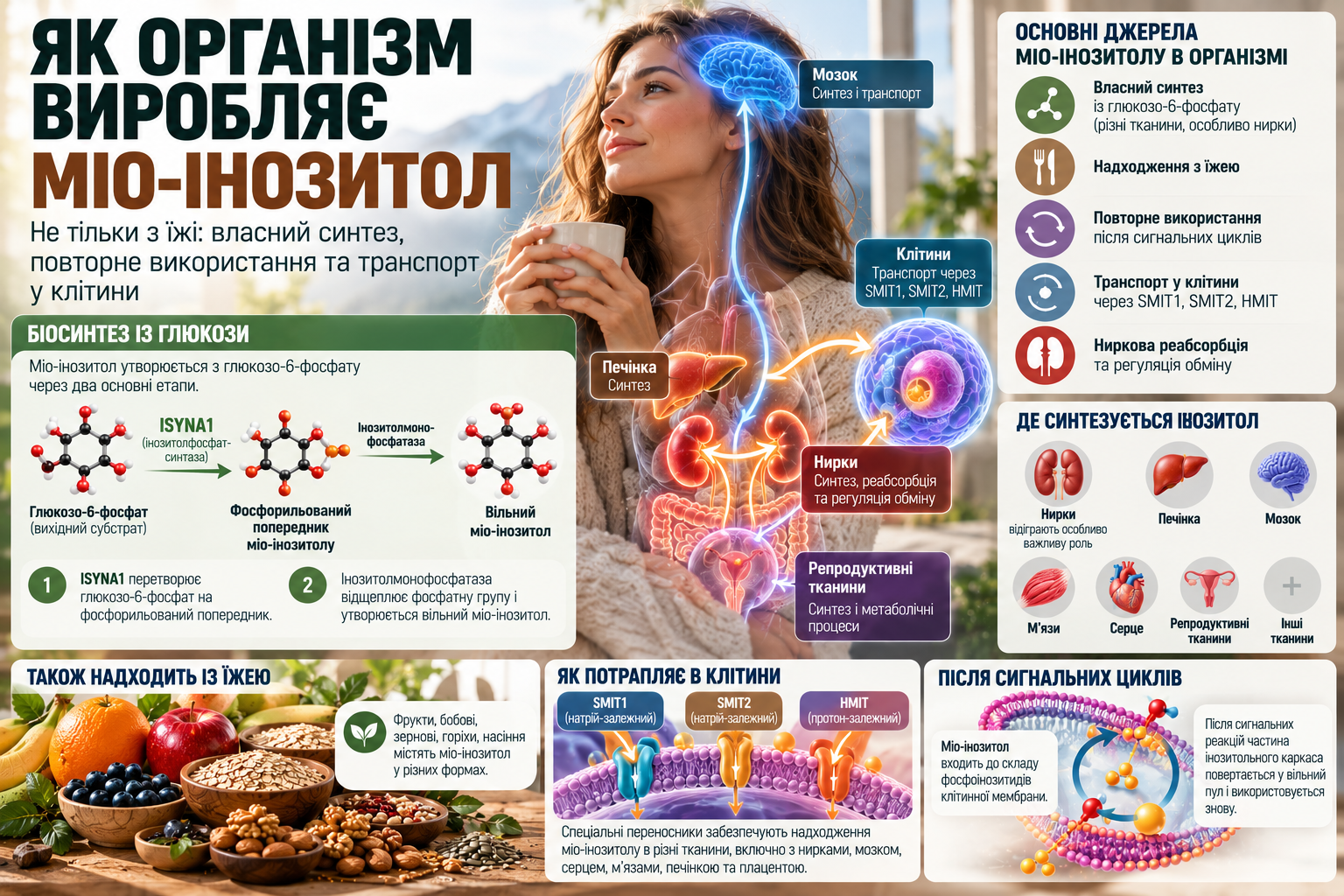
Where does the body get myo-inositol from?
There are several sources of myo-inositol in the body. Some comes from food, some is synthesized from intermediates of glucose metabolism, and some is returned to the free pool after inositol compounds are used in cellular signaling cycles.
Therefore, the level of myo-inositol in the tissue depends on more than one process. It is simultaneously influenced by its own synthesis, blood supply, membrane transporters, intracellular utilization, re-release, and excretion.
How glucose is converted to myo-inositol
The starting substrate for endogenous synthesis is glucose-6-phosphate, one of the central molecules of carbohydrate metabolism.
In the first step, a special enzyme converts glucose-6-phosphate into a phosphorylated precursor of myo-inositol. In the second step, the phosphate group is removed from it, after which free myo-inositol is formed.
That is, the body does not need to obtain every molecule of myo-inositol in ready-made form from food: it has its own biosynthetic pathway.
What role does ISYNA1 play?
The key enzyme in the first step is encoded by the ISYNA1 gene. It is often called inositol phosphate synthase. It catalyzes the conversion of glucose-6-phosphate to the phosphorylated precursor myo-inositol.
This is one of the central checkpoints of endogenous synthesis. Changes in the activity of this enzyme can affect how much new myo-inositol a cell is able to generate from glucose metabolism.
Second stage: formation of free myo-inositol
After the first reaction, the molecule still contains a phosphate group. To obtain free myo-inositol, it must be cleaved off.
This step is performed by inositol monophosphatases. After dephosphorylation, the resulting myo-inositol can be used for the synthesis of membrane phosphoinositides, osmotic regulation, and other cellular needs.
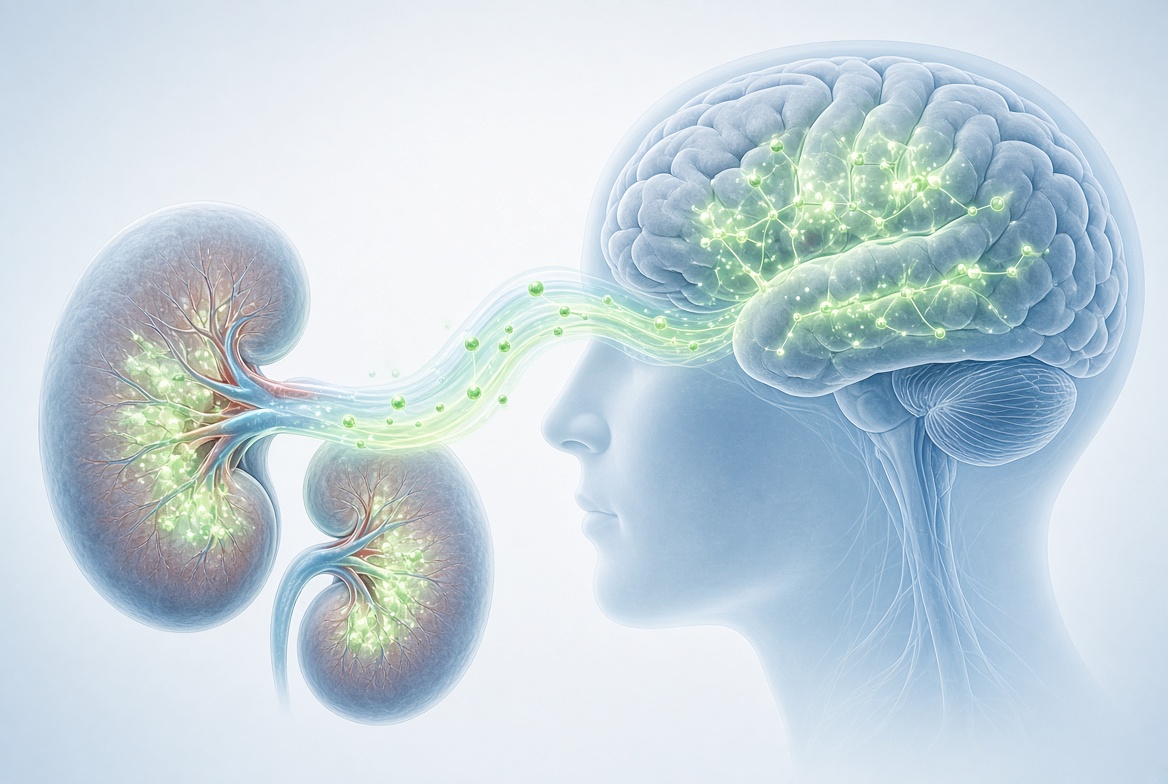
Where in the body is inositol synthesized?
Synthesis is not limited to one organ. Reviews describe the ability for endogenous formation of myo-inositol in the kidneys, liver, brain, reproductive tissues, and other organs.
This is why the phrase “inositol is produced in the kidneys” is only partially correct. The kidneys are very important for systemic inositol balance, but they are not the only site of its synthesis.
Why the kidneys are especially important for inositol metabolism
The kidneys combine several functions at once: they synthesize myo-inositol, participate in its reabsorption, and regulate its further metabolism and excretion.
The renal tubules also have transport systems that help return myo-inositol from the primary urine back to the blood and cells. Thanks to this, the kidneys affect not only the local but also the overall level of inositol in the body.
How myo-inositol gets into cells
The cell does not rely solely on its own synthesis. Myo-inositol can come from the extracellular environment via special membrane transporters.
The best-known are the sodium-dependent transporters SMIT1 and SMIT2. They are expressed in various tissues, including the kidney, brain, heart, muscle, liver, and placenta. A separate proton-dependent transporter, HMIT, is particularly associated with nervous tissue.
These systems help cells maintain internal concentrations of myo-inositol even when local demand changes.
Why cells don't rely solely on inositol from the blood
Myo-inositol not only acts as a precursor for signaling molecules, but in some tissues it also functions as an organic osmolyte, helping cells maintain water and osmotic balance.
Therefore, local synthesis and transport give the cell flexibility: it can increase or decrease the availability of inositol depending on its own needs, not just its concentration in the blood.
What happens to inositol after cell signaling
Myo-inositol is a component of phosphatidylinositol and other phosphoinositides in the cell membrane. During signaling reactions, these molecules can be broken down into smaller intermediates.
After the signaling cycle is complete, part of the inositol scaffold returns to the free pool and can be used again for the synthesis of membrane compounds. Therefore, cellular inositol metabolism is not only a continuous creation of new molecules, but also their reuse.
Is D-chiro-inositol synthesized by the same pathway?
Therefore, the ratio of the two isomers differs between tissues. A detailed analysis of this difference and the origin of the popular 40:1 ratio is a separate topic, but for endogenous synthesis it is enough to understand the sequence: myo-inositol is the starting form for such a conversion.
How much inositol can the body synthesize?
Reviews give approximate estimates of endogenous synthesis within a few grams of myo-inositol per day, often around 4 g. But this figure should not be taken as an exact norm for every person.
The actual rate of synthesis depends on tissue, metabolic state, enzyme activity, renal metabolism, nutrition, and other factors. Likewise, this physiological assessment cannot be used as an argument for automatically choosing the same dosage of a supplement.
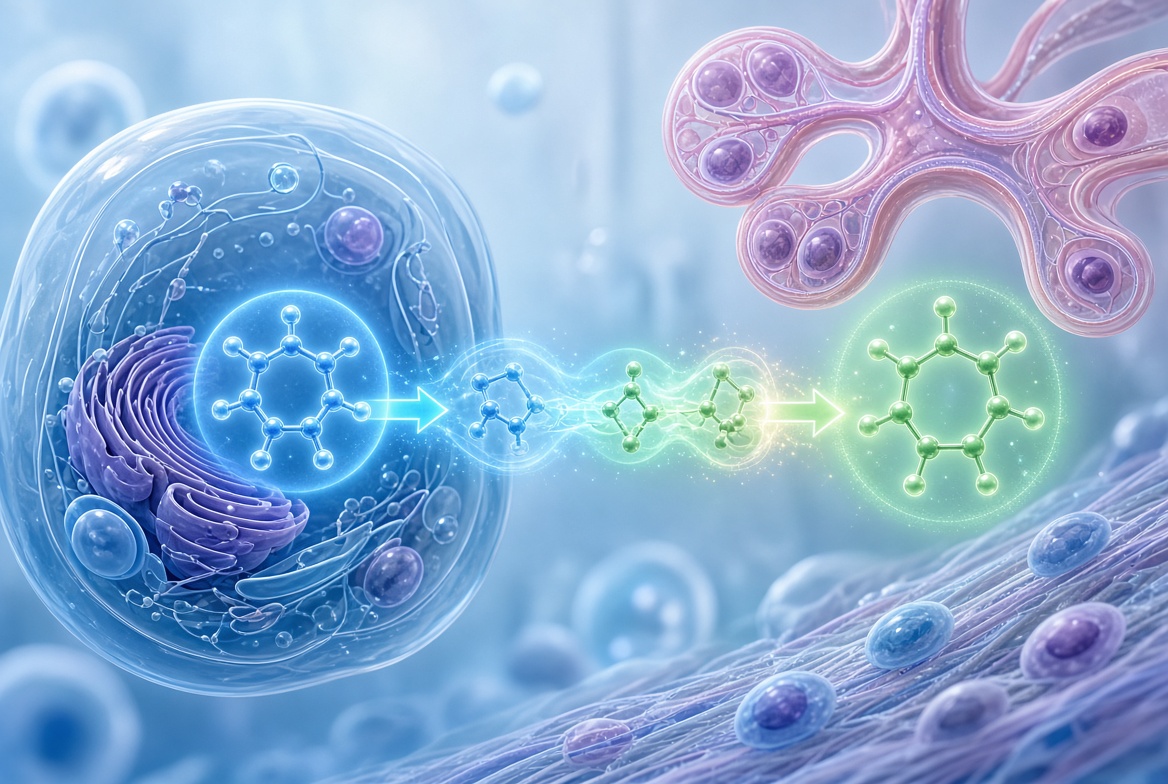
Main ways to maintain myo-inositol levels
| Way | What's happening? | Main meaning |
|---|---|---|
| Endogenous synthesis | Glucose-6-phosphate is converted to a phosphorylated precursor and then to free myo-inositol | Allows tissues to produce inositol on their own |
| Blood supply | Myo-inositol is transported into the cell by special membrane transporters. | Complements local synthesis |
| Renal reabsorption | Part of the filtered myo-inositol is returned | Helps maintain systemic balance |
| Intracellular recycling | The inositol scaffold is returned after the operation of phosphoinositol signaling cycles | Reduces the need to constantly synthesize new molecules |
| Formation of D-chiro-inositol | Part of myo-inositol is converted by epimerase | Forms a tissue-specific balance of two isomers |
Does in-house synthesis mean that a supplement is never needed?
No. The fact of endogenous synthesis only shows that myo-inositol is not a substance that the body can obtain exclusively from the outside.
However, self-synthesis does not automatically prove the need for supplementation. The issue of supplementation should be assessed individually for the specific population, purpose, and clinical data.
Frequently asked questions
Does the body produce myo-inositol itself?
Yes. Myo-inositol can be synthesized from glucose-6-phosphate through a sequence of enzymatic reactions.
Which organ produces the most inositol?
The kidneys play a particularly important role in systemic inositol metabolism, but synthesis is not limited to them: other tissues are also capable of carrying it out.
Is inositol synthesized in the brain?
Yes. Nervous tissue has its own mechanisms for the synthesis and transport of myo-inositol, which is also involved in osmotic balance and membrane signaling systems.
What does the body use to make myo-inositol?
Biosynthesis begins with glucose-6-phosphate, one of the central intermediates of glucose metabolism.
What does the ISYNA1 gene do?
It encodes a key enzyme in the first step of myo-inositol biosynthesis, which converts glucose-6-phosphate to the phosphorylated inositol precursor.
Is D-chiro-inositol also produced in the body?
Yes. Part of D-chiro-inositol is formed from myo-inositol with the participation of tissue-specific epimerase.
If the body produces inositol on its own, does that mean supplements are always unnecessary?
No. Self-synthesis and supplement use are two different things. The appropriateness of supplement use depends on the specific goal and evidence for the situation.
Sources
- Lepore E. and others. (2021). Inositols Depletion and Resistance: Principal Mechanisms and Therapeutic Strategies. International Journal of Molecular Sciences. PubMed
- Schneider S. (2015). Inositol transport proteins. FEBS Letters. DOI
- Kiani AK and others. (2021). From Myo-inositol to D-chiro-inositol molecular pathways. European Review for Medical and Pharmacological Sciences. PubMed
- Bizzarri M. and others. (2016). Pharmacodynamics and pharmacokinetics of inositol(s) in health and disease. Expert Opinion on Drug Metabolism & Toxicology. PubMed
- Maffucci T., Falasca M. (2020). Signaling Properties of Inositol Polyphosphates. Molecules. PubMed
Dietary supplement. Not a medicine. Consult a doctor before use.
Products related to this post
Related Posts
Comments
Information
Customer Service
Extras
My Account


Sports nutrition manufacturer in Ukraine StarkPharm © 2026