Your shopping cart is empty!

Citicoline and choline from food: why they are not the same
Published: 22/10/2026
Times Read: 7
Comments : 0
Citicoline and dietary choline are biochemically related, but they are not the same thing. Choline is a nutrient that comes from eggs, meat, fish, legumes, and other foods in several chemical forms. Citicoline, or CDP-choline, is a specific molecule with a choline and cytidine moiety; it is also formed in the body at one of the stages of phosphatidylcholine synthesis. After oral administration, citicoline is broken down and metabolized through its components.
Because of the common word “choline,” these names are often perceived as synonyms, and the amount of citicoline in milligrams is considered equivalent to the amount of choline. Both approaches are inaccurate. Let’s look at what forms of choline are found in products, how citicoline is different, and why it’s important to read labels correctly.
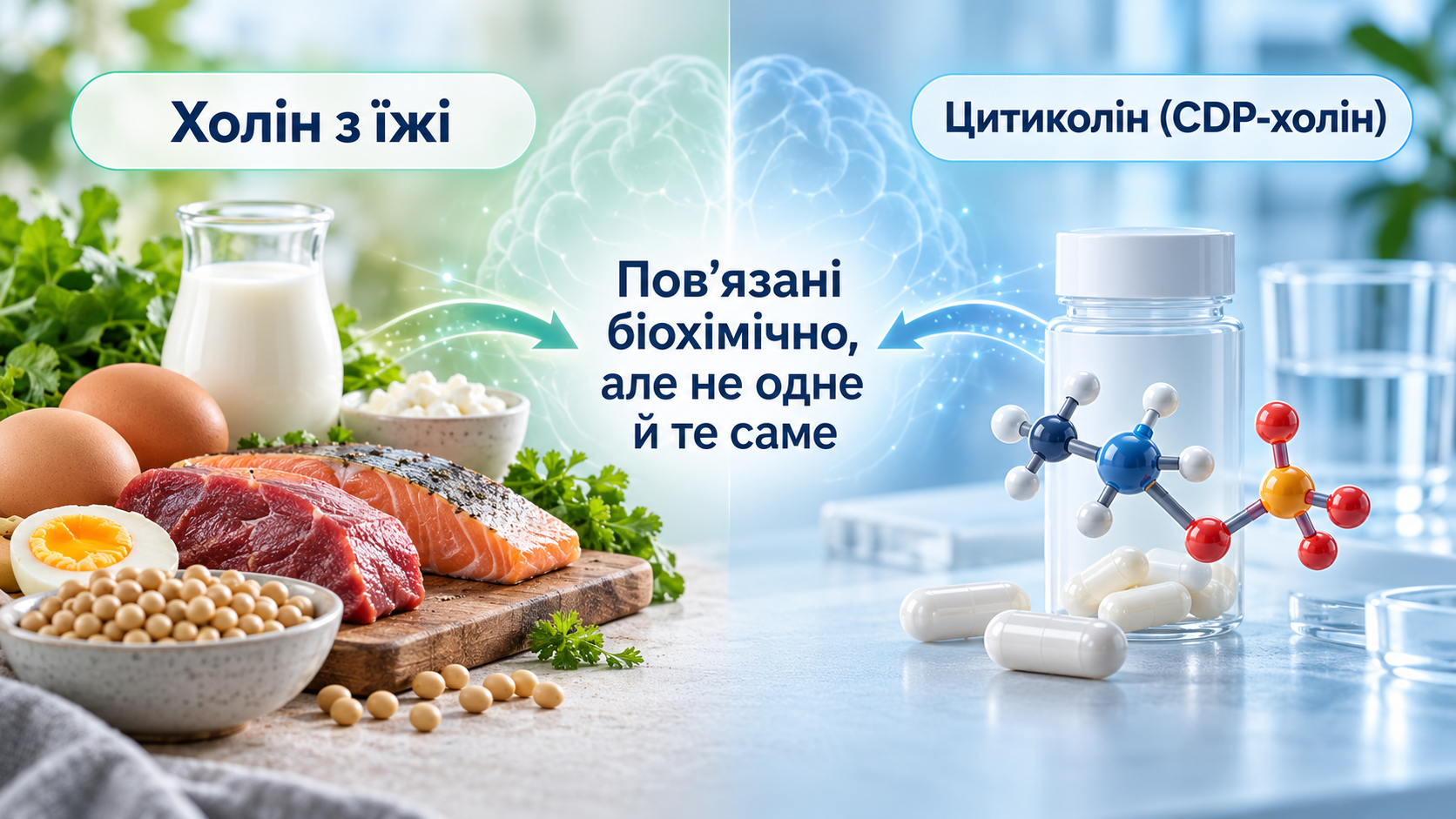
Why dietary choline and citicoline are not synonymous
Choline is an essential nutrient for the normal functioning of the body, which comes with food in various chemical forms. Citicoline (CDP-choline, cytidine diphosphatecholine) is a specific molecule containing choline and cytidine moieties connected by phosphate groups. The body also produces CDP-choline as an intermediate compound during the synthesis of phosphatidylcholine.
So, the question "citicoline or choline" is not quite like choosing between two interchangeable sources of the same substance. Choline is the name of a nutrient, and citicoline is the name of a specific choline-containing compound. They are united by choline metabolism, but differ in molecular structure, route of administration, and product composition.
What forms of choline are found in food?
Food does not only contain free choline. A significant part of it comes as part of phosphatidylcholine and other phospholipids; phosphocholine and glycerophosphocholine also occur. This explains why the total amount of choline in the diet is estimated taking into account various compounds, and not just the free form.
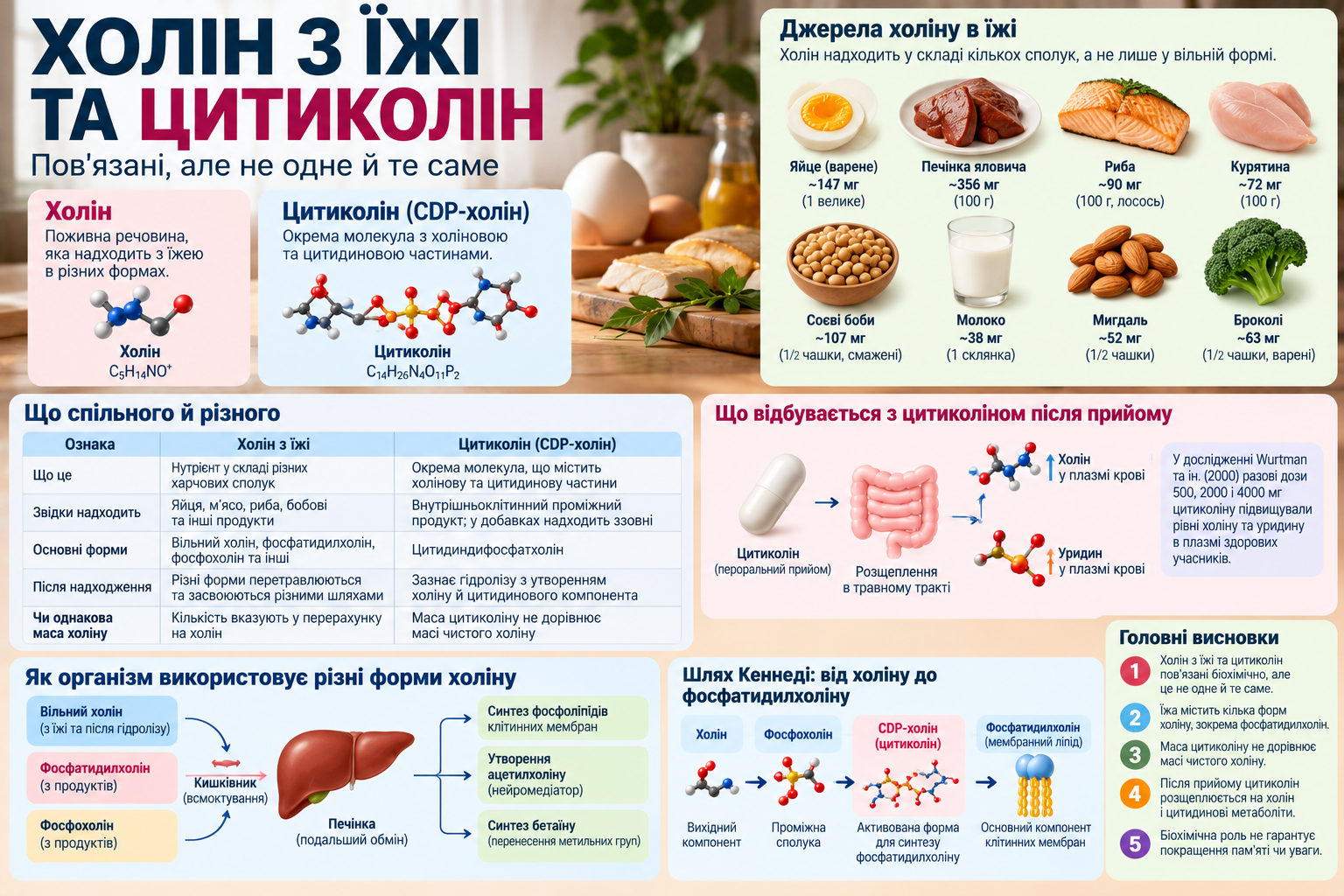
According to the NIH Office of Dietary Supplements, common food sources of choline include eggs, liver, meat, poultry, fish, dairy products, soybeans, and some other legumes. For example, one large boiled egg provides about 147 mg of choline, and one-half cup of refried soybeans provides about 107 mg. These are approximate reference values for specific foods and serving sizes, not universal numbers for any cooking method.
Dietary sources provide the usual daily intake of choline. Citicoline as a separate ingredient in supplements should not automatically be equated with choline as listed on food labels.
Table: what is common and different
| Sign | Choline from food | Citicoline (CDP-choline) |
|---|---|---|
| What is it | Nutrient in various food compounds | A separate molecule containing choline and cytidine moieties |
| Where does it come from? | Eggs, meat, fish, legumes and other products | Intracellular intermediate; external supply is mostly considered in the context of supplements |
| Basic shapes | Free choline, phosphatidylcholine, phosphocholine and others | Cytidine diphosphatecholine |
| After receipt | Different forms are digested and absorbed in different ways | Undergoes hydrolysis to form choline and a cytidine component |
| Is the mass of choline the same? | The amount of dietary choline is expressed as choline. | The mass of citicoline is not equal to the mass of pure choline |
The table compares chemical and nutritional characteristics, not efficacy for memory or attention. It cannot be concluded that citicoline supplementation is “better” or “worse” than a complete dietary intake of choline.
How the body uses different forms of choline
After digestion, water-soluble forms of choline can be absorbed in the intestine and transported to the liver. Some of the phospholipids undergo other stages of digestion and transport. Choline is then used for the synthesis of phospholipids of cell membranes, the formation of acetylcholine and betaine, which participates in methyl group transfer reactions.
For phosphatidylcholine, there is a Kennedy pathway: choline is converted to phosphocholine, then CDP-choline is formed, and the next step is phosphatidylcholine. Therefore, citicoline is not a foreign molecule for metabolism, but a natural intermediate participant in this biochemical pathway.
It is important not to substitute a description of metabolism for a claim of clinical outcome. The fact that a substance is involved in the synthesis of membrane lipids does not in itself mean that cognitive performance will be proven to improve after taking the supplement.
What happens to citicoline after oral administration?
Citicoline does not necessarily enter the tissues as an unchanged molecule after ingestion. Scientific reviews and the EFSA assessment describe its hydrolysis to release choline and a cytidine component; in humans, the important circulating metabolite in further metabolism is uridine. The body can use these components in its own metabolic pathways.
It is also incorrect to perceive the figure “500 mg of citicoline” as “500 mg of choline.” Choline is only part of the mass of the citicoline molecule. To compare the consumption of choline itself, a correct conversion to choline is necessary, taking into account the specific chemical form of the substance.
Can citicoline replace choline from a regular diet?
The nutritional value of a diet is not limited to a single ingredient. Eggs, fish, legumes, and other sources of choline all provide protein, fat, and other nutrients. Therefore, the presence of citicoline in a supplement does not make it a substitute for choline-rich foods or a complete diet.
At the same time, one should not make the opposite simplistic conclusion that citicoline “has nothing to do” with choline provision. After metabolism, it can be a source of the choline component. However, the effects of a particular supplement and its appropriateness are separate issues that cannot be resolved by comparing the names of the molecules.
To assess dietary choline intake, it is advisable to first analyze the usual diet, rather than trying to replace the daily amount of choline with a similar mass of citicoline.
Why you shouldn't draw conclusions from the mechanism of action alone
The literature on citicoline addresses phospholipid metabolism, signaling precursors, and possible cognitive effects. However, the presence of a plausible biochemical mechanism does not prove that any supplement provides measurable benefit in healthy individuals. Clinical outcomes depend on who is studied, what tests are used, and how well the study was conducted.
In this article, we compare substances based on their nature and metabolic pathways. Data on memory, attention, and individual clinical scenarios require independent analysis and are therefore not used as an argument in favor of one of the compared choline sources.
What to look for when choosing a supplement
First of all, you need to read the exact name of the active substance and its amount per daily serving. The terms “choline”, “phosphatidylcholine” and “citicoline” are not interchangeable units of measurement. You should not mechanically transfer the daily choline intake guidelines to the mass of citicoline or equate different salts and forms yourself.
The use of a particular supplement should be in accordance with the instructions on the package. During pregnancy, breastfeeding, in the presence of chronic diseases or concomitant use of medications, it is advisable to discuss use with a doctor. If the goal is to assess nutritional adequacy, a varied diet is of primary importance.
Frequently asked questions
Are citicoline and choline the same substance?
No. Choline is a separate nutrient; citicoline is a compound containing choline and cytidine moieties.
Is citicoline found in common foods?
Common dietary sources of choline contain it primarily in other forms, particularly as phosphatidylcholine. Citicoline is primarily known as an intracellular intermediate and supplement ingredient.
Does an egg provide the same amount of choline as citicoline?
Eggs contain dietary choline in several compounds, while citicoline has its own chemical structure. It is incorrect to compare them based solely on the weight of the product or supplement.
Can 500 mg of citicoline be equated to 500 mg of choline?
No. Part of the mass of citicoline is due to the cytidine and phosphate components. To determine the amount of choline, a conversion is required taking into account the chemical form.
What is CDP-choline?
This is another name for citicoline - cytidine diphosphatecholine, an intermediate in the synthesis of phosphatidylcholine.
Does citicoline replace a healthy diet?
No. A single-compound supplement cannot replace foods that provide a complex of nutrients.
Is citicoline proven to be better than dietary choline for memory?
Such a general conclusion cannot be drawn from the description of metabolism. Separate, high-quality clinical studies are needed to assess cognitive benefits.
Sources
- NIH Office of Dietary Supplements. Choline: Fact Sheet for Health Professionals. NIH ODS .
- Weiss GB (1995). Metabolism and actions of CDP-choline as an endogenous compound and administered exogenously as citicoline. Life Sciences . PubMed .
- EFSA NDA Panel (2013). Scientific Opinion on the safety of "citicoline" as a Novel Food ingredient. EFSA Journal . DOI .
- Citicoline for Supporting Memory in Aging Humans (2023). Nutrients . PMC .
Dietary supplement. Not a medicine. Consult a doctor before use.
Products related to this post
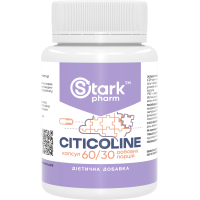
Related Posts
Comments
Information
Customer Service
Extras
My Account


Sports nutrition manufacturer in Ukraine StarkPharm © 2026


