Your shopping cart is empty!

Tribulus or fenugreek: what studies show about testosterone, libido, and sports
Published: 04/09/2026
Times Read: 669
Comments : 0
Tribulus terrestris and fenugreek are often lumped together in the same category of herbal supplements for men. Both plants contain steroidal saponins, and both have been studied for their effects on testosterone, sexual function, and athletic performance. But the clinical trial results for them are mixed—and simply stating “it works” or “it doesn’t work” doesn’t describe the available data well.
For tribulus, most studies in men with normal baseline androgen levels do not show a consistent increase in testosterone. At the same time, there is positive data on sexual function, and in some groups with low baseline testosterone, a moderate increase was observed. For fenugreek, modern meta-analyses find a small positive signal on total testosterone and some positive results on libido, sexual activity and athletic performance. Below is a comparison without trying to declare one plant “right” and the other “useless”.
Tribulus and fenugreek: comparison in the main
| Parameter | Tribulus | Fenugreek |
|---|---|---|
| Total testosterone | In most studies, men with normal baseline levels have no significant increases. There are positive signals in some groups with low testosterone. | Meta-analyses show a small, average positive effect, but the certainty of the evidence remains low. |
| Free testosterone | The results are not consistent enough to draw a clear conclusion. | Individual studies are positive, but a modern meta-analysis has not confirmed a consistent effect. |
| Libido and sexual function | There are positive controlled studies, especially in men with sexual dysfunction. | There are several positive randomized studies on sexual desire, activity, and morning erections. |
| Erectile function | A 2026 meta-analysis showed improvements in IIEF compared to placebo without a significant difference in total testosterone. | There is a positive signal regarding sexual function, but there are no direct comparisons with tribulus. |
| Sports performance | The evidence is conflicting; systematic reviews do not support a consistent effect on hormones, muscle damage, or performance. | There are small positive signals regarding strength, body composition, and total testosterone in training studies. |
| The main nuance | The result may depend more on the starting condition and the specific standardized extract. | The effect appears to be more consistent on average, but different fenugreek extracts are not interchangeable. |
What does "working" even mean: testosterone, libido, and erections are different indicators
One of the main sources of confusion is the attempt to assess any subjective effect solely by total testosterone concentration. In fact, these are different endpoints.
- Total testosterone is a laboratory measure of the concentration of the hormone in the blood.
- Free testosterone is a small unbound fraction; its measurement or calculation depends on the methodology and SHBG level.
- Libido is sexual desire, which depends not only on androgens, but also on the nervous system, sleep, stress, mood, and general condition.
- Erectile function is largely dependent on vascular response and NO–cGMP signaling.
- Sports recovery involves much more than testosterone: energy metabolism, sleep, nutrition, inflammatory response, training stress, and other factors.
Therefore, the situation where a person experiences a change in libido or performance without a major change in serum testosterone is not in itself a paradox. Clinical studies of both plants provide examples of just such a difference.
.jpg)
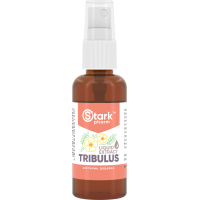
Tribulus: What Testosterone Studies Show
The most comprehensive current systematic review by Vilar Neto et al. (2025) included 10 clinical trials with a total of 483 men. The populations varied: healthy men, patients with erectile dysfunction, hypogonadism, infertility, and other conditions.
Eight of the ten studies found no significant changes in the androgen profile after tribulus. However, two studies in men with hypogonadism showed an increase in total testosterone of approximately 60–70 ng/dL. The review authors considered these studies methodologically weak and did not consider them sufficient to make a reliable claim about testosterone elevation.
An important detail of this review: most of the neutral studies did not have low androgen status at baseline. This does not prove that tribulus only works for low testosterone, but it does show why the results of different groups should not be mechanically mixed.
The classic study by Neychev and Mitev (2005) illustrates the other end of the spectrum well. 21 healthy men aged 20–36 years were given 10 or 20 mg/kg of the extract daily for four weeks. There were no significant changes in testosterone, LH, or androstenedione compared to controls. For young men with normal baseline values, this is a strong argument against expecting a guaranteed hormonal effect.
Tribulus and sexual function: a more interesting picture
In a large randomized, double-blind study by Kamenov et al. (2017), 180 men with mild to moderate erectile dysfunction, some of whom also had low sexual desire, were enrolled. A standardized tribulus extract was administered for 12 weeks. Compared with placebo, the overall IIEF score improved, as did the individual domains: sexual pleasure, orgasmic function, sexual desire, and overall satisfaction.
More important context is provided by a meta-analysis by Suharyani et al. (2026), which pooled eight studies in men with erectile dysfunction. Compared to placebo, tribulus improved both the short IIEF-5 and the full IIEF-15. However, there was no significant difference between groups in total testosterone.
Therefore, for Tribulus, a clinical picture is quite possible: sexual function changes more noticeably than serum testosterone. The exact mechanism explaining this has not yet been definitively established.
Fenugreek: What Testosterone Meta-Analyses Show
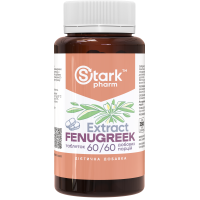
A somewhat more consistent base of randomized trials has accumulated for fenugreek. The most recent systematic review by Yang et al. (2026) included 13 randomized placebo-controlled trials in adult men.
Six studies with 385 participants were included in the meta-analysis for total testosterone. The mean effect was small but statistically significant: SMD 0.25; 95% CI 0.02–0.48. For free testosterone, five studies yielded SMD 0.08; 95% CI −0.48–0.63, indicating no consistent advantage.
This is an important clarification. Fenugreek has a better mean signal on total testosterone than tribulus, but current data do not support the image of a “powerful testosterone booster.” The review authors rated the certainty of the evidence for the main hormonal endpoints as very low due to the risk of bias, heterogeneity of the drugs, and small sample sizes.
A previous sports meta-analysis by Isenmann et al. (2023) also found a small effect on total testosterone in men, and only small or statistically insignificant effects for free testosterone, lean mass, fat mass, and leg press. That is, the overall trend is positive, but the magnitude of the result should not be exaggerated.
.png)
Fenugreek and libido: the effect is not limited to testosterone either
In a randomized trial by Steels et al. (2011), 60 healthy men aged 25–52 years were given a formula containing standardized fenugreek extract (600 mg/day) and mineral components or placebo for six weeks. The active supplement group improved physiological aspects of libido, including sexual arousal and orgasmic function, as well as subjective assessments of energy and well-being. Testosterone levels remained within the reference range and the study did not show a pattern of major hormonal surges.
In another RCT, Rao et al. (2016) treated 120 men aged 43–70 years with a standardized fenugreek seed extract at 600 mg daily for 12 weeks. There were simultaneous improvements in sexual function, including morning erection frequency and sexual activity, and increases in total and calculated free testosterone compared to placebo.
That is, there are two scenarios for fenugreek: the sexual effect may be accompanied by hormonal changes, but does not have to be directly proportional to them.
Why a person's starting state matters
The phrase “the study was conducted on athletes” does not mean that all participants were in the same physiological state or close to their potential maximum. Even formally healthy people differ in sleep, energy balance, percentage of body fat, training volume, stress level, baseline testosterone and other parameters.
That is why the average result of the group does not describe the response of each participant. At the same time, it is not possible to reliably predict from the available data who exactly will be “responders” to tribulus or fenugreek.
There is only an indirect signal for tribulus: in a 2025 systematic review, a positive increase in total testosterone was observed in two studies with men with low androgen status, while most of the neutral studies included people without baseline deficiency. This is a reason to investigate the dependence on baseline in the future, and not a ready-made criterion for choosing a supplement.
What is known about athletes and recovery
For tribulus, a systematic review by Fernández-Lázaro et al. (2022) included seven studies in physically active men. The authors found no clear evidence of consistent positive effects on hormonal behavior or markers of muscle damage. Individual biomarkers varied, but results were inconsistent between studies.
The athletic base appears somewhat stronger for fenugreek. In a systematic review with meta-analysis by Isenmann et al. (2023), there were small positive trends for total testosterone, leg strength, and body composition. Individual RCTs with fenugreek glycoside fractions have also reported changes in hormonal parameters, fat mass, and repetitions to failure during eight-week resistance training programs.
However, the term “recovery” should be used with caution here. Improvements in performance, body composition, or subjective energy are not automatic evidence of faster regeneration of damaged muscle. For both plants, the direct data on DOMS, CK, speed of strength recovery, and other recovery endpoints are much weaker than the marketing claims might suggest.
Both tribulus and fenugreek contain steroidal saponins, but this does not mean they have the same mechanism of action.
Protodioscin and other furostanol saponins are often discussed for Tribulus. However, human trials do not support a simple “more saponins → more LH → more testosterone” model. An older systematic review by Qureshi et al. (2014) highlighted possible non-androgenic mechanisms, particularly those related to nitric oxide, that could theoretically explain sexual effects without increasing testosterone. This remains a mechanistic hypothesis at present, and not a proven pathway in humans.
Fenugreek contains a different profile of steroidal saponins, sapogenins, furostanol glycosides, trigonelline, and 4-hydroxyisoleucine. Possible effects on androgen metabolism, SHBG, energy metabolism, and vascular function are discussed, but none of these mechanisms yet explains all the results of human RCTs.
The practical conclusion is simpler: the percentage of “total saponins” does not allow for a direct comparison of tribulus and fenugreek and does not guarantee the same biological action.
Standardization of the extract may be more important than the plant name
In clinical studies, not the abstract “tribulus” or “fenugreek” is used, but specific extracts with a specific chemical profile. Tribulus differs significantly in the content of furostanol saponins and protodioscin. In fenugreek, some preparations are standardized by glycoside fractions, others by saponins or specific sapogenins.
Therefore, the results of one standardized extract cannot be automatically transferred to any raw material with the same plant name. This is one of the reasons why clinical results within the two groups do not always coincide.
.png)
So what can we say from the data set?
If the question is narrowly phrased— which herb has more consistent clinical data for increasing total testosterone —fenugreek currently has the advantage of the evidence base. But the average effect is small and the confidence in it is limited.
If the broader question is whether tribulus can have a tangible effect, the clinical data do not allow the answer to be “no.” Current trials and meta-analyses show a positive signal regarding erectile and sexual function, even when total testosterone is not significantly changed.
Therefore, it is more correct to look at these plants not as two versions of the same "testo booster", but as different phytocomplexes with partially overlapping, but not identical, clinical effects.
Precautions
Most clinical studies of tribulus and standardized fenugreek extracts have been short-term. Serious adverse events have been rare in controlled trials, but this is not a substitute for data from long-term use.
Herbal extracts can cause individual reactions and interact with medications. If you have chronic diseases, hormonal disorders, or are taking medications regularly, it is advisable to discuss supplements with your doctor.
Frequently asked questions
Which increases testosterone better - tribulus or fenugreek?
In recent meta-analyses, fenugreek has a more consistent, albeit small, positive signal on total testosterone. Tribulus has not been shown to consistently increase testosterone in men with normal baseline levels.
Does this mean that tribulus doesn't work?
No. Tribulus has positive clinical data on sexual and erectile function, and has been shown to increase testosterone in some groups with low baseline testosterone. These results simply do not allow it to be called a reliable all-purpose testosterone booster.
Can tribulus improve libido without increasing testosterone?
This correlation of results is observed in the clinical literature: sexual function scores can improve without a significant difference in total testosterone. The exact mechanism of this effect has not yet been established.
Can fenugreek affect libido without a big increase in testosterone?
Yes. In some randomized studies, sexual arousal and other libido indicators improved without a pronounced hormonal surge.
Does the effect depend on the initial testosterone level?
Presumably, baseline status may influence the outcome, but a reliable profile of “responders” is not yet available. For Tribulus, positive hormonal signals are more often described in groups with lower baseline androgen status.
Which is better for athletes - tribulus or fenugreek?
There is slightly more positive data for fenugreek on strength, body composition, and hormonal performance. For tribulus, the athletic results are more controversial, but there are no direct qualitative trials of “tribulus vs. fenugreek.”
Is it possible to compare extracts by the percentage of saponins?
Only partially. Tribulus and fenugreek saponins have different compositions, and two extracts with the same percentage of total saponins can differ significantly in the profile of individual compounds.
Are there direct clinical studies of tribulus versus fenugreek?
There are no high-quality head-to-head RCTs directly comparing these two plants on testosterone and sexual function in current systematic reviews. Therefore, the comparison is made indirectly, using individual placebo-controlled studies and meta-analyses.
Sources
Dietary supplement. Not a medicine. Consult a doctor before use.
Products related to this post


Related Posts
Comments
Information
Customer Service
Extras
My Account


Sports nutrition manufacturer in Ukraine StarkPharm © 2026