Your shopping cart is empty!

Fenugreek 50% Saponins: What Clinical Studies of the Standardized Extract Show
Published: 23/06/2026
Times Read: 1235
Comments : 0
Fenugreek, or Trigonella foenum-graecum, has long been used as a food plant and a component of traditional diets. But modern fenugreek supplements are not just ground seeds. The greatest interest lies in standardized extracts, particularly those with a high content of saponin glycosides.
Standardization is exactly what matters for understanding how a product works. Seed powder, an ordinary extract and a 50% saponin extract are different forms with different concentrations. So to assess effects, it is worth looking not at "fenugreek in general" but at clinical studies of specific standardized extracts, dosages and durations of use. In a number of placebo-controlled trials, 600 mg of standardized extract per day was used — and that is exactly the daily serving in one tablet of Stark Fenugreek Extract (600 mg of extract standardized to 50% saponins).
What fenugreek studies examined
| Area | Study | Dose / duration | What was seen (active vs placebo) |
|---|---|---|---|
| Libido in men | 60 healthy men, double-blind placebo RCT | Testofen 600 mg/day, 6 weeks | Improvement in sexual arousal and orgasm domains, energy and well-being versus placebo. No effect on mood or sleep; testosterone and prolactin stayed within reference ranges. [1] |
| Androgen symptoms (43–70 years) | 120 men, double-blind placebo RCT | Testofen 600 mg/day, 12 weeks | Total testosterone in the active group rose from 12.3 to 13.8 nmol/L (+12%, p=0.001), free from 241 to 264 pmol/L (+9.5%, p=0.002); in placebo both declined (13.2→12.4; 254→231). Fewer androgen-decline symptoms, better sexual function. [2] |
| Training / body composition | 138 men, double-blind placebo RCT | Testofen 300 or 600 mg/day, 8 weeks + calisthenics | Both Testofen groups improved leg press more than placebo (P<0.05). The 600 mg group (from baseline): −1.2 kg body mass, −1.4% fat, +1.8% lean mass and a testosterone increase. [3] |
| Newer testosterone study | 95 men 40–80 years, double-blind RCT | Trigozim 600/1200/1800 mg + vitamins/minerals, 12 weeks | Plasma total testosterone and free testosterone index: no significant advantage over placebo. Saliva testosterone: +19.6% (p=0.006) vs placebo. No adverse reactions. [4] |
| Testosterone meta-analysis | 4 clinical trials | Various fenugreek extracts | Overall a significant effect on total testosterone, but a small base — only 4 studies. [5] |
| Glycemia — meta-analysis | 26 RCTs | Various fenugreek forms | Versus control: fasting glucose −16.75 mg/dL, postprandial −22.28 mg/dL, HbA1c −0.63%, insulin lower; HOMA-IR not significant. Heterogeneity high. [7] |
| Type 2 diabetes — separate RCT | 54 patients, double-blind placebo RCT | 3×335 mg dry extract/day, 8 weeks | Within both groups insulin, HOMA-IR and triglycerides fell. Between groups a significant difference only for HDL (rise in the extract group, P=0.014); for glucose, no advantage over placebo. [6] |
Why fenugreek is linked to male vitality
The main interest in fenugreek extract is not "direct stimulation" like caffeine, but potential support for male vitality, sexual function, well-being and physical performance.
In a study of 60 healthy men aged 25–52, 600 mg of Testofen per day was used for 6 weeks. The extract group showed improvement in certain sexual function domains, particularly arousal and orgasm, compared with placebo. Participants also reported improved energy, well-being and satisfaction with muscle strength.
Importantly, the extract had no noticeable effect on mood or sleep. This means fenugreek should not be described as a classic nervous-system stimulant: in clinical work its action is more about libido, well-being and hormonal markers than a sharp "boost".
Data on middle-aged and older men
Another double-blind, placebo-controlled study involved 120 healthy men aged 43–70. They took 600 mg of standardized extract per day for 12 weeks.
Total testosterone in the active group rose about 12% from baseline (from 12.3 to 13.8 nmol/L, p=0.001), free testosterone about 9.5% (from 241 to 264 pmol/L, p=0.002). In the placebo group, both fell slightly over the same 12 weeks. Absolute values stayed within the normal range, so this is a moderate shift rather than a sharp rise. In parallel, age-related androgen-decline symptoms decreased and sexual function improved, including the frequency of morning erections.
This does not mean fenugreek is a hormonal drug or a replacement for testosterone therapy. It is a plant extract studied as a supplement to support normal physiological processes related to male vitality and well-being.
Fenugreek and training
A separate area is the effect of fenugreek on physical performance and body composition. A study of 138 men compared 300 mg Testofen, 600 mg Testofen and placebo alongside an 8-week calisthenics program.
All groups improved strength, but both Testofen groups had better leg-press dynamics than placebo (P<0.05). In the 600 mg group, from baseline, body mass dropped by 1.2 kg, fat mass by 1.4%, and lean mass increased by 1.8%.
These data are interesting for people who train, but should not be read as "fenugreek builds muscle on its own". In the study the supplement was taken alongside regular exercise. So it is more accurate to speak of potential support for training adaptation, not a replacement for nutrition, sleep or training routine.
Fenugreek and blood sugar
A separate, well-studied topic is carbohydrate-metabolism markers. In a meta-analysis of 26 randomized controlled trials, forms of fenugreek showed reductions versus control: fasting glucose by about 16.75 mg/dL, postprandial glucose by 22.28 mg/dL, HbA1c by 0.63%, together with a fall in insulin. HOMA-IR was not significant, and heterogeneity between studies was high.
At the same time, not every individual study of a standardized extract beats placebo. In an 8-week RCT of 54 patients with type 2 diabetes (3×335 mg of extract per day), insulin, HOMA-IR and triglycerides fell in both groups, but a significant difference between extract and placebo appeared only for HDL (a rise in the extract group, P=0.014). For glucose, the extract showed no advantage over placebo; the authors noted that a larger sample or longer duration is needed.
So it is correct to say fenugreek is studied in the context of carbohydrate metabolism, not that the supplement "lowers blood sugar" or replaces therapy. If you take glucose-lowering medication or have a carbohydrate-metabolism disorder, combining it with fenugreek should be discussed with your doctor — to avoid excessive glucose lowering.
Are all the studies equally convincing
Fenugreek's evidence base is interesting, but it should be assessed soberly. Some trials show 600 mg of standardized extract producing positive dynamics in libido, sexual function and testosterone markers. But there are also newer data where the effect was more modest.
For example, the Trigozim study in men aged 40–80 assessed 600, 1200 and 1800 mg of extract per day over 12 weeks. Researchers saw a rise in testosterone-related markers from baseline, but for plasma total testosterone and the free testosterone index the result was not significantly better than placebo. Saliva testosterone, however, did rise versus placebo.
This is a good example of why fenugreek should not be presented as a "guaranteed testosterone booster". It is more accurate to say the standardized extract has a clinical base for supporting male vitality, libido and certain androgen markers, but results depend on the extract form, dose, duration, age and study design.
Why 600 mg is an important dose
Several clinical studies of standardized extract used exactly 600 mg per day. This matters because in plant supplements it is not only the plant name that counts, but also the form, the standardization and the daily amount of active substance.
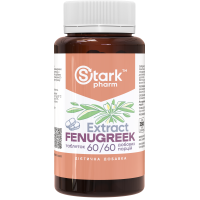
Stark Fenugreek Extract contains 600 mg of fenugreek extract per tablet, standardized to 50% saponins; the pack holds 60 tablets. One tablet provides a daily serving close to the one used in key studies.
The key parameter here is not just "600 mg of plant", but specifically a standardized extract. A 50% saponin label means a controlled content of the group of bioactive compounds linked to much of fenugreek's effects.
Can fenugreek affect sleep
Fenugreek is sometimes seen as an "energy" supplement, which raises a logical question: can it disturb sleep?
Based on available clinical data, fenugreek does not look like a typical stimulant. The study with 600 mg of Testofen explicitly noted that the extract had no effect on mood or sleep. That said, an individual reaction is possible to any bioactive supplement, especially if taken in the evening, on an empty stomach, together with alcohol, caffeine or other active substances.
The practical recommendation is simple: take the first dose in the first half of the day and with food. This lets you assess individual tolerance and not mix the supplement's effect with other factors.
Who may find 50% saponin fenugreek interesting
Standardized fenugreek extract may be of interest to men who want to support:
- a normal level of energy and vitality;
- sexual desire and general well-being;
- adaptation to training;
- normal physiological processes related to androgen balance.
At the same time, it is important not to treat fenugreek as a pharmacological agent for raising testosterone. It is a plant extract with a moderate but real clinical base. Its action is not instant: in studies, effects were assessed after 6–12 weeks of regular use.
Caution and tolerability
Fenugreek is usually well tolerated, but, like any active supplement, it can have individual specifics. Most often described are digestive reactions, allergic reactions and a possible effect on glucose levels.
People taking glucose-lowering medication or with carbohydrate-metabolism disorders should be cautious and consult a doctor. Also, do not assess a new supplement's action against a background of alcohol or large amounts of stimulants — in such a situation it is hard to tell what exactly affected well-being.
Conclusion
Fenugreek 50% saponins is not just a "herb for men" but a standardized plant extract with a real clinical base. The best-studied areas are support for libido, sexual function, well-being, androgen markers and training adaptation, as well as effects on carbohydrate-metabolism markers.
The 600 mg per tablet format is logical, since that is the daily dose used in key placebo-controlled studies. It is most accurate to describe fenugreek not as an aggressive stimulant nor as a replacement for hormone therapy, but as a supplement to support male vitality and training adaptation — taken regularly in the first half of the day, preferably with food.
Sources
1. Steels E., Rao A., Vitetta L. Physiological aspects of male libido enhanced by standardized Trigonella foenum-graecum extract and mineral formulation. Phytotherapy Research. 2011.
2. Rao A., Steels E., Inder W.J., Abraham S., Vitetta L. Testofen, a specialised Trigonella foenum-graecum seed extract reduces age-related symptoms of androgen decrease, increases testosterone levels and improves sexual function in healthy aging males in a double-blind randomised clinical study. The Aging Male. 2016.
3. Rao A., Mallard A.R., Grant R. Testofen (Fenugreek extract) increases strength and muscle mass compared to placebo in response to calisthenics. A randomized control trial. Translational Sports Medicine. 2020.
4. Lee-Ødegård S., Gundersen T.E., Drevon C.A. Effect of a plant extract of fenugreek on testosterone in blood plasma and saliva in a double blind randomized controlled intervention study. PLOS One. 2024.
5. Mansoori A. et al. Effect of fenugreek extract supplement on testosterone levels in male: A meta-analysis of clinical trials. Phytotherapy Research. 2020.
6. Chehregosha F., Maghsoumi-Norouzabad L., Mobasseri M., Fakhr L., Tarighat-Esfanjani A. The effect of Fenugreek seed dry extract supplement on glycemic indices, lipid profile, and prooxidant-antioxidant balance in patients with type 2 diabetes: A double-blind randomized clinical trial. Journal of Cardiovascular and Thoracic Research. 2024.
7. Chehregosha F., Fakhr L., Tarighat-Esfanjani A., Maghsoumi-Norouzabad L. The effects of fenugreek (Trigonella foenum-graecum) seed on glycemic parameters: An updated systematic review and meta-analysis of randomized controlled trials. Avicenna Journal of Phytomedicine. 2025.
Frequently Asked Questions
How much saponins are in Stark Fenugreek Extract?
The extract is standardized to 50% saponins, with 600 mg of extract per tablet.
What is the daily serving?
One tablet a day is 600 mg, a serving close to the one used in key studies of standardized extracts.
When is it best to take fenugreek?
It is convenient to take the first dose in the first half of the day and with food, to assess individual tolerance.
Is it a stimulant like caffeine?
No. In studies the extract did not act as a classic stimulant and did not affect mood or sleep.
How long until you assess the result?
In studies, effects were assessed after 6–12 weeks of regular use, so this is the period to focus on.
Does fenugreek guarantee a testosterone increase?
No. Testosterone results are mixed and depend on the extract and dose; it is not a hormonal drug or a replacement for therapy.
Does fenugreek lower blood sugar?
In studies, forms of fenugreek were linked to lower glucose markers, but results are mixed, and the supplement is not a treatment for diabetes. If you take glucose-lowering medication, discuss combining it with your doctor.
Who should be cautious about taking it?
Those taking glucose-lowering medication or with carbohydrate-metabolism disorders, as well as during pregnancy and lactation, should consult a doctor.
Choose a product
Stark Fenugreek Extract (60 tablets) — a standardized fenugreek extract, 600 mg with 50% saponins per tablet. Suitable for men who want to support vitality, libido, well-being and training adaptation within a balanced diet.
Dietary supplement. Not a medicinal product. Consult a healthcare professional before use.
Products related to this post
Comments
Information
Customer Service
Extras
My Account


Sports nutrition manufacturer in Ukraine StarkPharm © 2026