Your shopping cart is empty!

Omega-3: EPA and DHA — What’s the Difference and Why Count Them Separately?
Published: 28/11/2026
Times Read: 19
Comments : 0
EPA and DHA are the two best-known long-chain omega-3 fatty acids. They are often mentioned together, but researchers and supplement labels distinguish between them for good reason: EPA and DHA differ in structure, biological roles and proportions. To understand how much omega-3 a food or supplement actually provides, it is important to distinguish total oil weight, combined EPA+DHA and the amount of each fatty acid.
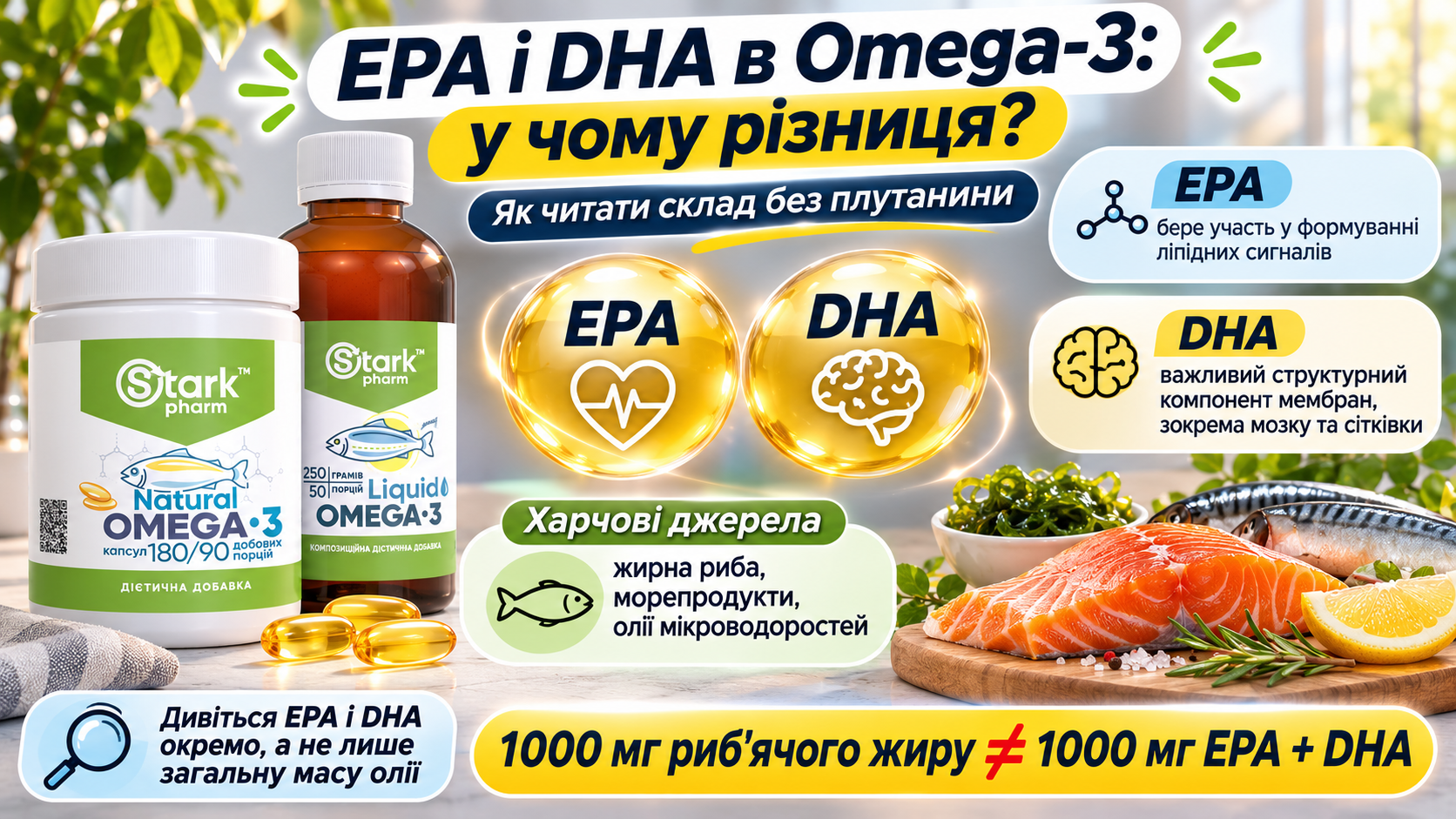
What are omega-3 fatty acids, and why are EPA and DHA different?
Omega-3 refers to a family of polyunsaturated fatty acids, not one substance. Three names commonly appear on labels and in studies: ALA (alpha-linolenic acid), EPA (eicosapentaenoic acid) and DHA (docosahexaenoic acid). Their first double bond is located at the omega-3 position, but they differ in carbon-chain length, number of double bonds, dietary sources and metabolism.
EPA has 20 carbon atoms and five double bonds (20:5 n-3); DHA has 22 carbon atoms and six double bonds (22:6 n-3). This seemingly small difference matters for interactions with cell membranes and enzymes. This is why studies frequently report EPA and DHA separately instead of simply stating “omega-3.”
| Parameter | EPA | DHA |
|---|---|---|
| Full name | Eicosapentaenoic acid | Docosahexaenoic acid |
| Structure | 20:5 n-3 | 22:6 n-3 |
| Main dietary sources | Oily fish, seafood, certain algal oils | Oily fish, seafood, certain microalgal oils |
| Main biological role | Participates in the production of lipid signaling mediators | Important structural component of membranes, particularly in nervous tissue and the retina |
| Label designation | EPA | DHA |
This table outlines major biochemical distinctions, not a rule that “EPA is for one organ and DHA for another.” Both fatty acids occur in membranes across different tissues, and their effects depend on the tissue, diet and study setting (NIH Office of Dietary Supplements; Burdge and Calder, 2005).
What does EPA do? From cell membranes to lipid signals
EPA can become incorporated into the phospholipids of cell membranes. When a cell is activated, fatty acids can be released from membranes and used by enzymes to produce signaling molecules. This is one reason EPA is studied in relation to lipid metabolism and the regulation of inflammatory processes.
Some EPA metabolites are eicosanoids; others are involved in the resolution of inflammatory responses. However, a laboratory mechanism does not automatically imply a clinical benefit: cellular findings do not establish that an ordinary dietary supplement prevents disease.
Reviews of cardiometabolic studies sometimes analyze EPA alone separately from EPA+DHA combinations because their composition, doses and study populations differ. For example, a 2021 systematic review reported different cardiovascular-event outcomes for various omega-3 formulations (Khan et al., 2021). These findings concern specific clinical protocols, not every fish oil supplement sold in stores.
What does DHA do, and why is it abundant in neuronal membranes?
DHA has a long, highly unsaturated chain. Within membranes, it can influence fluidity, lipid packing and interactions between membrane proteins. DHA is particularly prominent in certain brain structures and the retina. This does not mean that taking DHA necessarily improves memory or vision in everyone: being present in tissue and demonstrating the benefit of an intervention are different matters.
Adequate long-chain fatty acid intake attracts particular scientific interest during nervous-system development. However, findings from studies on infant or maternal nutrition cannot simply be applied to adult supplement users without considering their context. The NIH Office of Dietary Supplements discusses DHA in research on neurodevelopment, cognition and vision and notes that results vary by population and outcome.
Thus, the statement “DHA is part of nerve-cell membranes” has a biochemical basis. The claim “every DHA capsule improves brain function,” however, is a clinical promise that biochemistry alone does not support.
Where does ALA fit in, and why is plant omega-3 not the same as EPA+DHA?
ALA is abundant in flaxseed, chia seeds, walnuts and certain vegetable oils. The body can elongate and desaturate ALA to produce EPA and subsequently DHA, but this pathway is limited and affected by diet and individual factors.
Burdge and Calder (2005), reviewing stable-isotope studies, described the conversion of ALA into EPA as limited and further conversion into DHA as particularly low among the adult men studied. Rates may differ in other groups; for example, Burdge et al. (2002) evaluated ALA conversion in young women.
In practice, one gram of ALA from flaxseed oil cannot be equated directly with one gram of EPA+DHA. That does not make plant sources “bad”: they have nutritional value of their own, but their fatty acid profiles differ. Specially produced microalgal oils can also provide preformed DHA and sometimes EPA, rather than fish oil being the only source.
Why are EPA and DHA counted separately instead of just labeled “omega-3”?
A total “omega-3” figure indicates the amount of fatty acids belonging to that family in a serving. It does not necessarily identify the individual molecules or their proportions. To understand a product's composition, at least three values matter: EPA, DHA and EPA+DHA.
Consider two hypothetical labels, not actual products. In the first, a serving provides 180 mg EPA and 120 mg DHA; in the second, 80 mg EPA and 220 mg DHA. Both contain 300 mg EPA+DHA, but their ratios differ: 60:40 versus approximately 27:73. That may matter for comparing formulas or research protocols, yet neither ratio is “best for everyone.”
| Example (hypothetical) | EPA | DHA | EPA+DHA |
|---|---|---|---|
| Formula A | 180 mg | 120 mg | 300 mg |
| Formula B | 80 mg | 220 mg | 300 mg |
| Formula C | 330 mg | 220 mg | 550 mg |
When comparing servings, examine not only the numbers but also what “one serving” means: one capsule, two capsules or another amount. In standardized research, the precise fatty acid composition makes the experiment reproducible, not the marketing name “omega-3.”

“1,000 mg fish oil” does not mean 1,000 mg EPA+DHA
Fish oil weight refers to a mixture of lipids. Some of it is EPA, some is DHA, and the remainder may contain other fatty acids and oil components. The NIH Office of Dietary Supplements gives a typical example: around 1,000 mg fish oil may provide 180 mg EPA and 120 mg DHA. Together that is just 300 mg EPA+DHA, even if a larger number is prominent on the front label.
Another product may be more concentrated and provide more EPA+DHA in the same oil weight. Compare the composition panel, not only the large front-label number. A simple approach is to check serving size, locate EPA, locate DHA and add them together. Comparing different pack sizes is a separate topic, but the basic principle is clear: oil weight and EPA+DHA weight are not interchangeable.
Nor should all declared “omega-3” automatically be assumed to consist solely of EPA and DHA: other omega-3 fatty acids may be present. If the manufacturer does not disclose the individual amounts of EPA and DHA, their exact content cannot be determined.
Must EPA always exceed DHA?
Products on the market may contain more EPA, more DHA, or roughly equal proportions. The ratio alone does not prove higher quality. It describes the composition and can show how closely a formula matches a particular research protocol.
Systematic reviews do not always find identical results for EPA-only products and EPA+DHA mixtures. Some clinical studies used specialized high-dose medicines for medical indications, and those findings should not be applied to everyday supplements. Likewise, a higher DHA share does not automatically imply greater benefits for memory or vision.
More useful questions are: how much of each fatty acid is in a serving, how reliable is the composition information, what conditions have been studied, and do those findings concern the relevant population? This approach is more precise than “more EPA is always better” or “DHA is always more important.”
What does research show, and why can't every finding be applied to every supplement?
Omega-3 studies are not a uniform body of evidence. They compare different oils and pharmaceutical forms, doses, EPA/DHA ratios, study durations and participant groups. Some measure fatty acid levels in blood, others triglycerides, and still others clinical events. These outcomes answer different questions.
A systematic review by Abdelhamid et al. (2020) in the Cochrane Database of Systematic Reviews found that increasing long-chain omega-3 intake generally had little or no effect on many cardiovascular outcomes studied. Another meta-analysis (Khan et al., 2021) found varying results depending on whether EPA alone or EPA+DHA was studied and which endpoint was measured.
These mixed results do not mean EPA and DHA “do nothing” as nutrients. They mean biochemical roles, changes in laboratory markers and clinical outcomes represent different levels of evidence. Scientific conclusions must therefore be interpreted in terms of the formulation, participant group and specific endpoint.
Sources of EPA and DHA: fish, seafood and microalgae
Long-chain omega-3 fatty acids occur in oily fish and certain seafood. Their amounts vary with species, feed, farming practices and fish origin. The NIH Office of Dietary Supplements lists Atlantic salmon, herring, sardines and mackerel as examples. Not all fish contain identical amounts.
Microalgae can supply preformed DHA and, depending on species and production methods, EPA. This matters for people who do not eat fish. However, two algal oils can differ in EPA and DHA content as substantially as two fish-oil concentrates.
Plant foods such as flax and chia primarily supply ALA. Accurate comparisons of dietary sources require specifying ALA, EPA or DHA: a statement such as “contains omega-3” may conceal important differences in composition.
How to assess composition and quality without confusing different criteria
EPA and DHA amounts concern composition. Chemical form (for example, triglycerides or ethyl esters) is a separate matter. Oil oxidation is a third. High EPA+DHA concentration does not automatically prove freshness, and molecular form does not show whether a finished product has undergone quality testing.
Analytical studies of commercial supplements measure, among other things, peroxide values and secondary oxidation products. A multi-year analysis of 72 products (2023) found variation in oxidation measures between samples and highlighted difficulties in interpreting flavored oils. This cannot establish the quality of a particular product without testing that product.
Look for a clear EPA and DHA amount per serving, oil source, storage instructions and expiry date. Missing information should not be filled in by guesswork. Following the manufacturer's storage guidance matters because polyunsaturated fatty acids are susceptible to oxidation.
What should you know about safety?
EPA and DHA are dietary components, but that does not mean any dose or combination with medication is appropriate. In some randomized trials, high omega-3 doses were associated with a greater incidence of atrial fibrillation; a 2021 meta-analysis examined this safety signal. Some studies also examined bleeding, so people taking anticoagulants, with clotting disorders or preparing for surgery should discuss supplements with a doctor.
People with allergies to fish or seafood should check ingredient sources and other components carefully. Nutrition during pregnancy, breastfeeding and childhood also requires individual consideration; adult study findings cannot automatically be extended to these groups.
Research protocols involving gram-level quantities of purified fatty acids are not instructions for self-treatment. Follow current labeling for the specific dietary supplement and seek professional advice when needed. Ordinary fish oil should not be equated with prescription omega-3 medicines used in certain clinical trials.
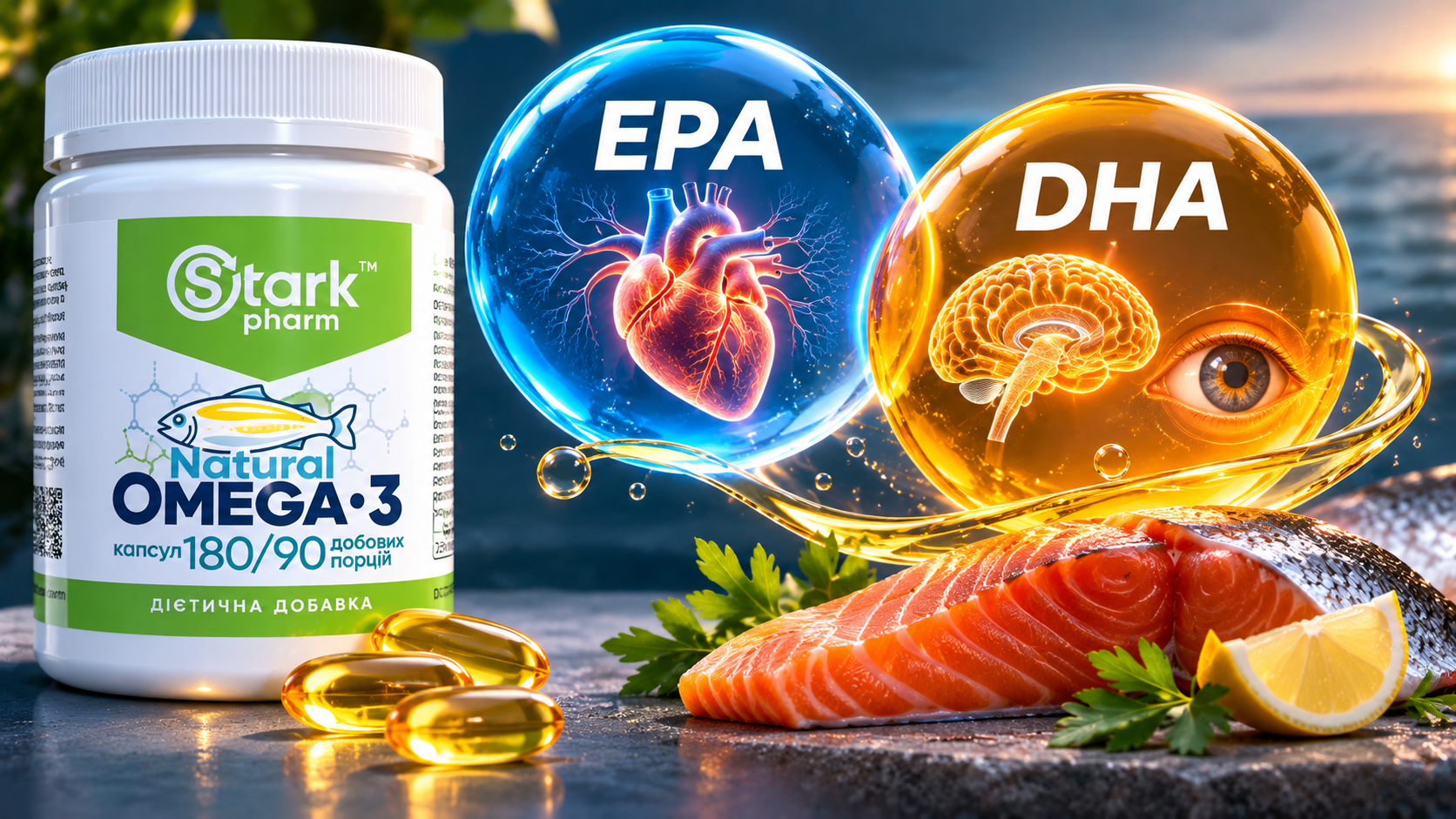
Key takeaway: how to interpret EPA and DHA correctly
EPA and DHA belong to the same omega-3 family, but they are distinct molecules with different structural and metabolic properties. Reporting them separately allows more accurate descriptions of foods, supplements and research interventions.
The most useful habit when reading labels is to separate total oil weight from EPA and DHA content, compare equal serving sizes and avoid attributing universal benefits to a particular ratio. A label stating only “omega-3,” without a breakdown, provides less information than it might appear.
Frequently asked questions
Are EPA and DHA the same omega-3 fatty acid?
No. They are two different long-chain omega-3 fatty acids: EPA has 20 carbon atoms and DHA has 22. Their amounts and composition should be assessed separately.
Why do capsule labels list EPA and DHA separately?
Because total oil weight does not indicate how much of each fatty acid it contains. Separate values make serving compositions easier to compare accurately.
Does 1,000 mg of fish oil mean 1,000 mg EPA+DHA?
No. Fish oil also contains other fatty acids. The actual EPA and DHA amounts must be checked in the composition panel.
Which is more important, EPA or DHA?
There is no universal answer: they fulfill different biochemical roles. Choosing one cannot be justified solely by advertising claims of its “superiority.”
Can you obtain EPA and DHA from flaxseed?
Flax mainly provides ALA, which the body can partially convert into EPA and DHA. Conversion is limited, so ALA should not be equated with preformed EPA+DHA.
Do algae contain DHA?
Yes. Certain microalgal oils provide DHA, and some also contain EPA. Exact amounts depend on the specific product.
Does more EPA always mean a better supplement?
No. More EPA describes the composition but does not by itself establish higher quality or better results for everyone.
Can oil freshness be determined from the EPA-to-DHA ratio?
No. That ratio describes the fatty acid profile, whereas oxidation is assessed through other analytical measurements.
Sources
- National Institutes of Health, Office of Dietary Supplements. Omega-3 Fatty Acids — Fact Sheet for Health Professionals. NIH ODS.
- Burdge GC, Calder PC (2005). Conversion of alpha-linolenic acid to longer-chain polyunsaturated fatty acids in human adults. Reproduction Nutrition Development. PubMed.
- Burdge GC et al. (2002). Conversion of alpha-linolenic acid to eicosapentaenoic, docosapentaenoic and docosahexaenoic acids in young women. British Journal of Nutrition. PubMed.
- Abdelhamid AS et al. (2020). Omega-3 fatty acids for the primary and secondary prevention of cardiovascular disease. Cochrane Database of Systematic Reviews. PubMed.
- Khan SU et al. (2021). Effect of omega-3 fatty acids on cardiovascular outcomes: A systematic review and meta-analysis. EClinicalMedicine. PubMed.
- Harris WS, von Schacky C (2004). The Omega-3 Index: a new risk factor for death from coronary heart disease? Preventive Medicine. PubMed.
- Gencer B et al. (2021). Omega-3 fatty acids supplementation and risk of atrial fibrillation: an updated meta-analysis of randomized controlled trials. European Heart Journal. PubMed.
- National Institutes of Health, Office of Dietary Supplements. Omega-3 Fatty Acids — Fact Sheet for Consumers. NIH ODS.
- Hands JM et al. (2023). A Multi-Year Rancidity Analysis of 72 Marine and Microalgal Oil Omega-3 Supplements. Journal of Dietary Supplements. PubMed.
- Evaluation of the composition and oxidative status of omega-3 fatty acid supplements on the Finnish market using NMR and SPME-GC-MS in comparison with conventional methods (2020). PubMed.
- Eicosapentaenoic acid vs. docosahexaenoic acid for the prevention of cardiovascular disease (2023). PubMed.
Dietary supplement. Not a medicinal product. Consult a doctor before use.
Products related to this post
Related Posts
Comments
Information
Customer Service
Extras
My Account


Sports nutrition manufacturer in Ukraine StarkPharm © 2026


