Your shopping cart is empty!

Creatine and muscle growth: how much extra muscle mass does research show?
Published: 13/09/2026
Times Read: 473
Comments : 0
When creatine is discussed in the context of muscle growth, the most common simplistic statement is: “it adds about a pound of muscle.” The problem is that studies don’t measure “net new muscle tissue” directly. More often than not, they measure lean body mass, fat-free mass, the thickness of individual muscles, or their cross-sectional area—and these metrics aren’t interchangeable.
The best quantitative question to ask is: How much additional lean mass or hypertrophy does creatine provide over and above the effects of strength training? This is how modern meta-analyses are structured, and this is why the numbers should be read with caution.
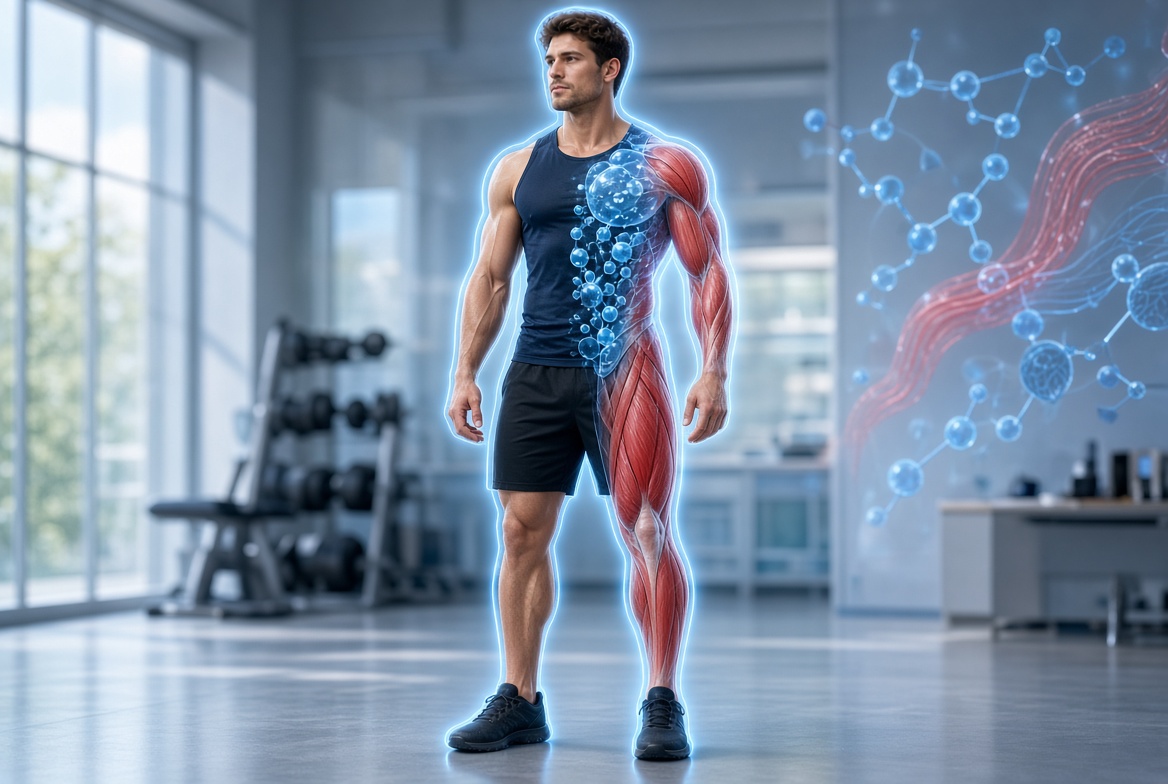
Where did the number +1.14 kg come from?
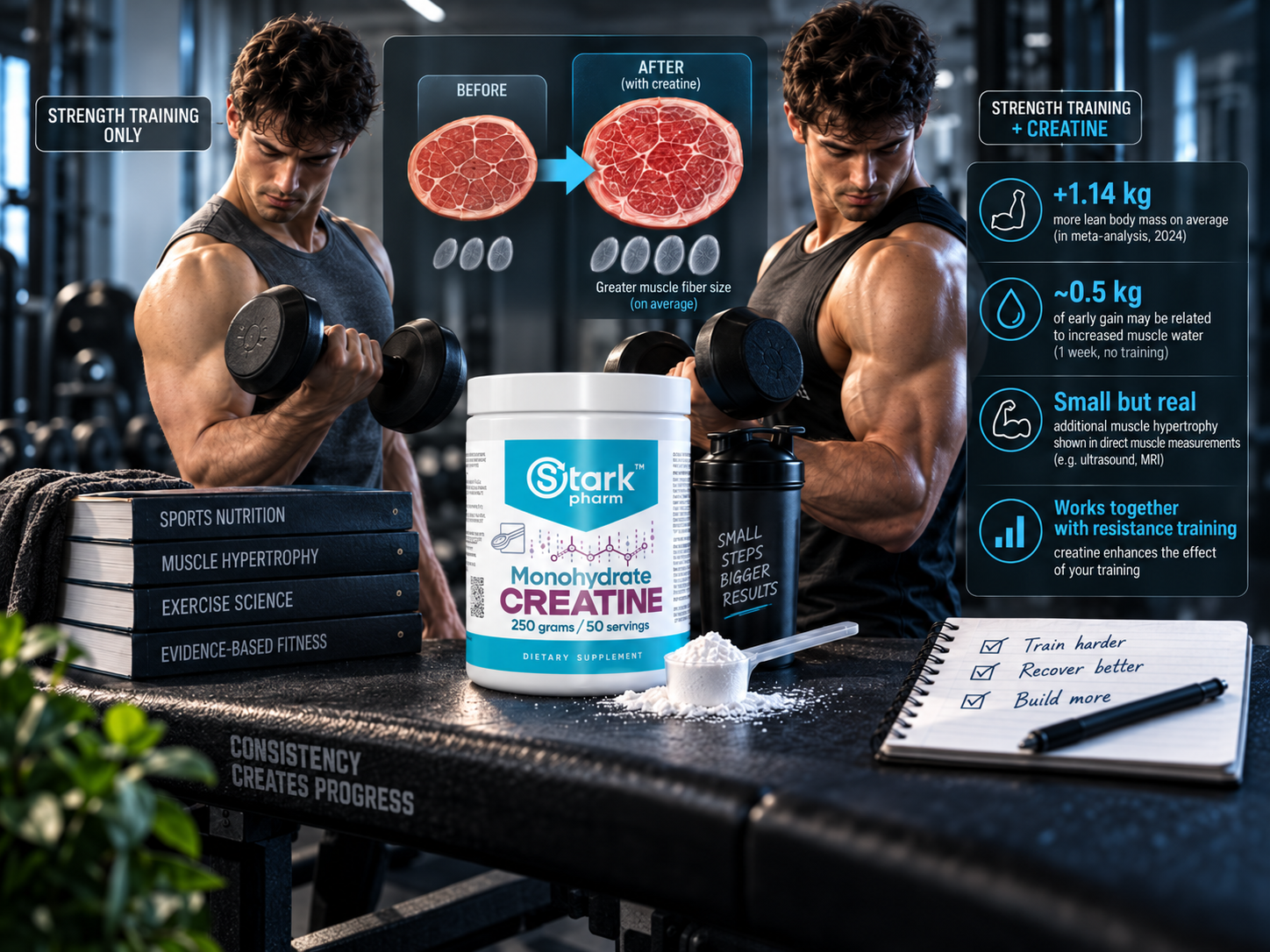
In a meta-analysis, Desai et al. (2024) pooled 12 studies in adults younger than 50 years of age, comparing creatine with resistance training to the same training without creatine. On average, the creatine groups had 1.14 kg more lean body mass than the control groups; the 95% confidence interval was approximately 0.69–1.59 kg.
This is an important number, but it's easy to misrepresent it. It doesn't mean that each participant gained exactly 2.5 pounds of new muscle. It's an average between-group difference calculated from several studies with different training programs, durations, participants, and body composition assessment methods.
Additionally, most of these studies assess lean mass using methods like DXA. This is a useful measure, but it includes more than just contractile proteins in muscle fibers.
Why lean body mass does not equal pure muscle tissue
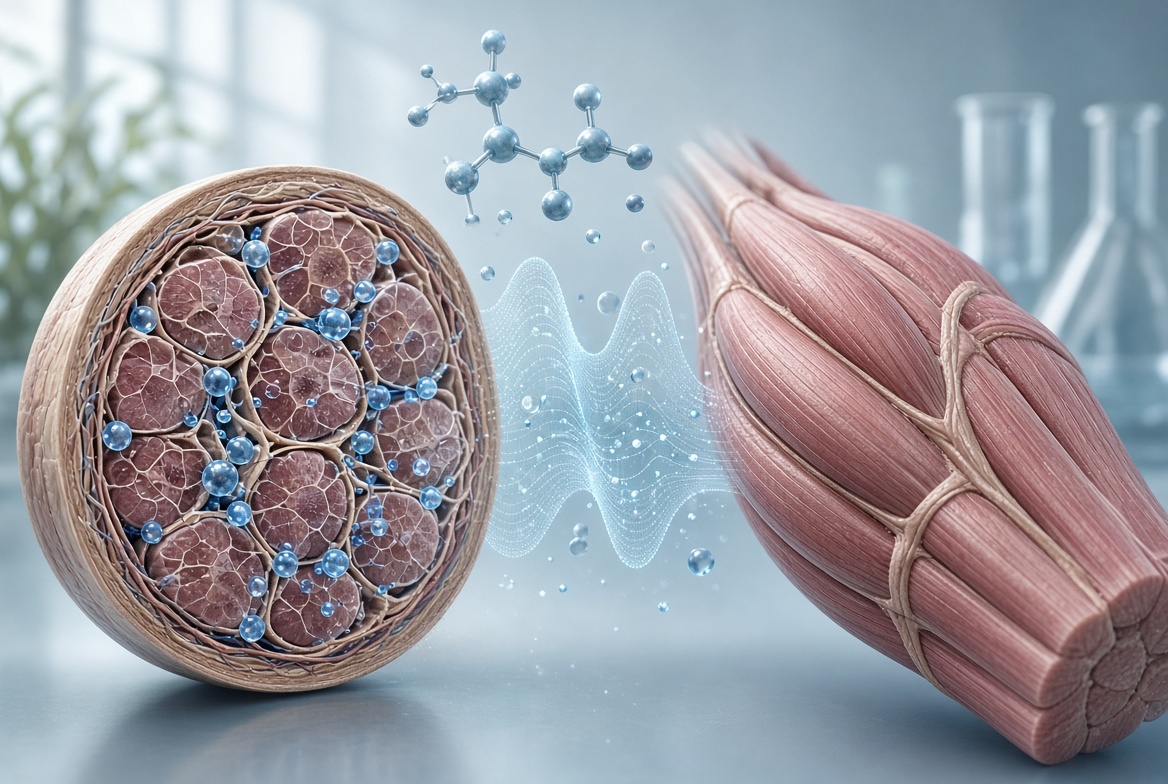
Lean body mass is the mass of the body without fat tissue, but it includes water, glycogen, organs, bone mineral content, and other non-fat tissues. This is why an increase in lean mass may reflect more than just true muscle fiber hypertrophy.
Creatine can alter intracellular water and creatine stores in the muscle. Muscle glycogen can also change during exercise, and each gram of glycogen is stored along with water. To DXA, all of these changes may appear as an increase in lean mass, even though some of the gain is not new structural muscle tissue.
Therefore, the correct formulation is not "creatine adds 1.14 kg of muscle", but "in a meta-analysis, creatine together with strength training gave an average of approximately 1.14 kg more measured lean body mass than training without creatine."
How much of the early growth can be explained by water?
A particularly telling study is Desai et al. (2025), which initially separated a short period of creatine supplementation from the training phase. Participants received 5 g of creatine per day or a non-training control for seven days. After this short period, the creatine group had approximately 0.51 kg more lean body mass than the control.
In one week without strength training, it is difficult to explain such a change by significant building of new muscle tissue. It is much more logical that changes in water and intramuscular substance content made a significant contribution.
Both groups then completed a 12-week resistance training program. When considering changes from baseline after this initial wash-in period, no additional benefit of creatine on total lean body mass was found. This does not invalidate all previous literature, but it does highlight the importance of considering early water changes when interpreting DXA.
What do direct measurements of muscle hypertrophy show?
To separate true hypertrophy from water changes, it is helpful to look at studies that have measured the thickness of individual muscles, cross-sectional area, or other regional parameters using ultrasound, MRI, or similar methods.
A systematic review by Burke et al. (2023) focused on such direct regional measures. The overall picture was that creatine + resistance training more often provided a small additional benefit compared to resistance training without creatine. Across muscle groups, the average additional change in thickness was small—on the order of tenths of a centimeter, not kilograms.
This is an important piece of evidence because it shows that the effect cannot be entirely explained by water. Direct measurements also indicate additional hypertrophy, but the magnitude is much more modest than the phrase “+1.14 kg of muscle” might suggest.
Why creatine is valued alongside strength training
Creatine itself does not create mechanical stress on the muscle. Long-term hypertrophy requires a training stimulus that triggers adaptation. Creatine can affect how much quality work a person can perform in a set, how well they recover between short bursts of intense effort, and how much training volume they accumulate.
That's why most muscle growth studies evaluate creatine in conjunction with resistance training. We discussed the differences between strength, power, training volume, and muscle mass in more detail in our article on how creatine affects strength, power, and training volume.
This also explains why you shouldn't expect the same results from someone without progressive strength training and someone who systematically increases the load and training volume.
What exactly do different methods measure?
| Indicator | What does it reflect? | What can distort the interpretation |
|---|---|---|
| Lean body mass by DXA | Water, glycogen, and other non-fat components; this is not a direct measurement of muscle fibers | |
| Fat-free mass | Body mass without fat tissue | Also includes water, organs, bone mass, and other non-fatty tissues |
| Muscle thickness | The thickness of a specific muscle or section of it | Depends on measurement technique, area and time relative to training |
| Cross-sectional area | The cross-sectional area of a particular muscle | Better reflects local hypertrophy, but does not provide a direct assessment of total body muscle mass |
Why is the result of an individual not equal to +1.14 kg?
Meta-analysis shows the average difference between groups, not the individual prognosis. Even within a single study, some people react more strongly, some less strongly, and some may be almost indistinguishable from controls.
- The duration and program of strength training vary between studies;
- Initial training experience and muscle mass affect adaptation potential;
- nutrition, energy balance, and protein intake alter the conditions for hypertrophy;
- DXA, ultrasound, and MRI measure different aspects of body changes;
- Some of the early lean mass gain may be due to water, not just new muscle tissue.
Therefore, the figure of +1.14 kg should not be presented as a promise or as an expected result for a specific individual. It is useful as an average to estimate the magnitude of the effect across studies.
What number should be correctly called to the reader?
If one quantitative answer is needed, it's most accurate to say this: in a 2024 meta-analysis, creatine supplementation combined with strength training increased measured lean body mass by an average of about 1.14 kg more than the same training without creatine.
But this figure does not equal 1.14 kg of pure new muscle tissue. Part of the difference may be due to water and other non-fat components, and direct regional measurements show a smaller but still additive effect on hypertrophy of individual muscles.
Data limitations and interpretation safety
The bulk of the evidence is for healthy adults who perform strength training. Average figures should not be automatically extrapolated to adolescents, pregnant women, people with serious chronic diseases, or clinical populations.
The doses and durations given in the studies describe protocols for specific work, not a universal regimen for self-administration. For athletic use, you should refer to the instructions for the specific product and individual circumstances.
Frequently asked questions
How much muscle does creatine add on average?
In a 2024 meta-analysis, creatine combined with resistance training resulted in approximately 2.5 pounds (1.14 kg) more lean body mass than the same training without creatine. This does not translate to 2.5 pounds (1.14 kg) of pure new muscle tissue.
Is all early mass gain from creatine muscle?
No. In the first days or weeks, some of the change may be due to intracellular water and other non-fat components.
How much growth can water explain?
It is difficult to accurately separate water from new tissue in each individual. In a 2025 RCT, just seven days of creatine without training already increased DXA-lean mass by approximately 0.51 kg relative to control, indicating a significant contribution from early non-hypertrophic changes.
Does creatine work for muscle growth without strength training?
In the short term, lean mass can change even without training due to water and intramuscular changes. But long-term hypertrophy requires a training stimulus.
Which is more accurate in showing true hypertrophy — DXA or muscle measurement?
DXA is good at assessing changes in total lean mass, but does not separate muscle tissue from all other non-fat components. Ultrasound, MRI, or cross-sectional area measurements provide more direct information about specific muscle.
Does everyone react to creatine the same way?
No. Average values from meta-analyses mask significant individual variability related to training experience, nutrition, baseline creatine stores, and other factors.
Can we expect exactly +1.14 kg?
No. This is an average between-group difference from several studies, not a prediction for a specific person.
Sources
- Desai I. and others. (2024). Effect of creatine supplementation on lean body mass with resistance training in adults younger than 50 years: a systematic review and meta-analysis. PubMed
- Desai I. and others. (2025). Creatine supplementation and lean body mass: separating short-term water-related changes from resistance-training adaptations. PMC
- Burke R. and others. (2023). Effects of creatine supplementation and resistance training on regional measures of muscle hypertrophy: a systematic review. PMC
Dietary supplement. Not a medicine. Consult a doctor before use.
Products related to this post

Related Posts
Comments
Information
Customer Service
Extras
My Account


Sports nutrition manufacturer in Ukraine StarkPharm © 2026