Your shopping cart is empty!

Does ashwagandha help with stress: what the research shows
Published: 16/11/2026
Times Read: 89
Comments : 0
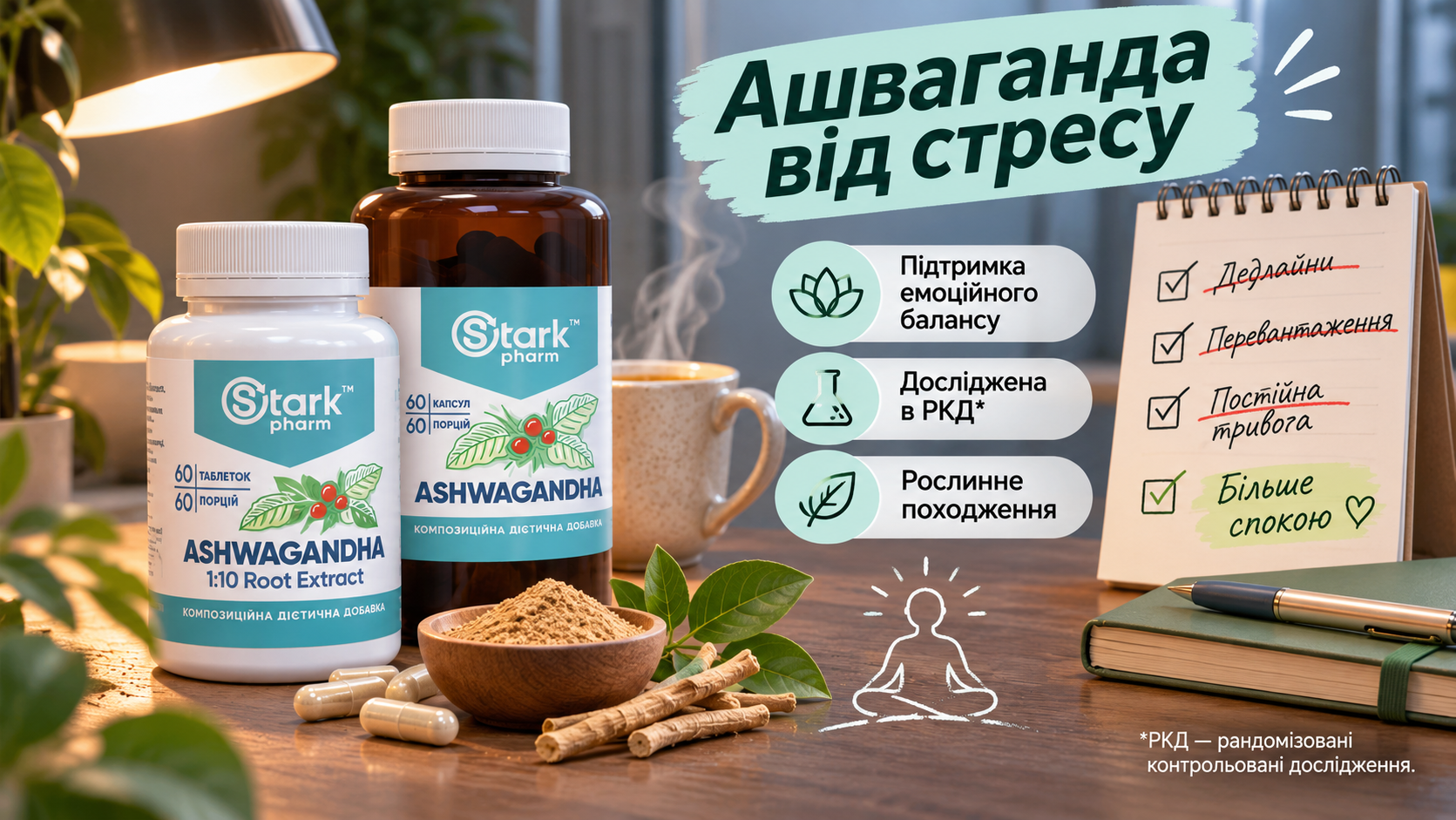
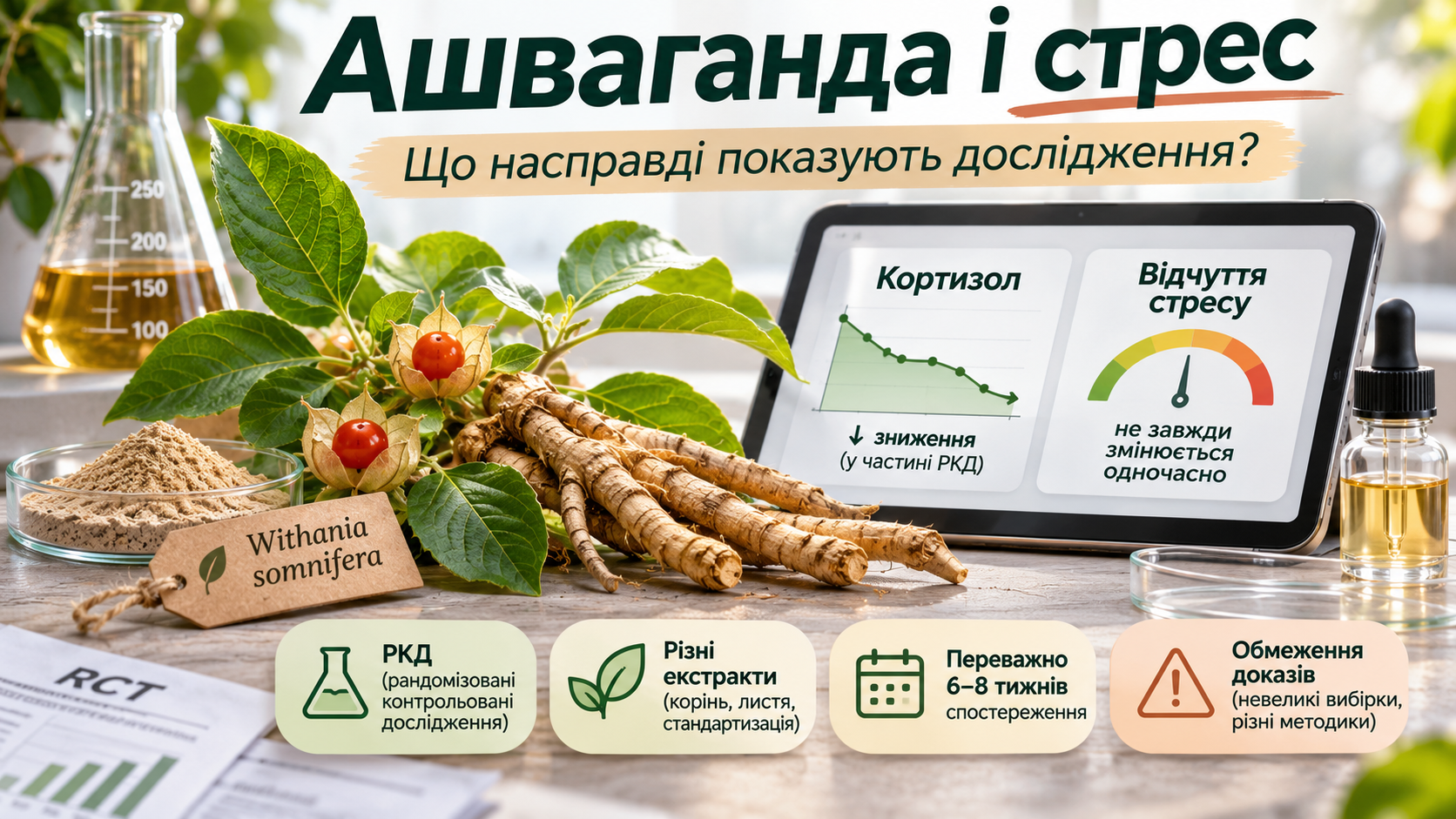
Ashwagandha for stress is a popular question, but the scientific answer is more complicated than the promise of “lowering cortisol.” In randomized controlled trials (RCTs), some extracts of the plant Withania somnifera have been linked to better well-being scores and lower cortisol levels compared to placebo. However, the results of different studies are not always consistent: a decrease in a lab result does not necessarily mean that a person will feel less stressed.
To properly read this data, you need to separate three questions: what exactly was measured, which extract was studied, and how convincing the results are. Below are the specific RCTs, meta-analyses, limitations, and caveats, without promises of a therapeutic effect.
What the research shows: in brief
| Question | What is known | Important clarification |
|---|---|---|
| Feeling stressed | In a number of small RCTs, participants taking ashwagandha reported less stress. | Not all pooled analyses confirmed superiority over placebo. |
| Cortisol | Some studies and meta-analyses have found lower rates. | One blood test does not describe the entire state of the nervous system. |
| Duration of observation | Most of the cited RCTs lasted approximately 6–8 weeks. | This is not proof of the safety and effectiveness of taking it for many months. |
| Forms of Ashwagandha | Various extracts of the root or root and leaves were tested. | The same mass of extract does not mean the same composition of withanolides. |
What is ashwagandha and why are researchers interested in cortisol?
Ashwagandha, or sleeping pill ( Withania somnifera ), is a plant whose root and aerial parts are used to obtain various extracts. Among the studied components are withanolides, a group of natural compounds. The composition depends on the part of the plant, the method of extraction and standardization. Therefore, the inscription "ashwagandha extract" without additional information does not give a complete idea of the substance that was studied.
During the stress response, the so-called hypothalamic-pituitary-adrenal axis is involved in the regulation of cortisol. This hormone has a natural circadian rhythm: its level usually varies depending on the time of day, sleep and current stress. Therefore, “lower cortisol” in itself is not a universal goal. The conditions of sample collection and the clinical context are important for assessment.
Studies of ashwagandha also use subjective scales, such as the Perceived Stress Scale (PSS), where people answer questions about their perceived stress. This is a different type of data than hormone levels in blood or saliva. Both measures can be useful, but they are not interchangeable.
RCTs: which extracts, servings, and durations were tested
In RCTs, participants are randomly assigned to groups and outcomes are compared, often with placebo. This design helps reduce the influence of expectations, although it does not eliminate all sources of error. In the case of ashwagandha, it is particularly important to look at the small sample sizes, the composition of the extracts, and how changes were measured.
| Research | Participants and protocol | Main result |
|---|---|---|
| Salve et al., 2019 | 60 adults with high stress scores; root extract 250 or 600 mg daily for 8 weeks, compared with placebo. | The ashwagandha groups had decreased PSS and cortisol scores compared to placebo; the study was small. |
| Lopresti et al., 2019 | 60 adults reporting significant stress; 240 mg of standardized extract per day or placebo for 60 days. | A difference was found on the HAM-A scale and morning cortisol, but on the DASS-21 composite scale, the result did not reach statistical significance. |
| Root and leaf extract research, 2024 | Groups of 125, 250 and 500 mg per day for 8 weeks; comparison with placebo. | The authors reported changes in individual stress indices; these are data for a specific extract, not all forms of the plant. |
These numbers are provided for the purpose of describing the design of the research paper only. They are not intended to be a guideline. It is not just the mass of extract that influences the study: standardization, the part of the plant used, and the characteristics of the participants are also important.
Why meta-analyses give different answers
Meta-analyses combine the results of multiple studies, but their conclusions depend on the inclusion criteria and quality of the original studies. Therefore, the pooled estimates of ashwagandha should be read with uncertainty measures in mind.
Another meta-analysis, Albalawi (2025), summarized seven studies of cortisol and six studies of subjective stress, with a total of 488 participants. For cortisol, the author found a statistically significant reduction of an average of 1.16 μg/dL compared to controls. However, for the PSS stress assessment, no statistically significant difference was found. This does not prove the absence of any effect: the results may depend on the composition of the studies, their size and methodology. However, this conclusion does not allow us to state that a decrease in cortisol necessarily means less anxiety.
A review of the scientific evidence from the NIH Office of Dietary Supplements also describes promising but limited results: most trials were short and the herbal extract formulations varied. So a blanket promise like “any ashwagandha will help with stress” goes far beyond the available evidence.
Cortisol has decreased, but stress remains: how to understand this
The physiological response to stress and the personal experience of stress are related, but not identical. A person may feel tired, sleep-deprived, or emotionally drained without a clear correlation to a single laboratory measure. Conversely, a change in cortisol in a group analysis does not guarantee a significant difference for each participant.
When researchers report a decrease in the average score in a group, it also doesn’t mean that everyone responded the same way. The result can be influenced by baseline stress levels, sleep patterns, comorbid conditions, time of measurement, and random fluctuations. This is why well-conducted RCTs measure multiple independent outcomes, not just one hormone.
The practical conclusion is simple: it is worth distinguishing between biomarker, well-being and proven benefit in everyday life. Changing the first does not automatically confirm the second and third.
Are root, root and leaf extracts and plant powder the same?
No. Plant powder, unstandardized extract, and standardized extract are all different products. The designation of an extraction ratio, such as 1:10 or 10:1, does not in itself indicate the exact content of withanolides. Standardization in percentages also requires context: it indicates the specific components measured, but does not guarantee the identity of all other substances.
Salve et al.’s RCT used one type of root extract; Lopresti et al.’s used another standardized extract. The studies cited in the NIH review also included combinations of root and leaf extracts. Comparing results based solely on the “mg” figure could be misleading, as different formulations may be compared.
This is one reason why even positive RCT results cannot be automatically transferred to any product with the name ashwagandha.
What limits the reliability of the results?
- Small sample sizes. Some key RCTs included only a few dozen people.
- Short period: Often participants were followed for about two months, rather than years.
- Different composition of extracts. Direct transfer of results between forms of ashwagandha is incorrect.
- Participant heterogeneity: Some people had high self-rated stress; these results do not describe all adults.
- Different endpoints. PSS, HAM-A, DASS-21, and cortisol answer different questions.
- Limited safety data. Good tolerability in a short RCT does not prove the absence of rare adverse reactions.
That is why it is more correct to talk about the possible effects of certain extracts in specific research conditions, rather than about a universal property of the plant.
Safety: Who needs special care?
Ashwagandha is not neutral just because it is herbal. The NIH review describes possible nausea, abdominal discomfort, loose stools, and drowsiness. There have also been published reports of liver damage associated with ashwagandha supplements; the rarity of these cases does not make them unimportant.
Children under 18, pregnant women, and breastfeeding women should not use ashwagandha. People taking sedatives, hypnotics, or antiepileptic medications should be especially careful. Other interactions are possible, especially if you have thyroid problems or are being treated for them. In such circumstances, it is important to consult a doctor before using any supplement.
If you experience severe weakness, yellowing of the skin or sclera, dark urine, severe nausea, or unusual abdominal pain while taking this supplement, discontinue use and seek immediate medical attention. These are symptoms that require evaluation regardless of possible association with the supplement.
Persistent anxiety, panic attacks, persistent insomnia, or a condition that interferes with work or rest are reasons to see a doctor or mental health professional. Dietary supplements are not a substitute for medical evaluation and care.
Summary: What to realistically expect from ashwagandha
The most useful question when reading an advertisement is not “by how much does it reduce cortisol?”, but “ in whom, with what extract, for how long, and by what indicator was it tested?” This is how you can distinguish scientific data from overly bold generalizations.
Frequently asked questions
Does ashwagandha really help with stress?
In some small RCTs, certain extracts have been linked to better stress scores, but the results are not consistent across the board. This does not prove the same result for every person.
Does ashwagandha reduce cortisol?
Some RCTs and meta-analyses have found lower cortisol levels compared to placebo, but this does not automatically translate into improved well-being.
Why might cortisol levels and feelings of stress not match?
Cortisol is a physiological indicator with daily fluctuations, and stress is measured by a person's responses. They are related, but they do not measure the same thing.
After what time did the studies evaluate the effect?
In many of the RCTs cited, outcomes were assessed after 6–8 weeks. This is the duration of the study follow-up, not the recommended course.
Can Ashwagandha extracts be compared based on milligrams alone?
No. The composition depends on the part of the plant, the method of extracting and standardization, so the same mass does not guarantee the same effect.
What do withanolides mean in the composition?
This is a group of natural compounds in ashwagandha. Their claimed content helps describe the extract, but the percentage alone does not prove a clinical outcome.
Can you take ashwagandha with sleeping pills?
This should not be done without consulting a doctor due to possible interactions and increased drowsiness. It is also important to inform your doctor about other medications.
Is ashwagandha suitable during pregnancy?
No. Ashwagandha should not be used during pregnancy or breastfeeding, and is not intended for children.
Does ashwagandha replace help for severe anxiety?
No. If anxiety, sleep disturbances, or other symptoms significantly impact daily life, professional evaluation is needed rather than self-medicating with supplements.
Sources
- Salve J. et al. (2019). Adaptogenic and Anxiolytic Effects of Ashwagandha Root Extract in Healthy Adults: A Double-blind, Randomized, Placebo-controlled Clinical Study. Cureus. PubMed.
- Lopresti AL et al. (2019). An investigation into the stress-relieving and pharmacological actions of an ashwagandha (Withania somnifera) extract: A randomized, double-blind, placebo-controlled study. Medicine (Baltimore). PubMed.
- Effects of Withania somnifera Extract in Chronically Stressed Adults: A Randomized Controlled Trial (2024). PubMed.
- Akhgarjand C. et al. (2022). Does Ashwagandha supplementation have a beneficial effect on the management of anxiety and stress? A systematic review and meta-analysis of randomized controlled trials. Phytotherapy Research. PubMed.
- Albalawi AA (2025). Dual impact of Ashwagandha: Significant cortisol reduction but no effects on perceived stress — A systematic review and meta-analysis. Nutrition and Health. PubMed.
- NIH Office of Dietary Supplements. Ashwagandha: Is it helpful for stress, anxiety, or sleep? Health Professional Fact Sheet. NIH ODS.
Dietary supplement. Not a medicine. Consult a doctor before use.
Products related to this post
Related Posts
Comments
Information
Customer Service
Extras
My Account


Sports nutrition manufacturer in Ukraine StarkPharm © 2026


