Your shopping cart is empty!

L-Theanine: The Amino Acid from Tea Leaves and What It Does
Published: 29/10/2026
Times Read: 39
Comments : 0
L-theanine is a non-protein amino acid found primarily in the leaves of the tea plant Camellia sinensis. It gives tea some of its characteristic mild flavor and has attracted the attention of researchers for its possible effects on stress response, attention, and some sleep parameters. Unlike caffeine, L-theanine is not a classic stimulant. However, it would be premature to call it a proven agent for calming or improving memory: the results of studies depend on the conditions, the sample, and whether theanine was used alone or in combination with caffeine.
To understand what L-theanine does, we need to distinguish between three levels of evidence: its known chemical nature, hypotheses about the mechanism in the nervous system, and the results of human trials. These levels are related but not identical.
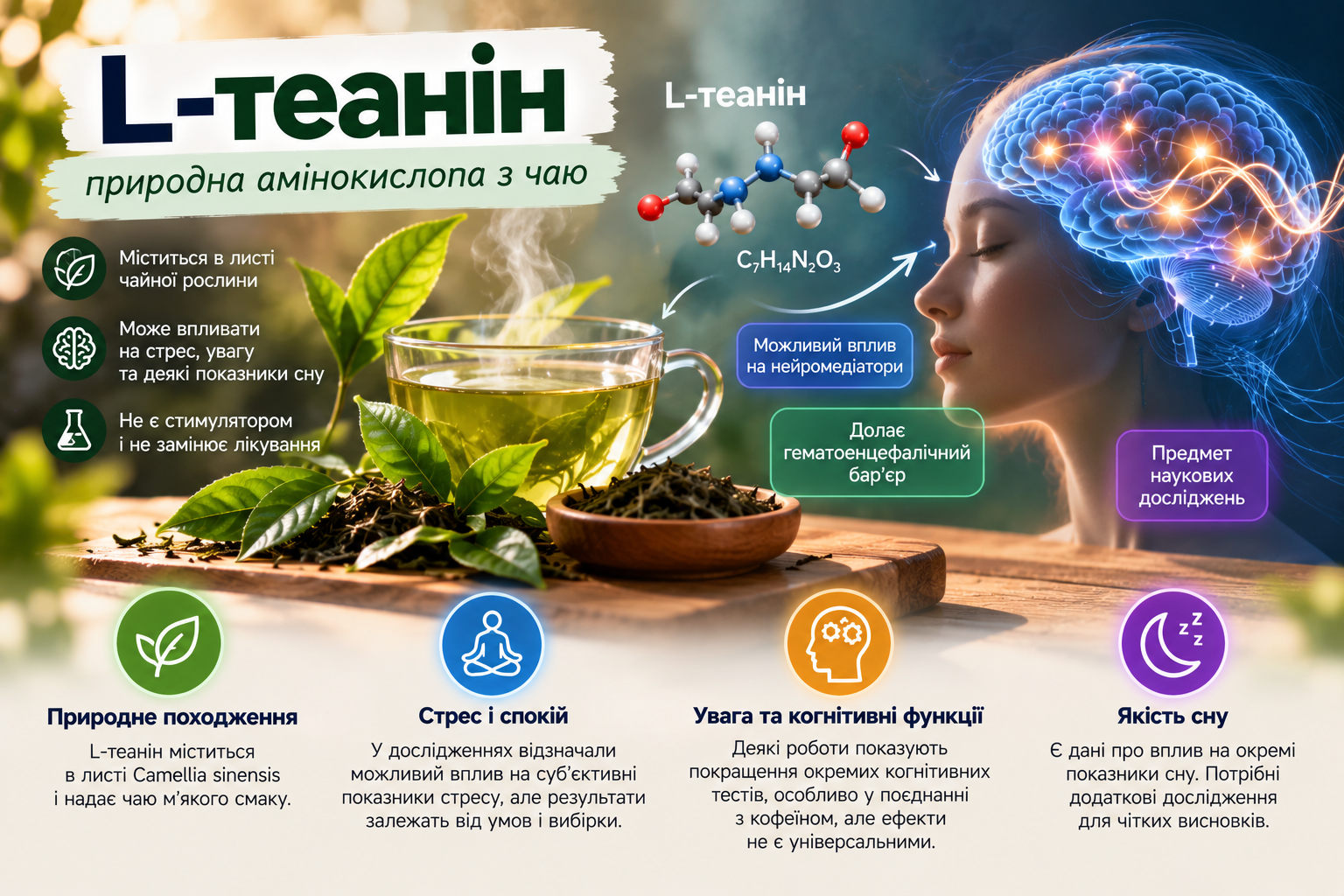
What is L-theanine and why is it in tea?
L-theanine, or γ-glutamylethylamide, is chemically similar to glutamate. It is classified as a non-protein amino acid: unlike the amino acids from which the body builds ordinary proteins, theanine is not used as a standard building block of the protein chain. In the tea plant, it participates in nitrogen metabolism and the formation of the taste of the leaf. A review by Dashwood and Visioli (2025) considers theanine as a characteristic component of tea, the biological effects of which are studied separately from other components of the drink.
Green, black and other traditional teas are made from the same plant, but processed differently. The amount of theanine in a finished cup is not constant: it is influenced by the variety, growing conditions, part of the leaf, processing technology and brewing method. Therefore, a cup of tea and a capsule with the specified amount of L-theanine are not interchangeable units for comparing doses. The issue of actual content in drinks should be considered separately, and not deduced from one universal figure.
How L-theanine is related to the functioning of the nervous system
Researchers are interested in the structural similarity of theanine to glutamate, an important excitatory neurotransmitter. In cellular and experimental models, theanine's possible involvement in the regulation of glutamatergic transmission, as well as changes in other signaling pathways, is being studied. However, chemical similarity does not mean the same action: L-theanine cannot be identified with glutamate or considered a substance that simply "turns off" brain excitation.
According to reviews, once ingested, L-theanine is absorbed in the gut; available experimental data indicate its ability to cross the blood-brain barrier. This helps to explain the scientific interest in the substance, but does not in itself prove clinical benefit. Similarly, changes in the activity of a particular neurotransmitter or EEG waves are not direct evidence of improved concentration, calmness, or sleep quality in everyday life.
What L-theanine studies show in humans
Human studies measure a variety of outcomes: self-reported stress, cognitive performance, electroencephalographic measures, and subjective sleep quality. These should not be lumped together into a single “brain-boosting” claim. It is especially important to separate trials of theanine alone from trials of its combination with caffeine.
| Research | Participants and conditions | What has been established and what are the limitations? |
|---|---|---|
| Hidese et al., 2019 | 30 healthy adults; 200 mg L-theanine daily for 4 weeks, crossover placebo-controlled trial | Changes were recorded in some scales of stress symptoms, sleep, and cognitive tests. The sample is small; some of the effects are based on self-assessment. |
| AlphaWave Research, 2021 | 16 participants in the trial; single dose 200 mg, laboratory stress task | Differences were found in individual EEG, cortisol, and subjective responses. These are short-term laboratory results, not long-term, everyday results. |
| Giesbrecht et al., 2010 | 44 young adults; 97 mg theanine plus 40 mg caffeine, single dose | Some attentional switching scores improved; other cognitive tests showed no significant differences. The effect cannot be attributed to theanine itself. |
| Payne et al., 2025 | A systematic review of 50 randomized trials of tea, theanine, or a combination with caffeine | Some assessments of attention and mood were favorable, but significant uncertainty remained for many measures; studies are heterogeneous. |
Thus, scientific interest is warranted, but even a positive result from a particular test cannot be extrapolated to all age groups, long-term use, or all theanine products. The review by Dashwood and Visioli (2025) also notes that the popularity of supplements outpaces the quality of evidence for some of the advertised effects.
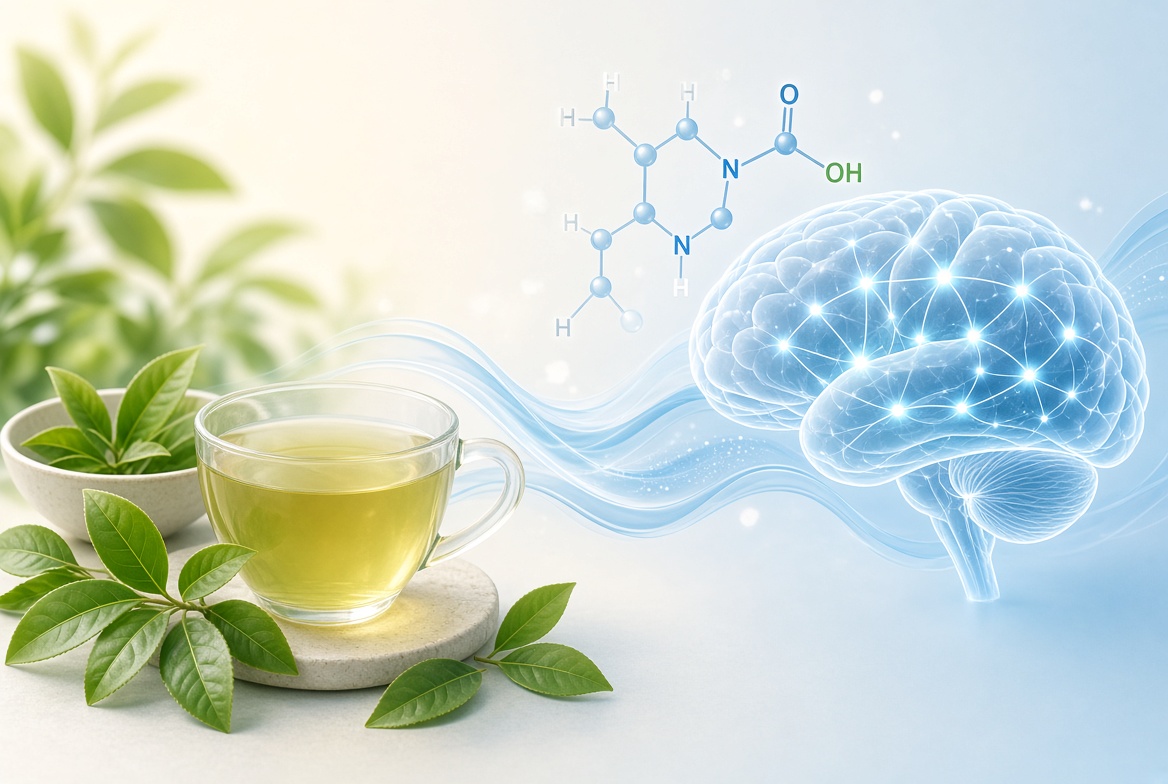
L-theanine and the stress response: what does “relaxation without drowsiness” mean?
However, “relaxation” is not a single laboratory measure. A lower response during a brief task does not mean a sustained reduction in anxiety in other circumstances. In addition, people respond differently, and well-being is influenced by sleep, caffeine, general condition, and related habits. Theanine should not be described as a substitute for professional help for persistent or severe symptoms.
Attention, caffeine and tea: why the results should be separated
Tea can contain both L-theanine and caffeine, making it difficult to assess the separate effects of each substance. Caffeine has its own stimulant effect, so a positive result after combining them does not prove that theanine alone improves concentration. In the trial by Giesbrecht et al. (2010), the combination gave an advantage in the attention switching test, but not in all tasks.
A systematic review by Payne et al. (2025) found small beneficial differences for some measures of attention, particularly when combined. However, the confidence intervals for many estimates included uncertain or small effects. This is not to say that L-theanine eliminates adverse reactions to caffeine or makes any amount of caffeine safe.
What is known about sleep and alpha waves?
L-theanine has also been studied in the context of sleep, but it should not be equated with a sleeping pill. Hidese et al. (2019) reported changes in subjective ratings of individual sleep characteristics. Such scales are useful, but not identical to instrumental measurements of sleep duration or structure. The available results are not sufficient to promise the same effect in people with different causes of disturbed sleep.
Another direction is EEG alpha activity, which depends on the state of wakefulness, attention, and measurement conditions. In the AlphaWave study (2021), differences in individual alpha activity parameters were recorded after L-theanine. However, the formula “more alpha waves = better brain” oversimplifies neurophysiology. Alpha rhythm cannot by itself confirm improved sleep, memory, or psychological state.
What is the difference between theanine in tea and theanine in a supplement?
In the drink, L-theanine is included with other natural components of tea, primarily caffeine and polyphenols. In the supplement, the amount of the substance is usually declared separately; sometimes other ingredients are included. Therefore, the results of the study of pure L-theanine cannot be automatically equated with the effect of any multi-component formula.
When reading the label, it is important to distinguish between the amount of L-theanine per unit of the product, the recommended serving size, and the composition of other active ingredients. Doses from scientific publications are descriptions of research protocols and are not advice on choosing your own consumption regimen. For a specific supplement, you should follow the instructions on the package.
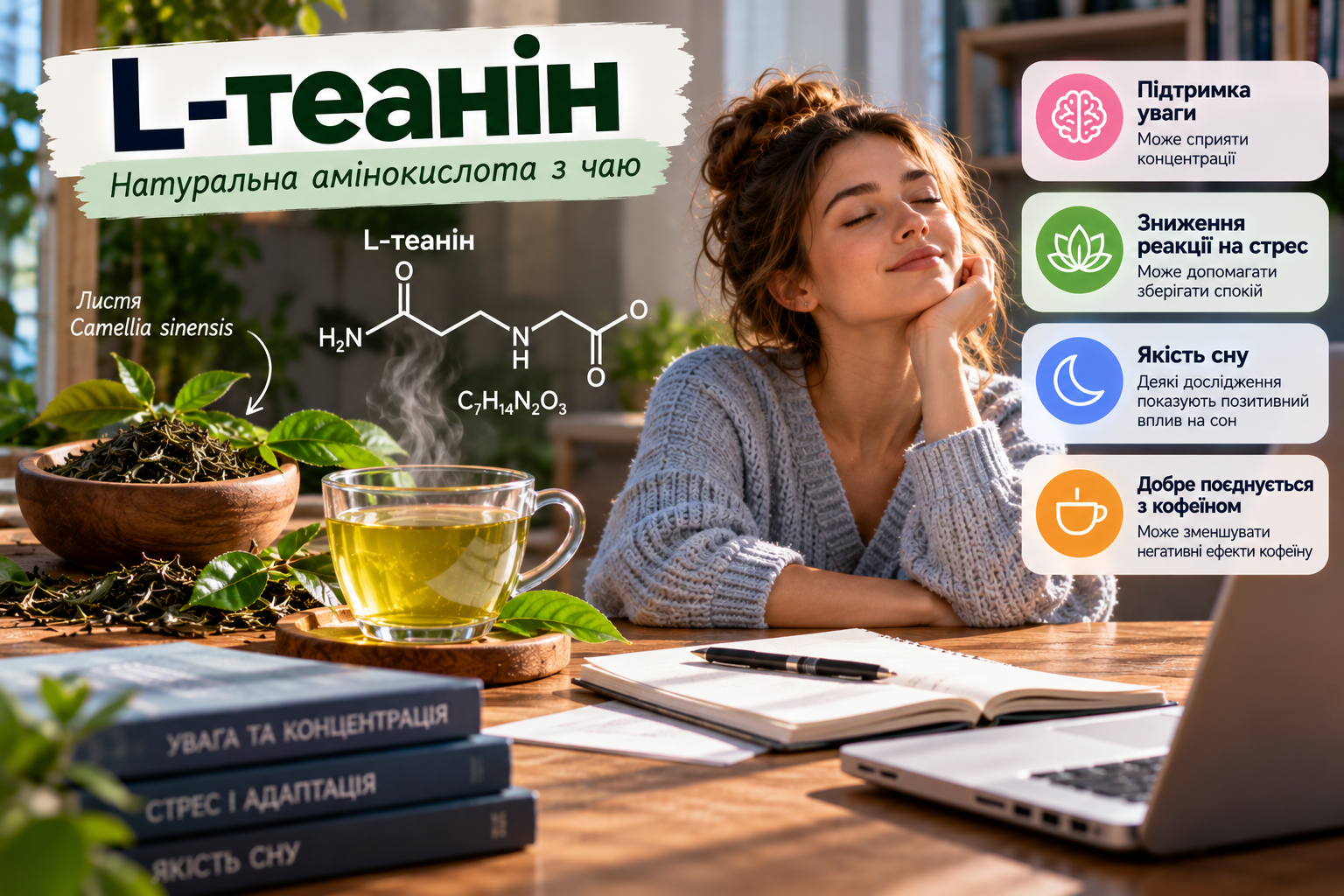
Security and limitations of available data
In small trials, L-theanine has been generally well tolerated, but this does not equate to proven safety for any duration, dose, or population. Data on pregnancy, breastfeeding, and long-term use in vulnerable populations are limited. Consult a physician if you are taking medications, have a chronic condition, or are pregnant or lactating.
Individual reaction also matters: if drowsiness occurs after taking it or the reaction speed changes, you should refrain from driving or operating machinery. L-theanine does not replace a healthy diet, sleep routine, or medical examination in case of complaints.
Frequently asked questions
What is L-theanine in simple words?
This is a non-protein amino acid found in tea leaves. It is being studied in relation to stress response, attention, and other parameters, but clinical findings are limited.
Is L-theanine in green and black tea?
Yes, both drinks are made from the tea plant. The actual amount depends on the raw materials and brewing method.
Is L-theanine caffeine?
No. They are different compounds: theanine belongs to the non-protein amino acids, and caffeine belongs to the methylxanthines.
Is theanine proven to improve concentration?
Some studies have shown improvements in certain tests of attention, particularly when combined with caffeine. There is not enough evidence to say that this effect is consistent across individuals.
Does L-theanine work as a sleeping pill?
No, it cannot be equated with sleeping pills. Some studies have evaluated subjective sleep indicators, but the results do not confirm a universal effect.
What do alpha waves mean in theanine studies?
This is the electrical activity of the brain, recorded using an EEG. A change in this indicator is not direct evidence of improved memory or well-being.
Can a cup of tea be equated to an L-theanine capsule?
No. The amount of theanine in tea varies, and other components are present, and the supplement declares a certain amount of the substance per serving.
Sources
- Dashwood R., Visioli F. (2025). L-theanine: From tea leaf to trending supplement - does the science match the hype for brain health and relaxation? Nutrition Research. PubMed.
- Hidese S. and others. (2019). Effects of L-Theanine Administration on Stress-Related Symptoms and Cognitive Functions in Healthy Adults: A Randomized Controlled Trial. Nutrients. PubMed.
- Payne ER and others. (2025). Effects of Tea (Camellia sinensis) or its Bioactive Compounds L-Theanine or L-Theanine plus Caffeine on Cognition, Sleep, and Mood in Healthy Participants: A Systematic Review and Meta-Analysis of Randomized Controlled Trials. Nutrition Reviews. PubMed.
- Evans M. and others. (2021). A Randomized, Triple-Blind, Placebo-Controlled, Crossover Study to Investigate the Efficacy of a Single Dose of AlphaWave L-Theanine on Stress in a Healthy Adult Population. Neurology and Therapy. PubMed.
Dietary supplement. Not a medicine. Consult a doctor before use.
Products related to this post
Comments
Information
Customer Service
Extras
My Account


Sports nutrition manufacturer in Ukraine StarkPharm © 2026


